
Rangemaster Treble Booster RCA 2N5783 Silicon Vintage Enclosure with Brazilian Rosewood Plates
£250.00
1 in stock
Description
Description of Product
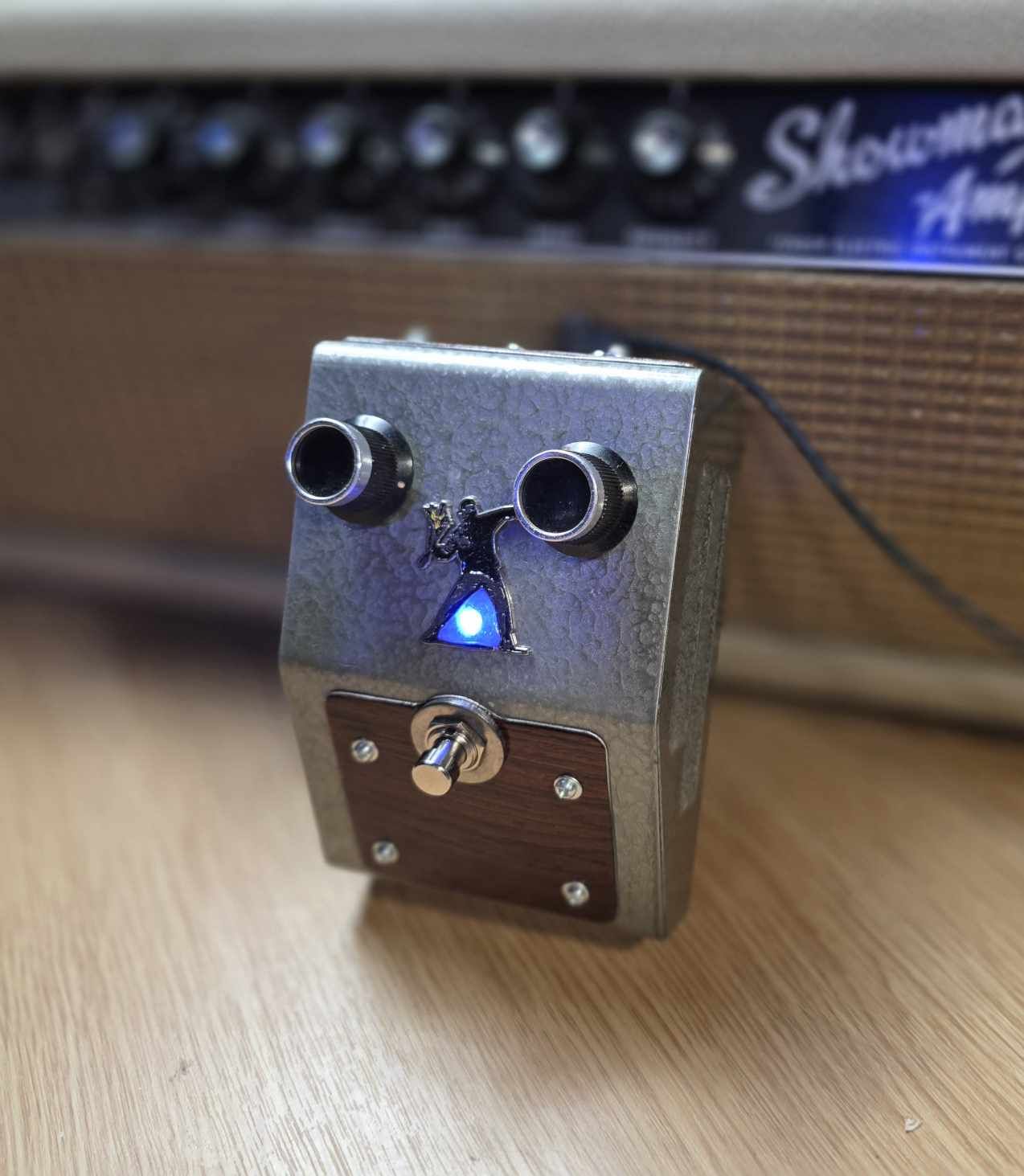
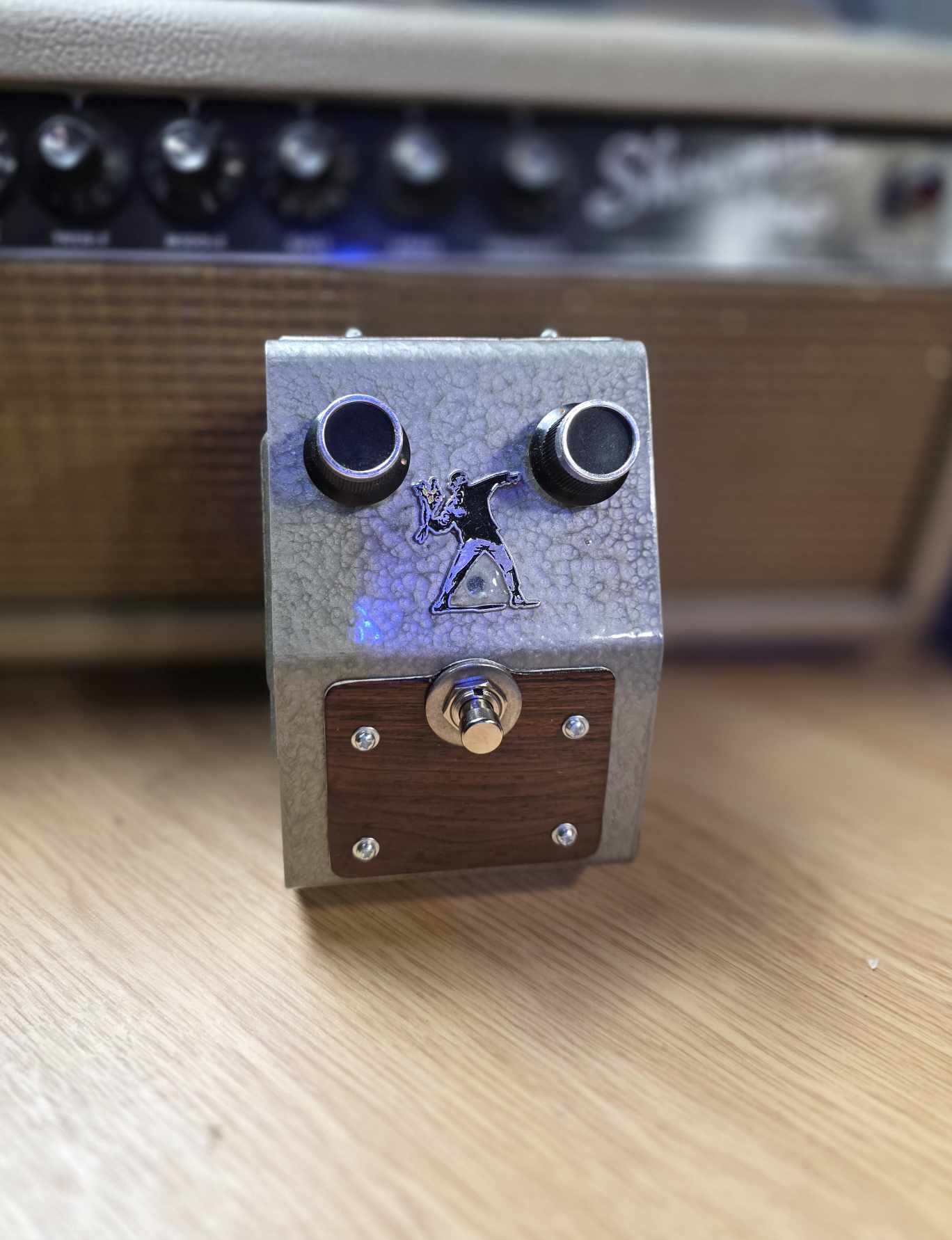
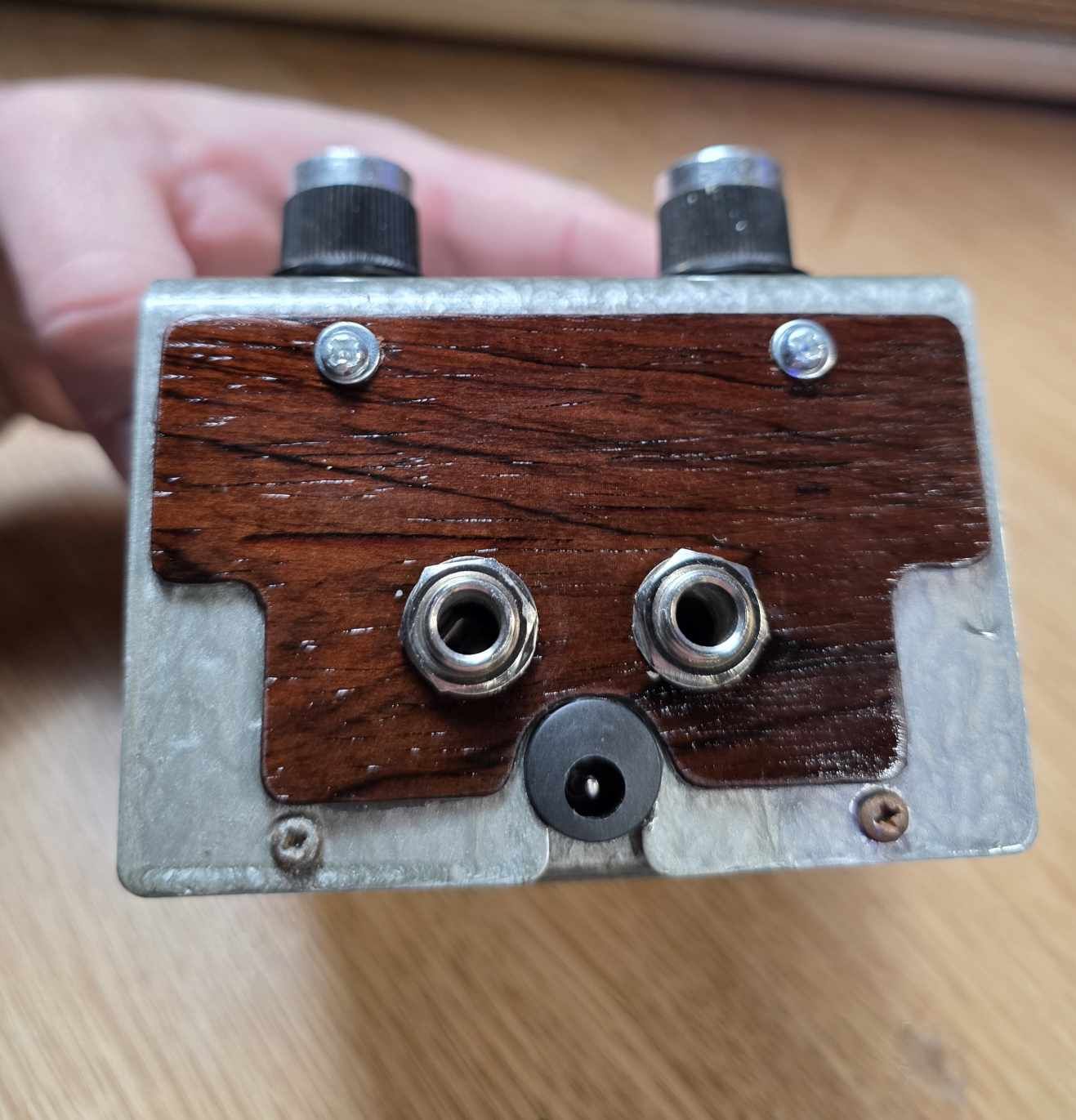
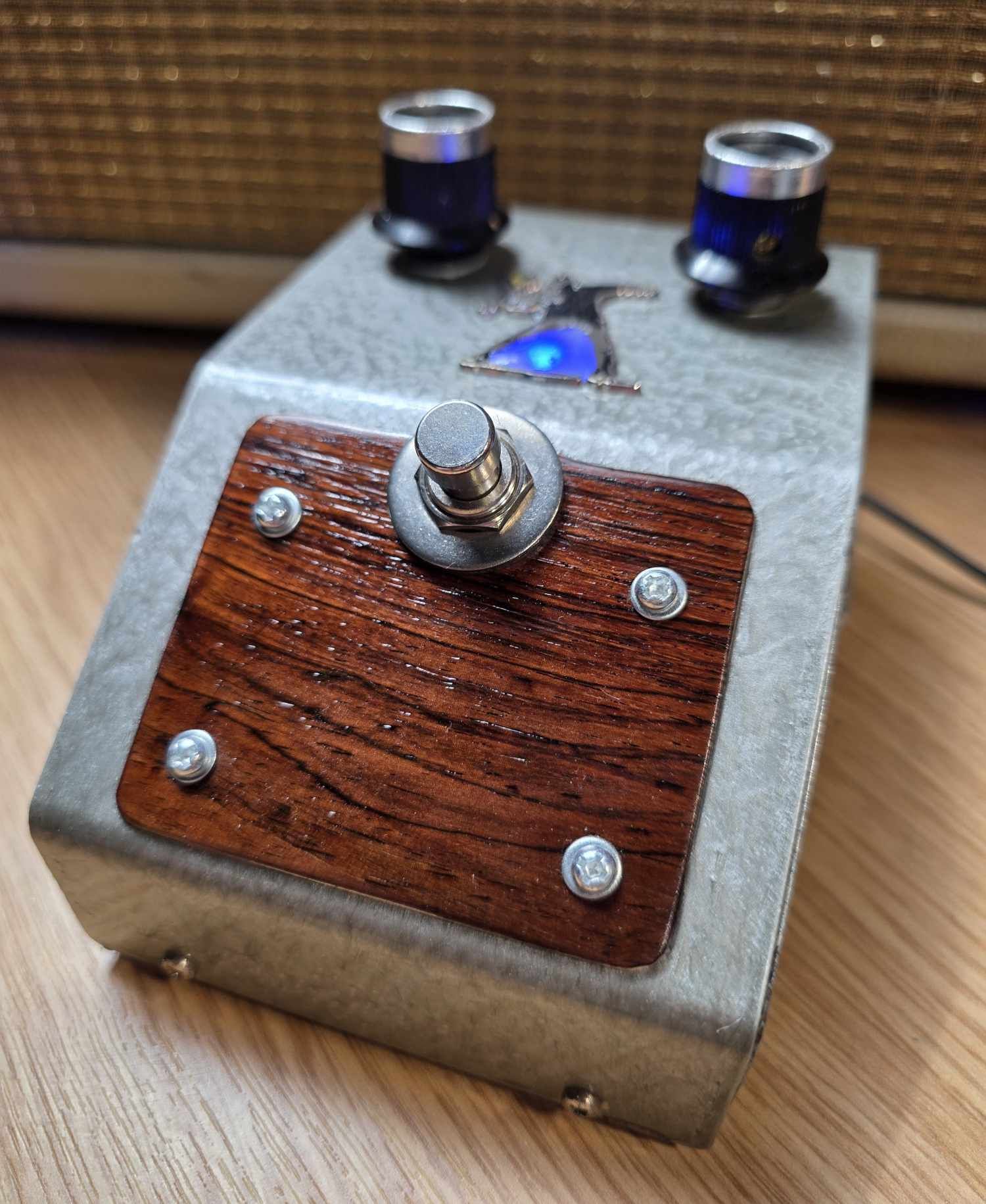
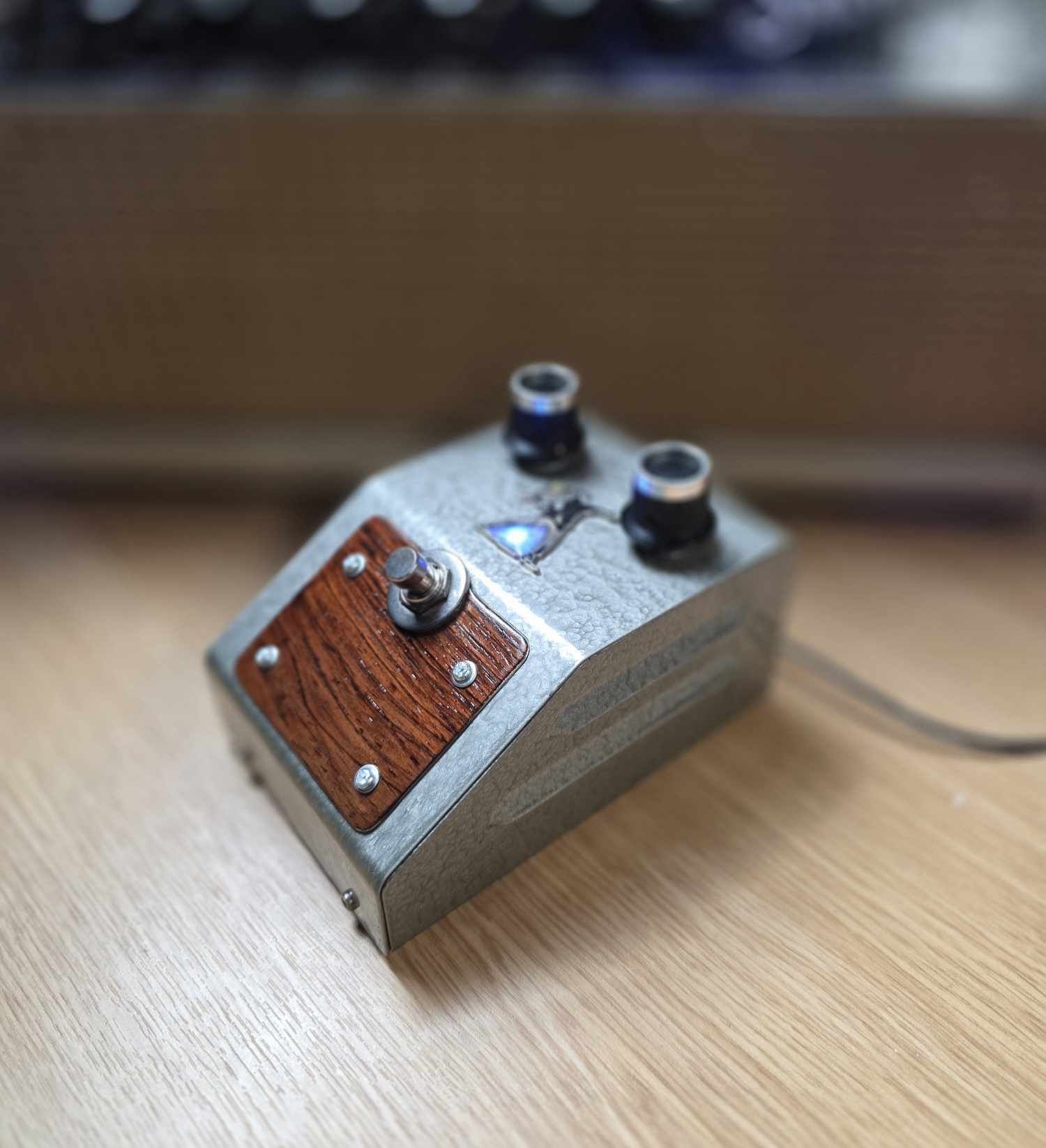
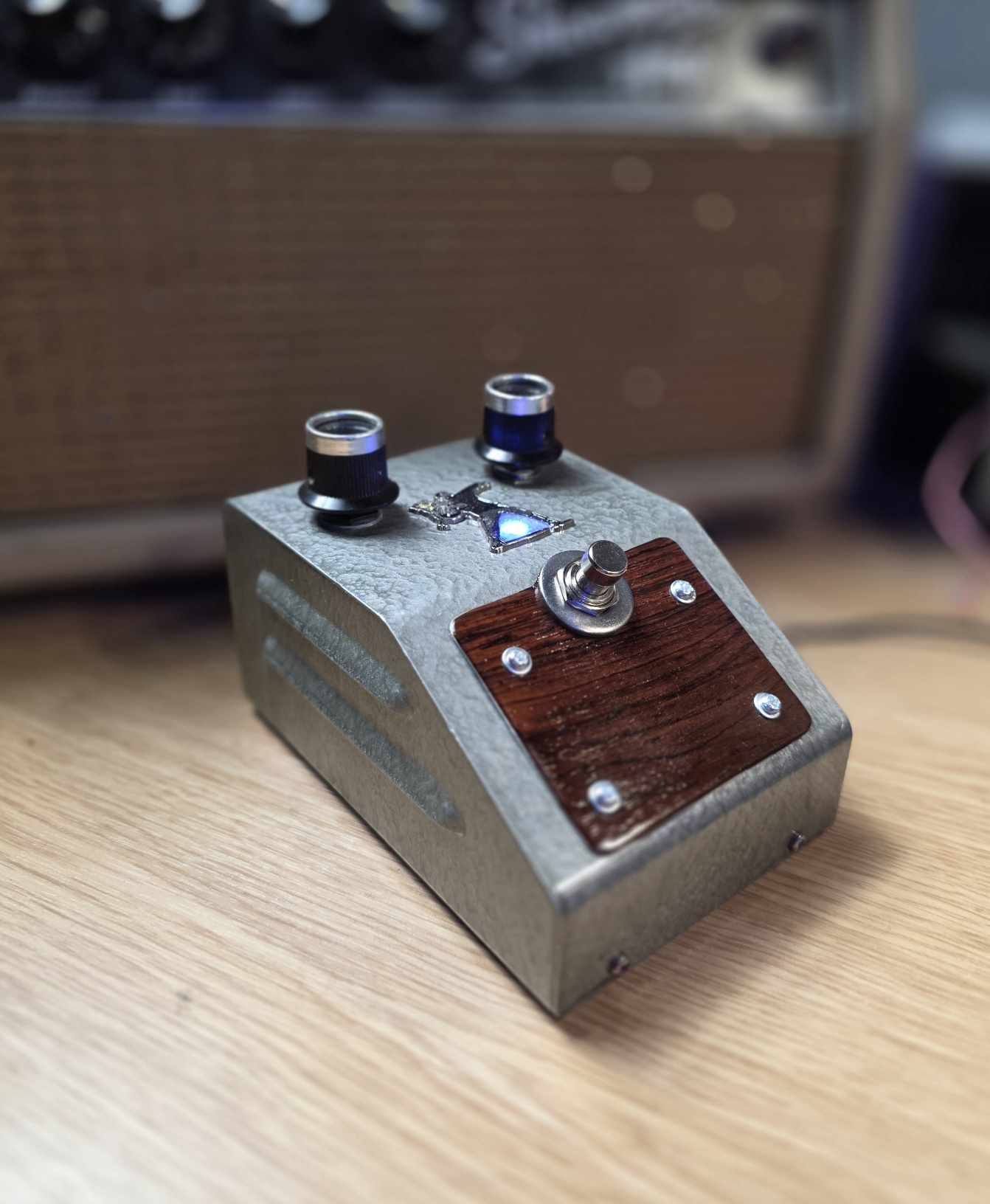
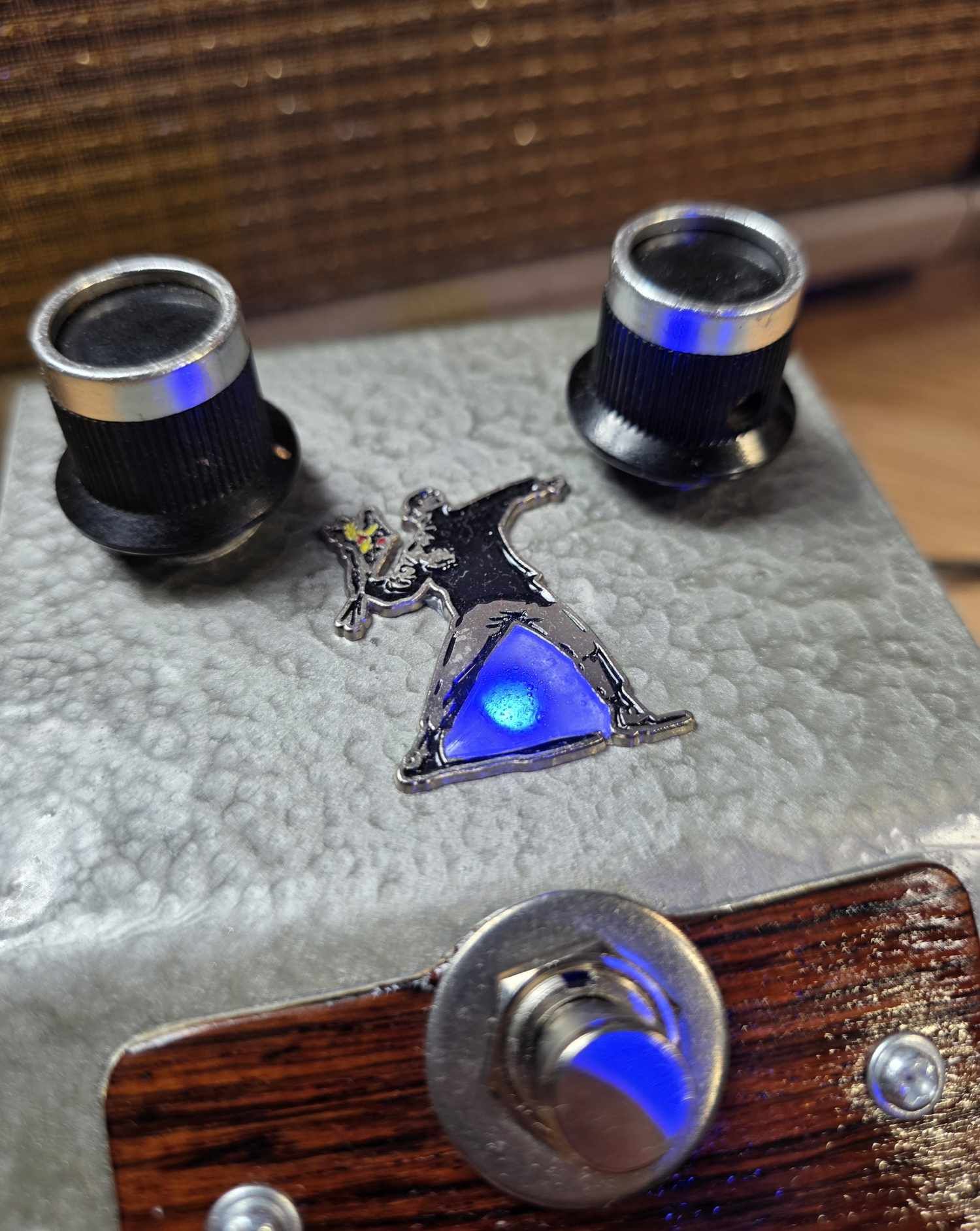
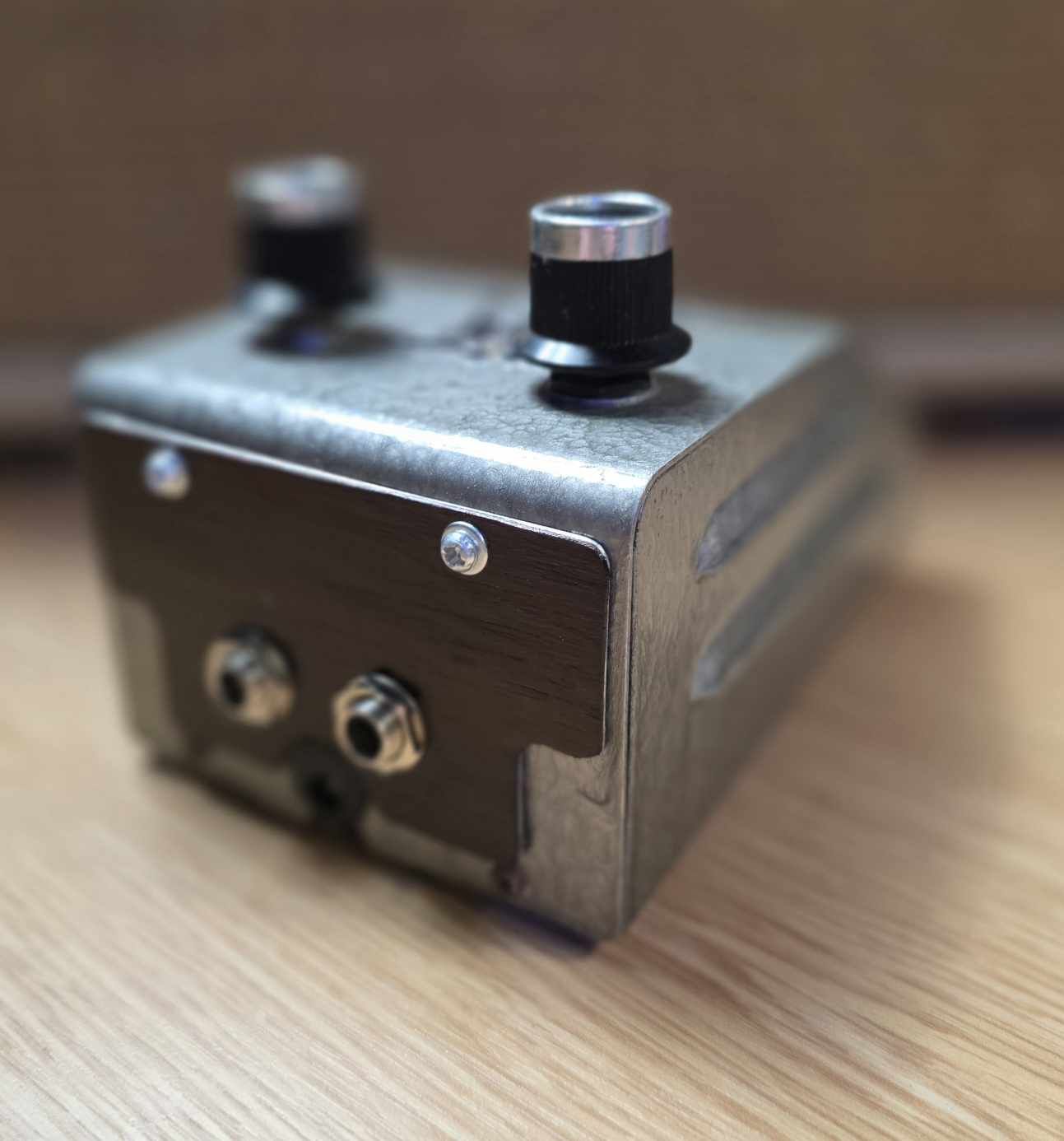
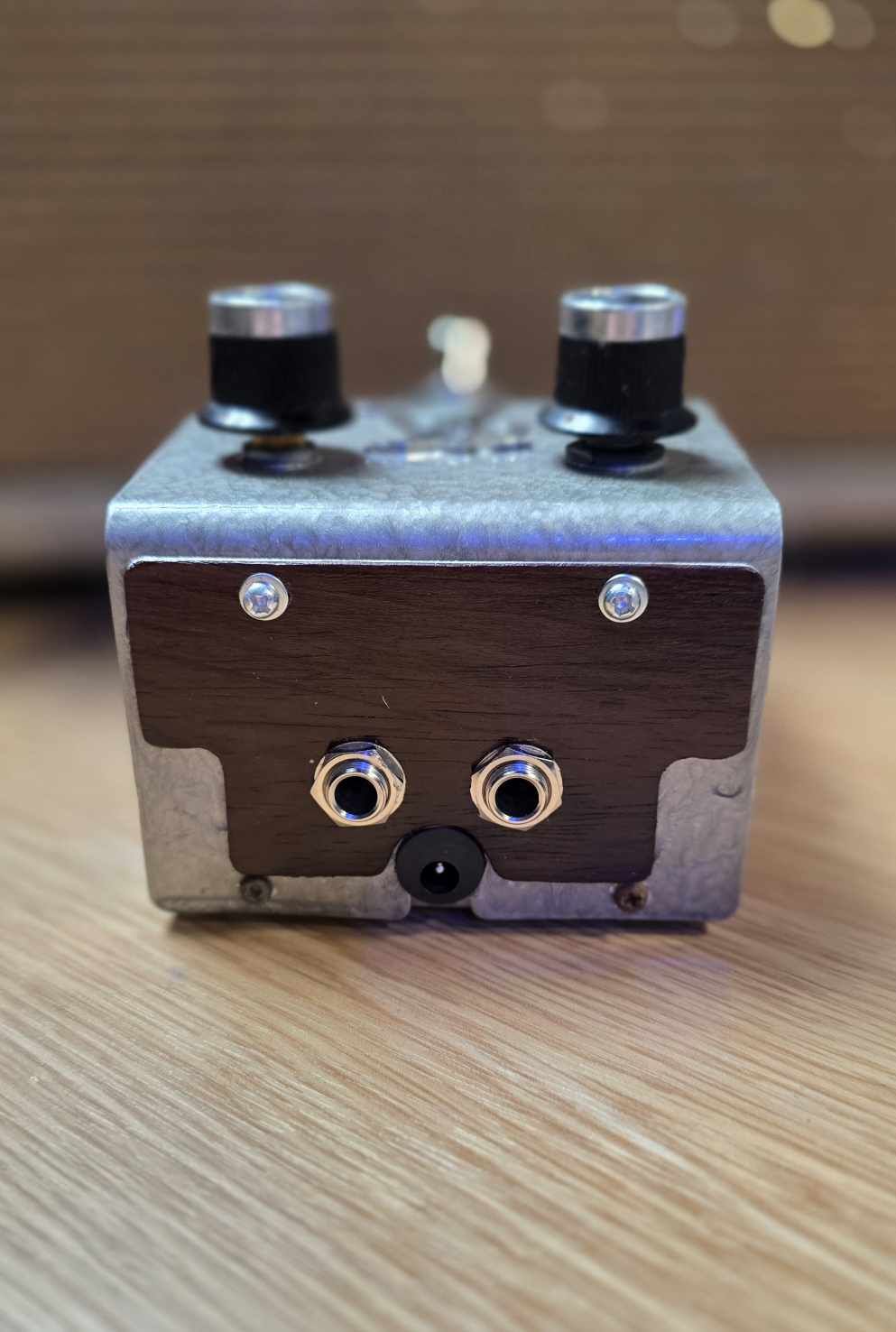
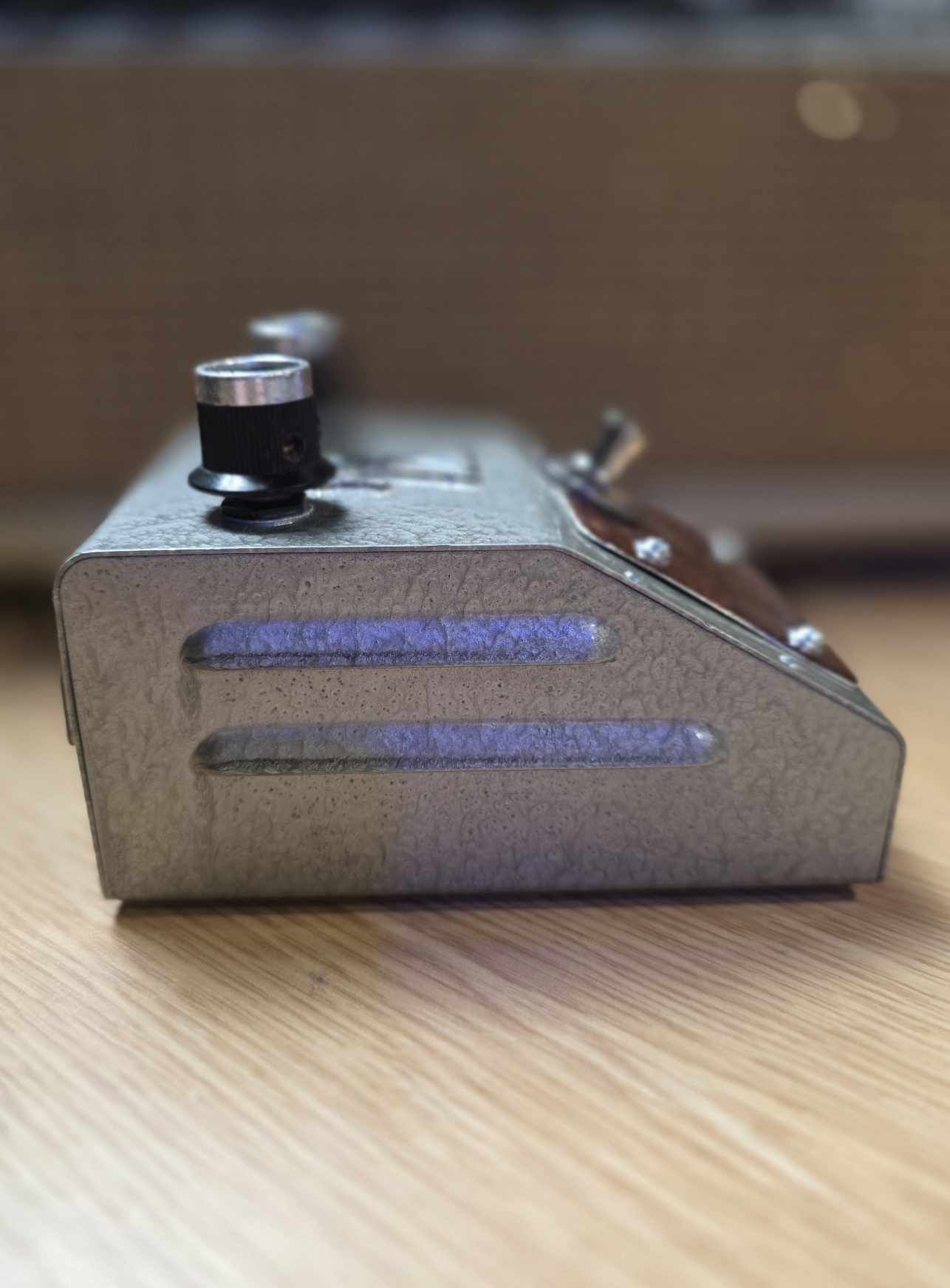
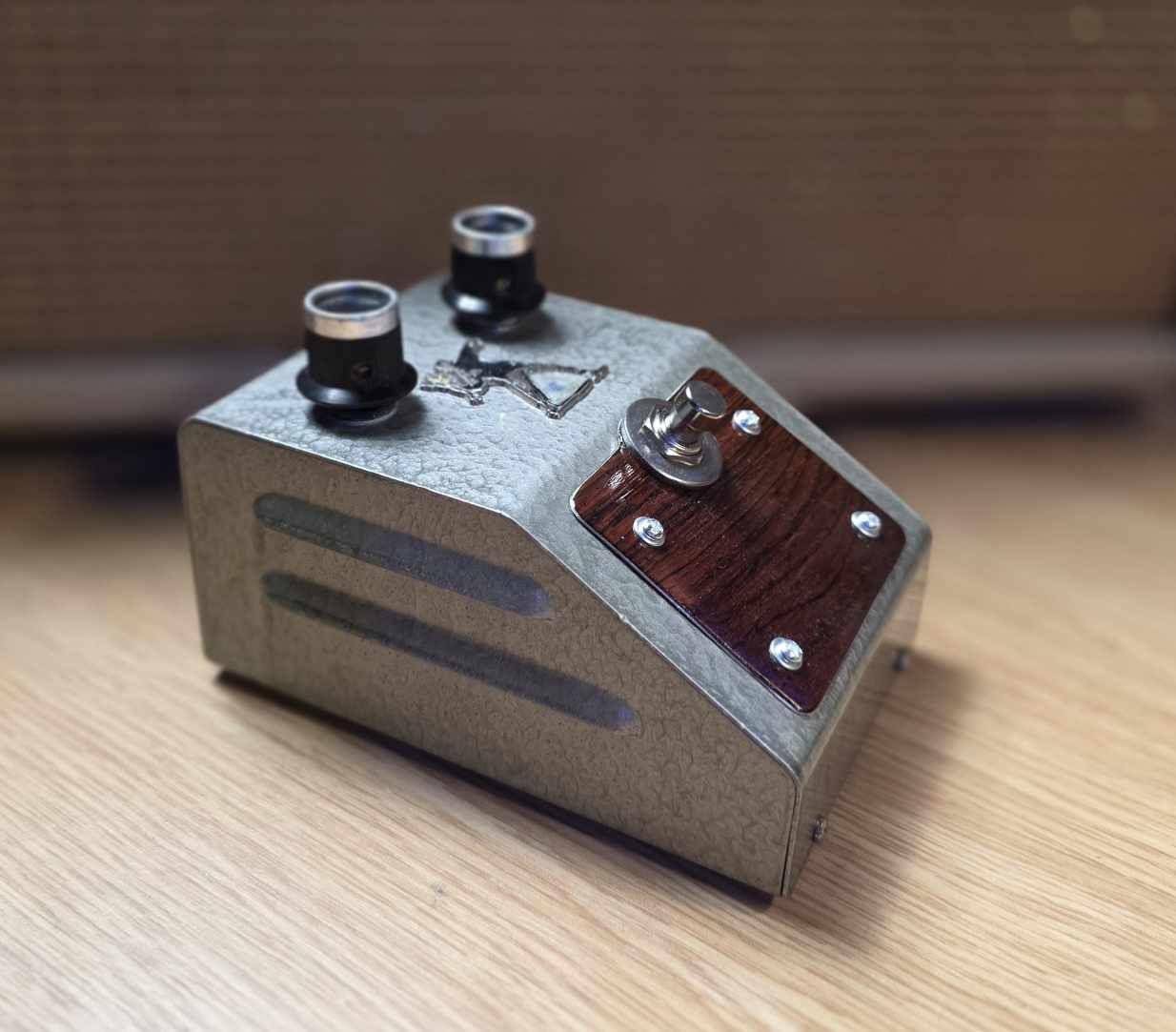
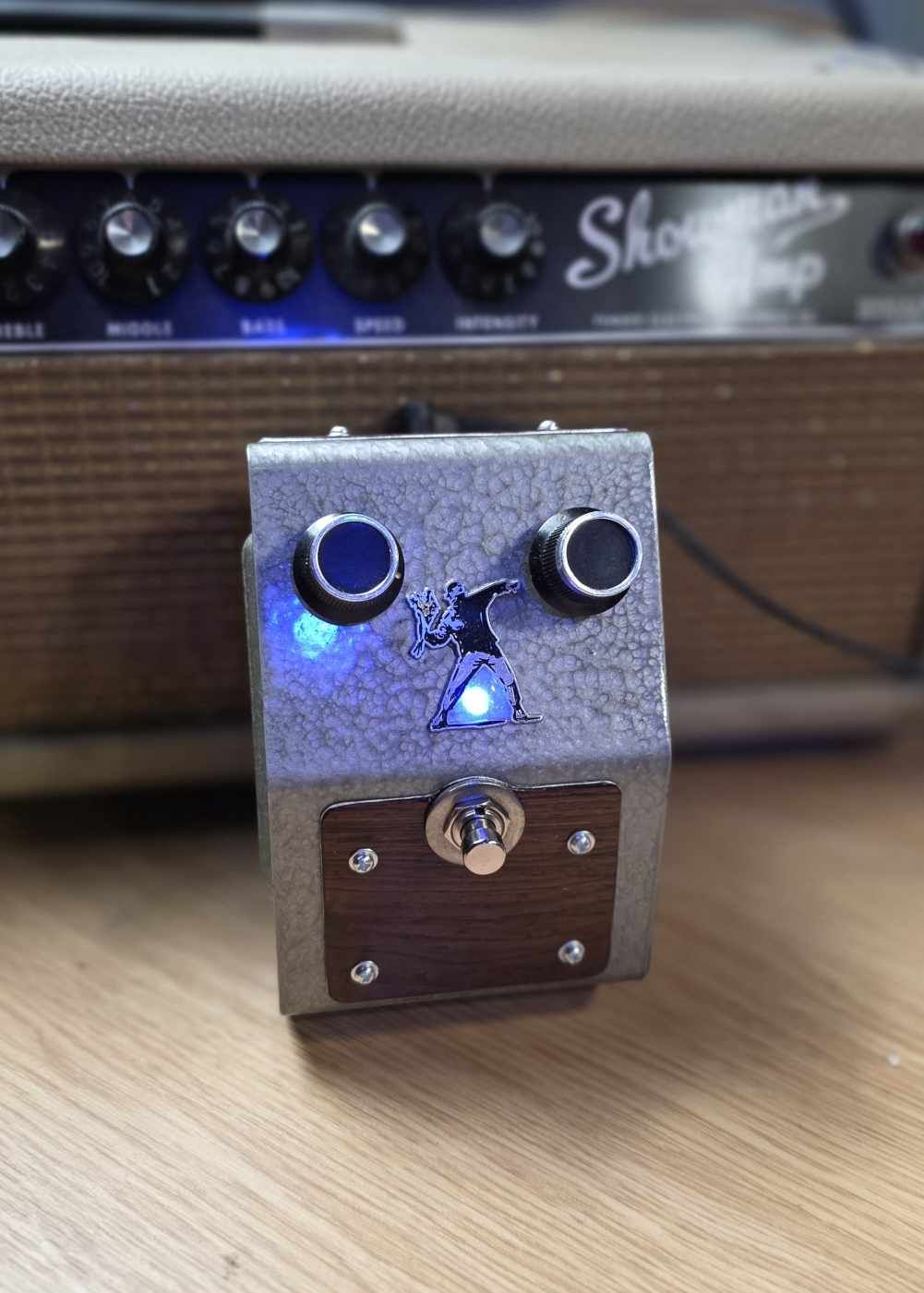
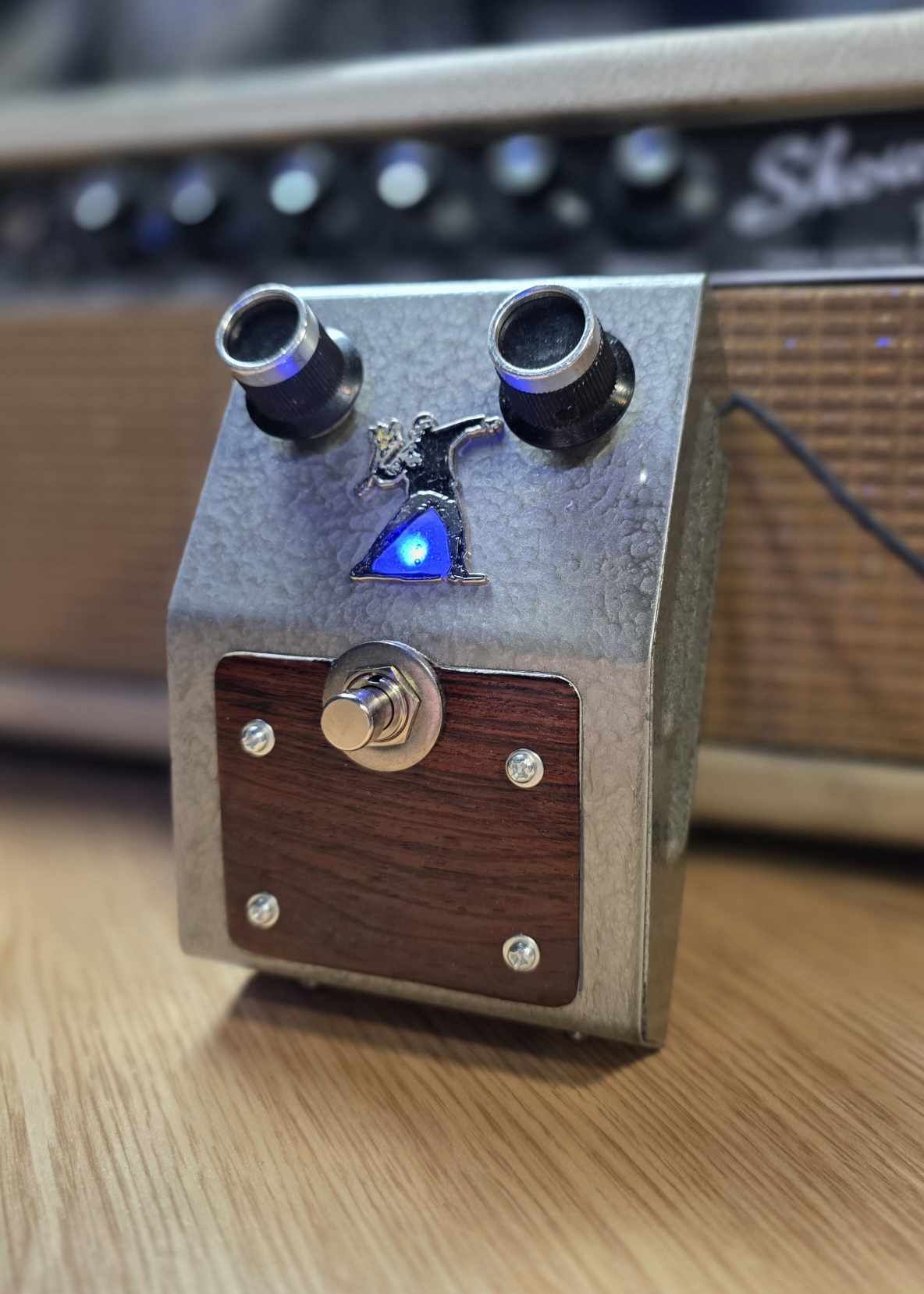
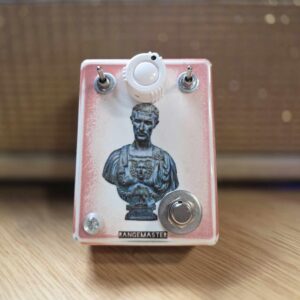
This Rangemaster treble booster is built inside a vintage enclosure fitted with real Brazilian rosewood veneer plates and finished with Banksy flower thrower artwork.
The enclosure carries the familiar silhouette of the early British boosters but the addition of the rosewood panels changes the feel immediately. Brazilian rosewood has a density and grain pattern that cannot be replicated with modern substitutes. The wood has been finished lightly so the surface remains tactile and natural rather than polished.
The artwork draws from the well known flower thrower image. The contrast between the monochrome stencil style and the natural rosewood gives the pedal a visual presence without making it feel decorative.
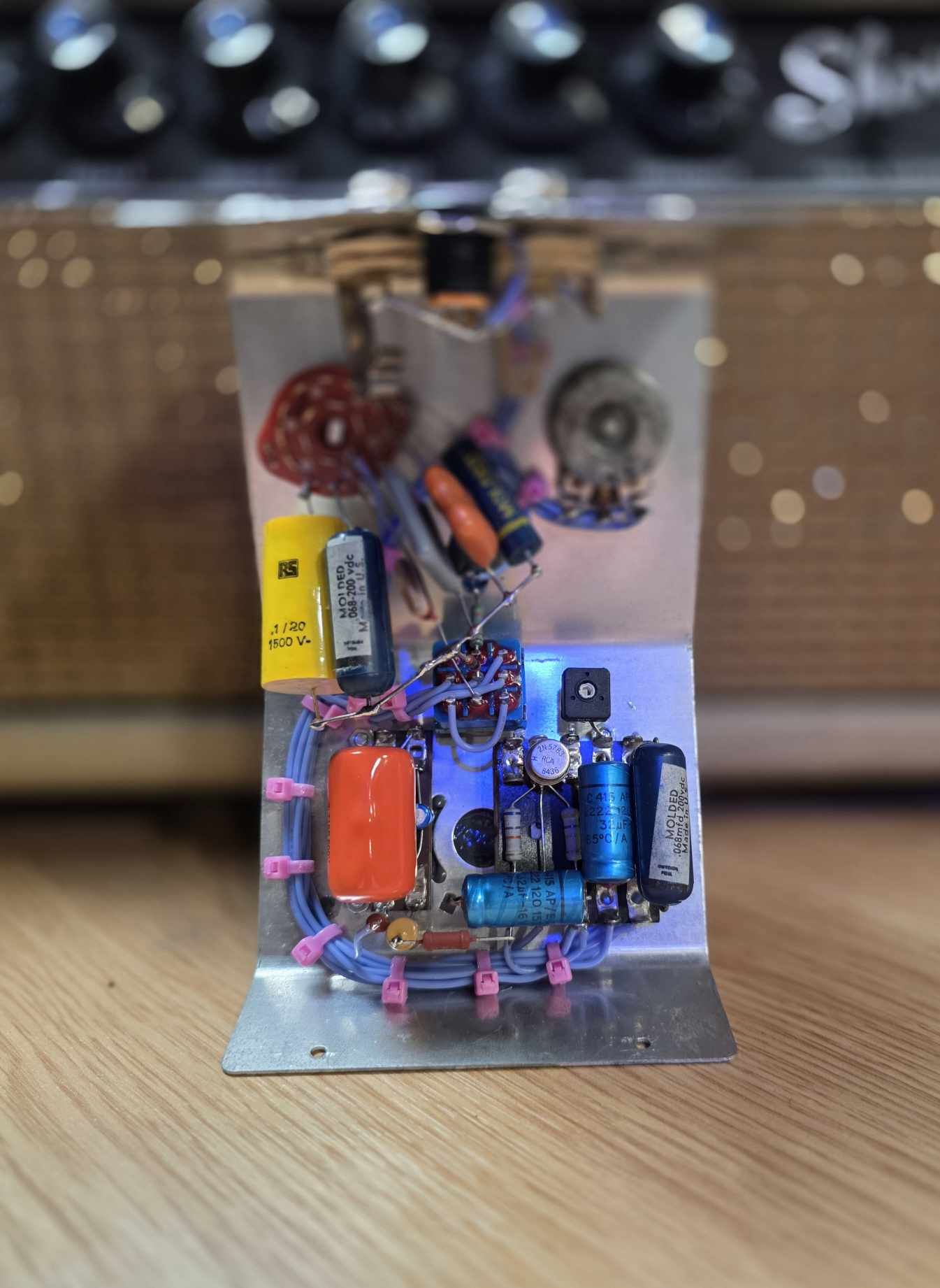
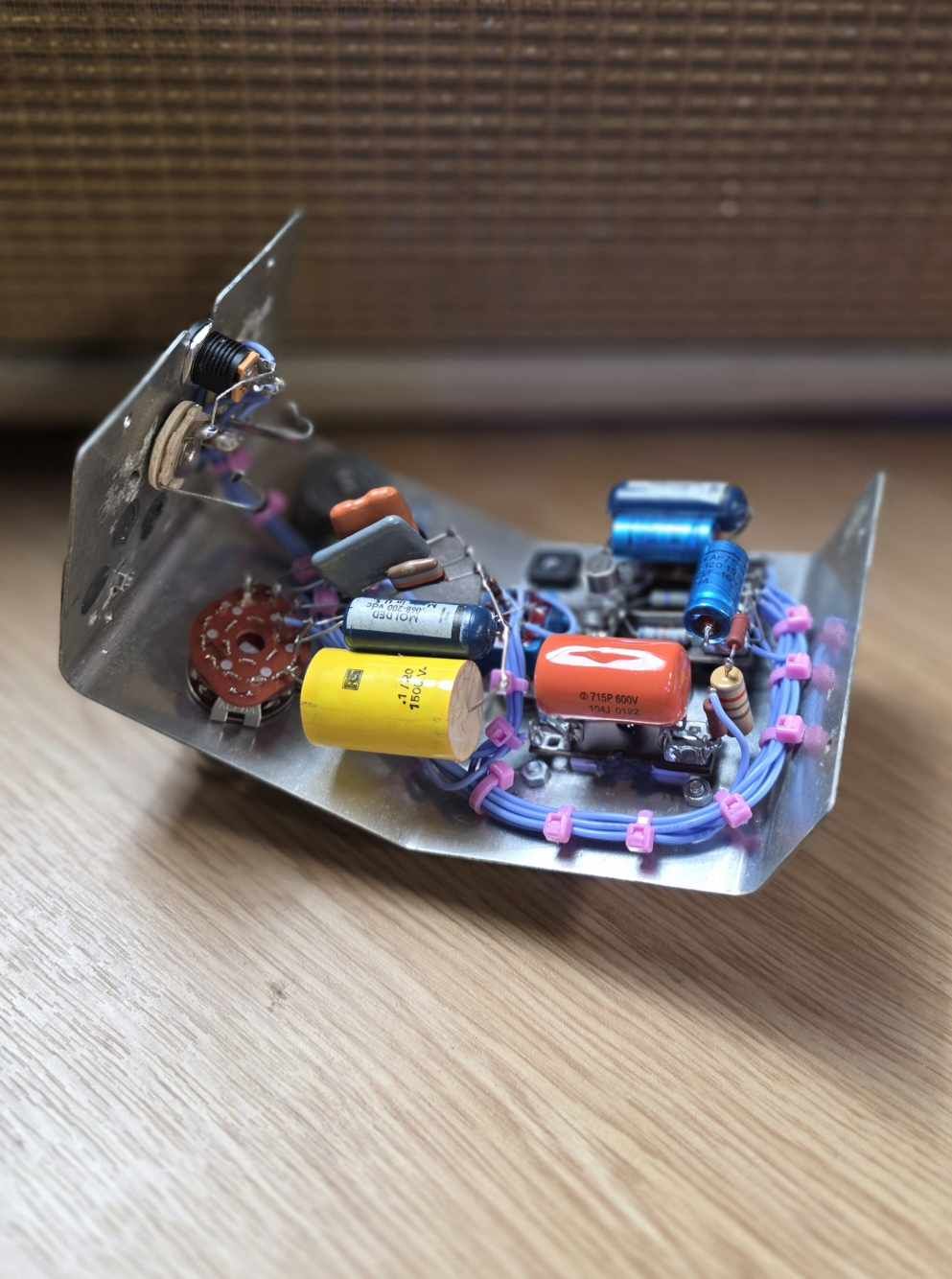
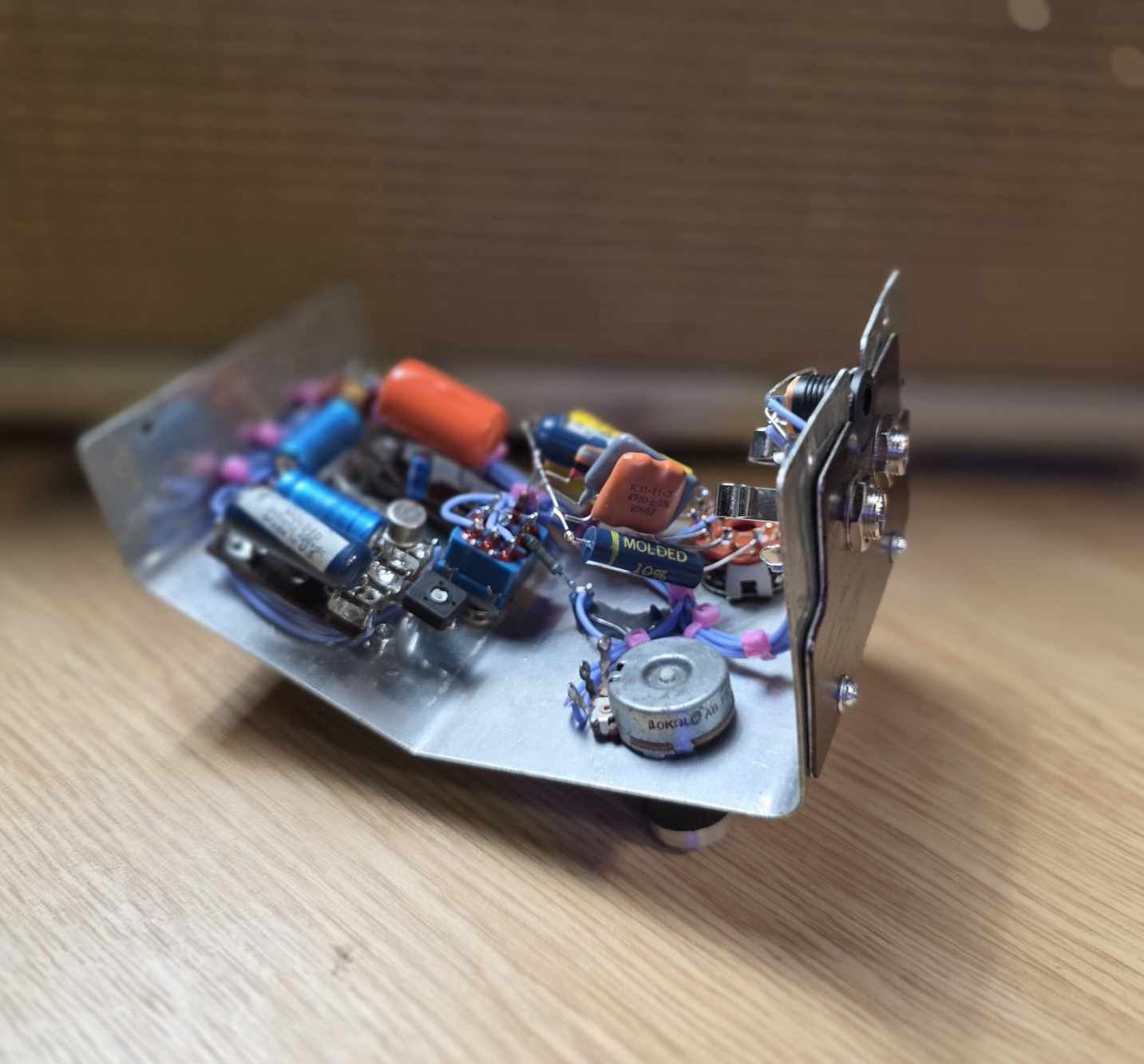
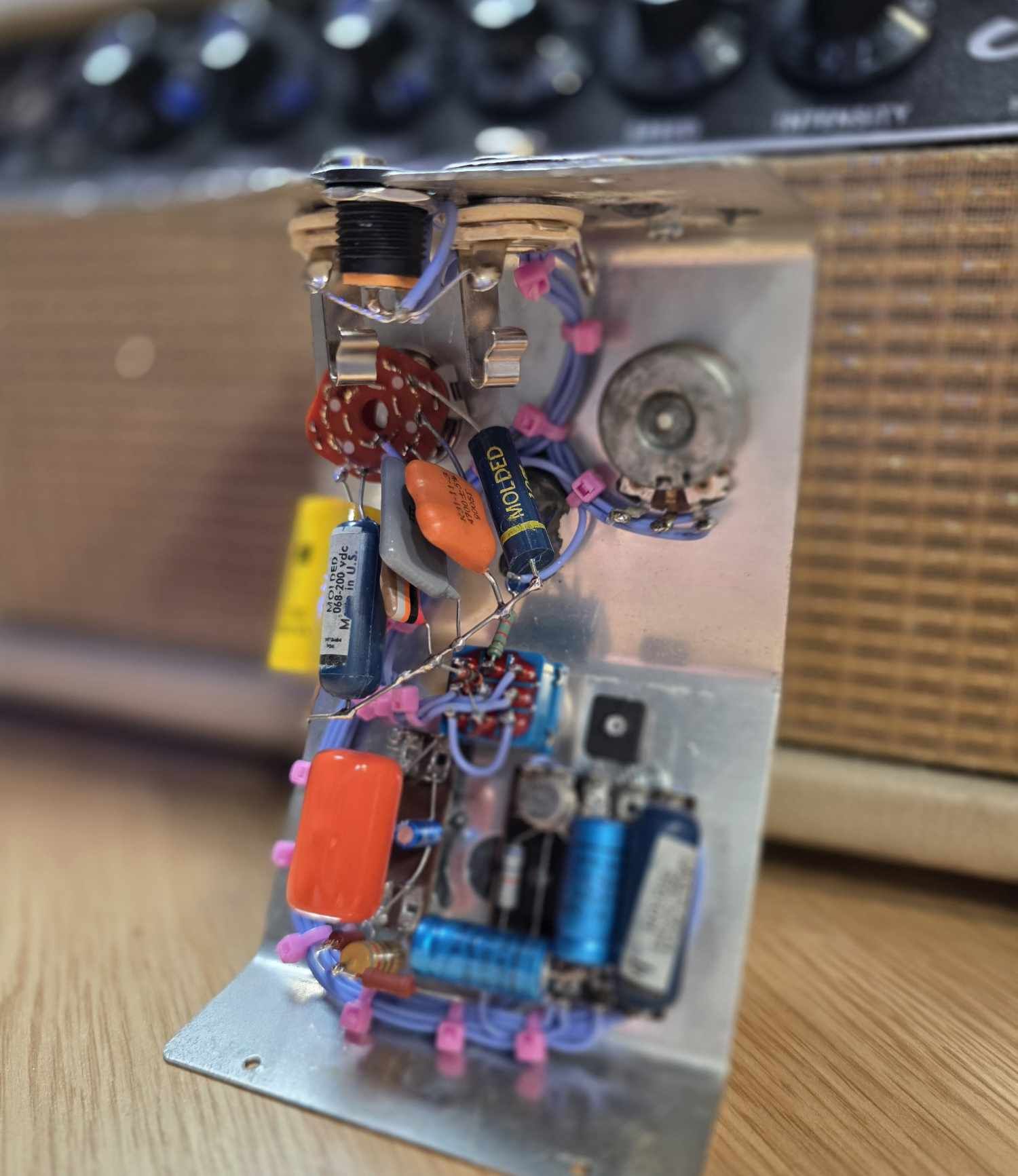
Inside the enclosure the circuit follows the traditional Rangemaster architecture and is hand wired on tagboard using the same construction approach found in early amplifiers. Every connection remains visible and serviceable.
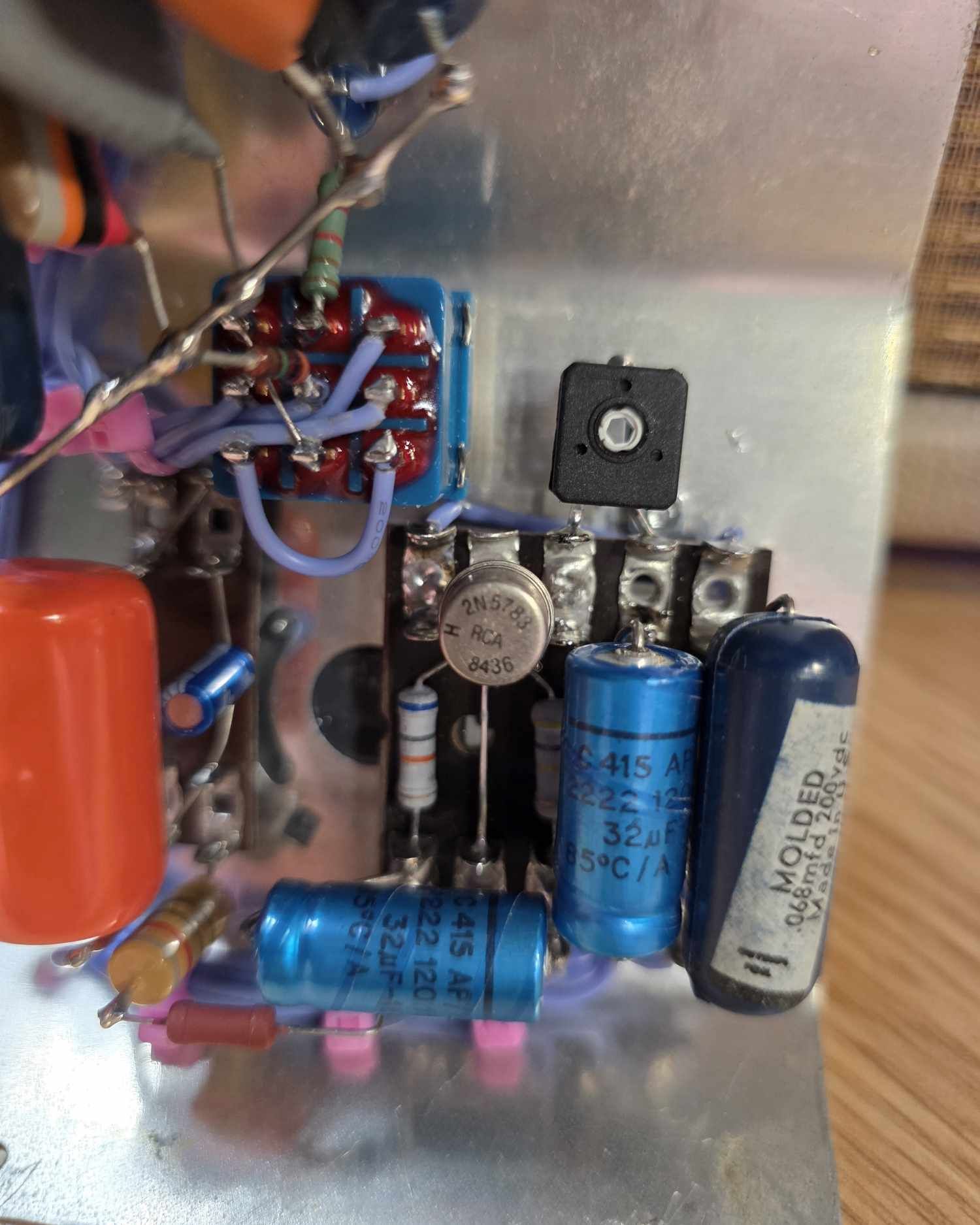
The signal path uses blue moulded capacitors of the type commonly found in 1960s blackface Fender and Magnatone amplifiers. These parts are known for their stability and the way they handle high frequencies without becoming brittle.
A large British made RS Components 1.5Kv capacitor sits within the input network alongside a substantial NOS Orange Drop capacitor used in the tone shaping section.
The transistor is a NOS RCA 2N5783 metal can silicon device. These early silicon transistors appeared during the transitional period between germanium and later silicon production. They provide more stability than germanium while retaining a musical gain structure that works well in this circuit.
A six position rotary EQ selector allows the booster to move across several frequency ranges rather than remaining fixed to the traditional treble emphasis.
Output level is controlled by a NOS CTS potentiometer. These pots were widely used in American amplifiers and instruments and are known for their smooth mechanical feel and reliable taper.
Every connection inside the pedal is soldered by hand and the entire circuit is assembled slowly so that it remains understandable and repairable long into the future.
This particular build exists as a single piece.
Description of Sound
The Rangemaster circuit was originally intended to push the input stage of a valve amplifier harder while shaping the upper midrange of the guitar signal.
With the EQ selector set to the traditional treble position the pedal produces the familiar bright push that tightens the low end and brings lead notes forward in a mix.
Moving through the six positions gradually shifts the frequency emphasis downward. The circuit moves from the classic treble boost into broader midrange shaping and eventually into a thicker full range push.
The RCA 2N5783 silicon transistor changes the behaviour slightly compared to germanium versions of the circuit. The attack becomes firmer and the output remains consistent across temperature changes.
Notes remain defined even when pushing the front end of an already driven amplifier. Sustained lead lines hold together well while still responding to the guitar volume control.
Rolling the guitar volume back cleans the signal while retaining the tonal colour introduced by the booster.
It is a simple circuit that interacts strongly with the amplifier it feeds.
Real World Testimonials
“Excellent Rangemaster. One of the best and most useful ones I have played.”
Reverb feedback
“A genius bit of design.”
AM Guitar review
“A treble booster with a lot to offer all guitarists.”
Medium review
This pedal is a single build.
The vintage enclosure, rosewood plates, Banksy artwork, and the particular RCA transistor used here will not be repeated in exactly the same way again.
If this version speaks to you, it is available.
Related products
-
Sale!

Silicon Rangemaster Three Position EQ Treble Booster in Sloped Enclosure with Lion Artwork
Original price was: £150.00.£100.00Current price is: £100.00. -
Sale!
Silicon Rangemaster Six Position EQ Treble Booster with Illuminated Viking Artwork
Original price was: £250.00.£220.00Current price is: £220.00. -
-
Reviews
There are no reviews yet.