
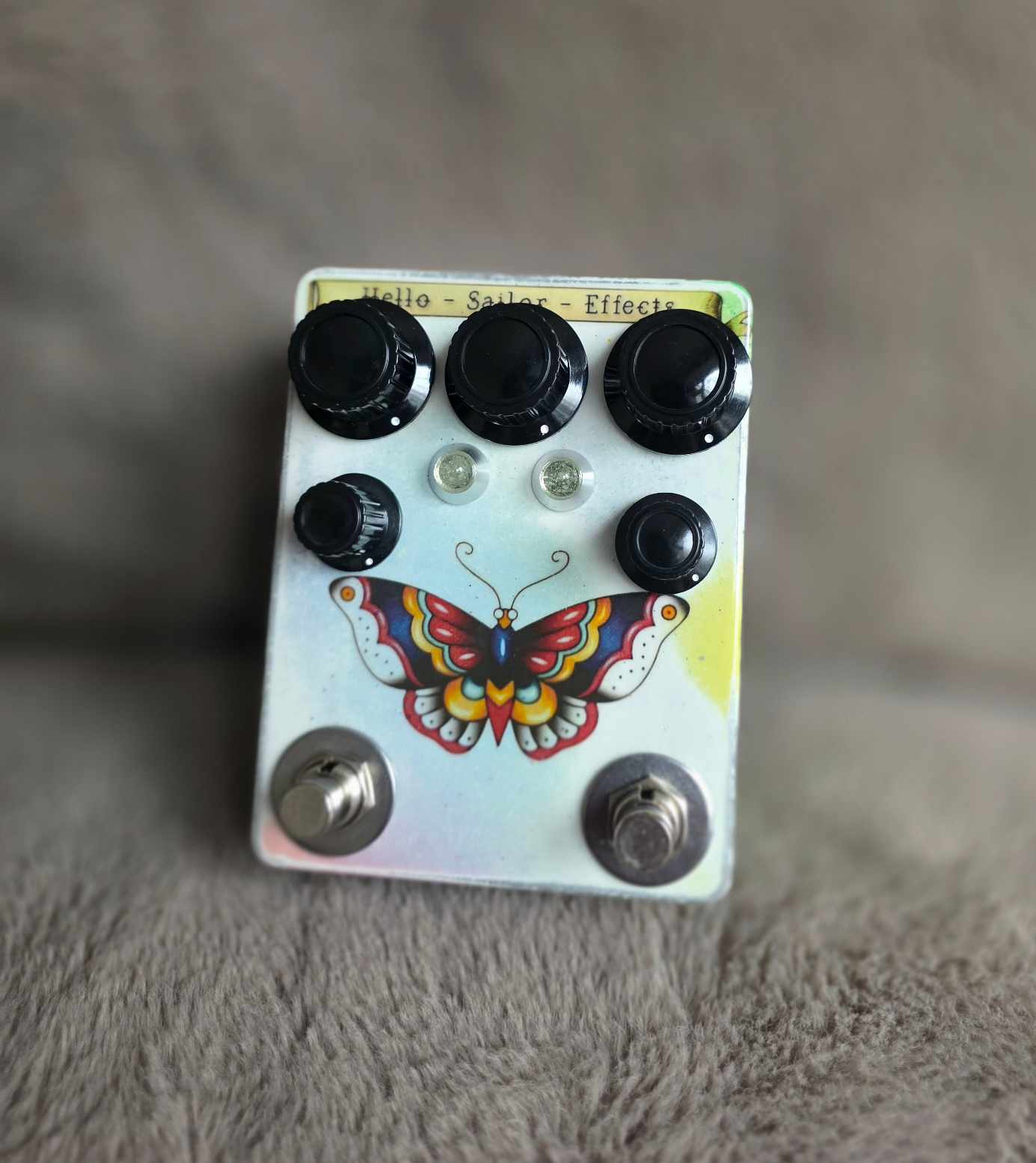
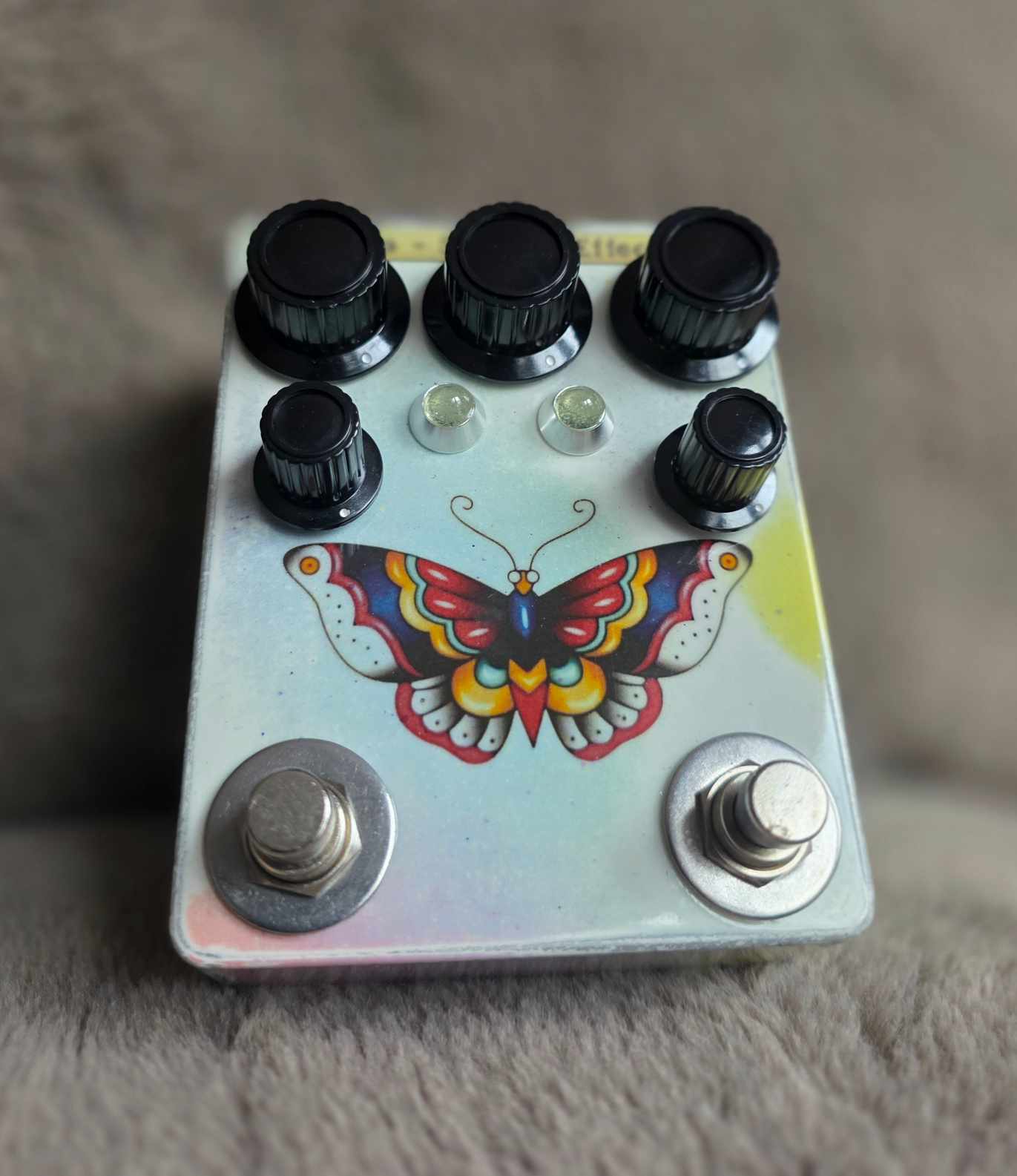
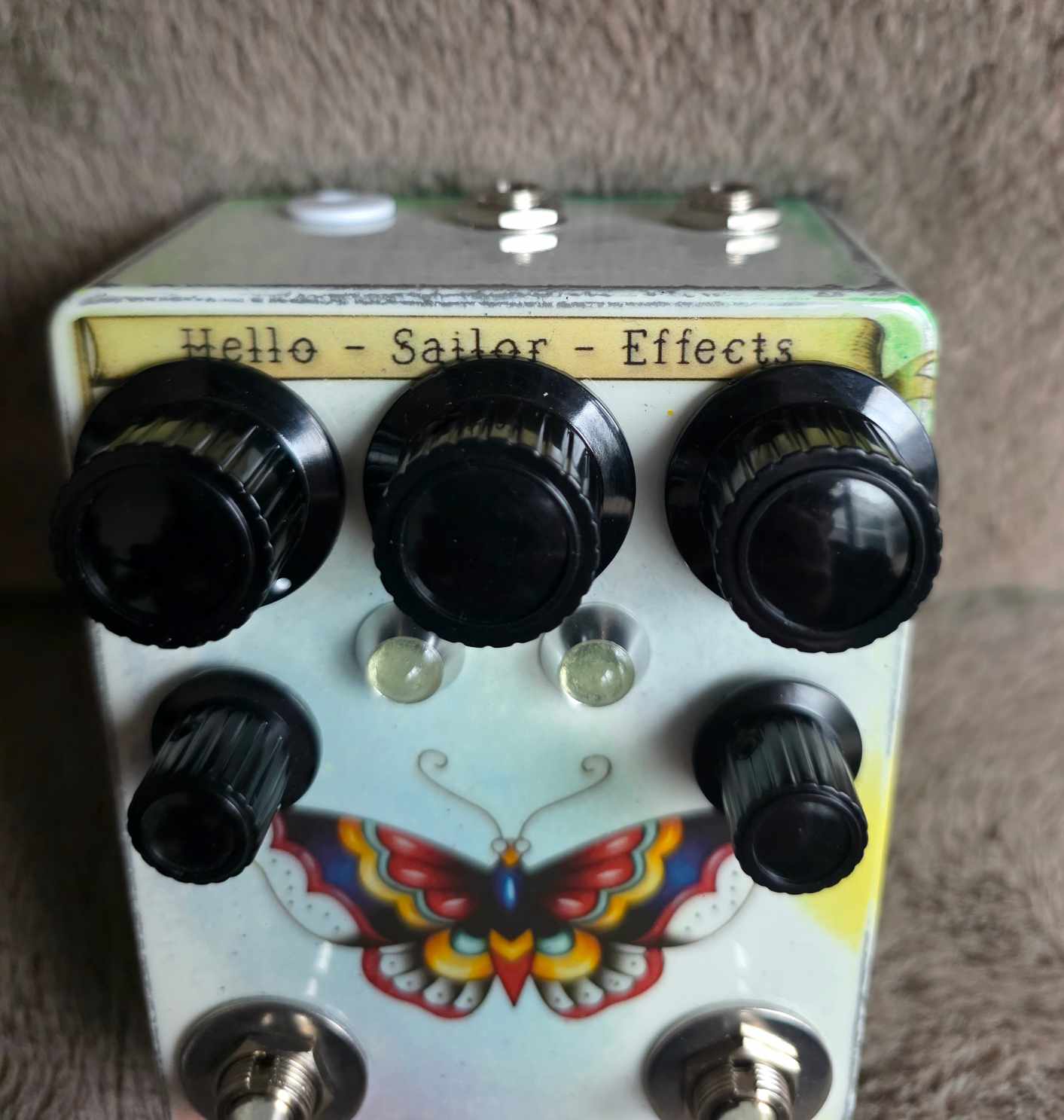
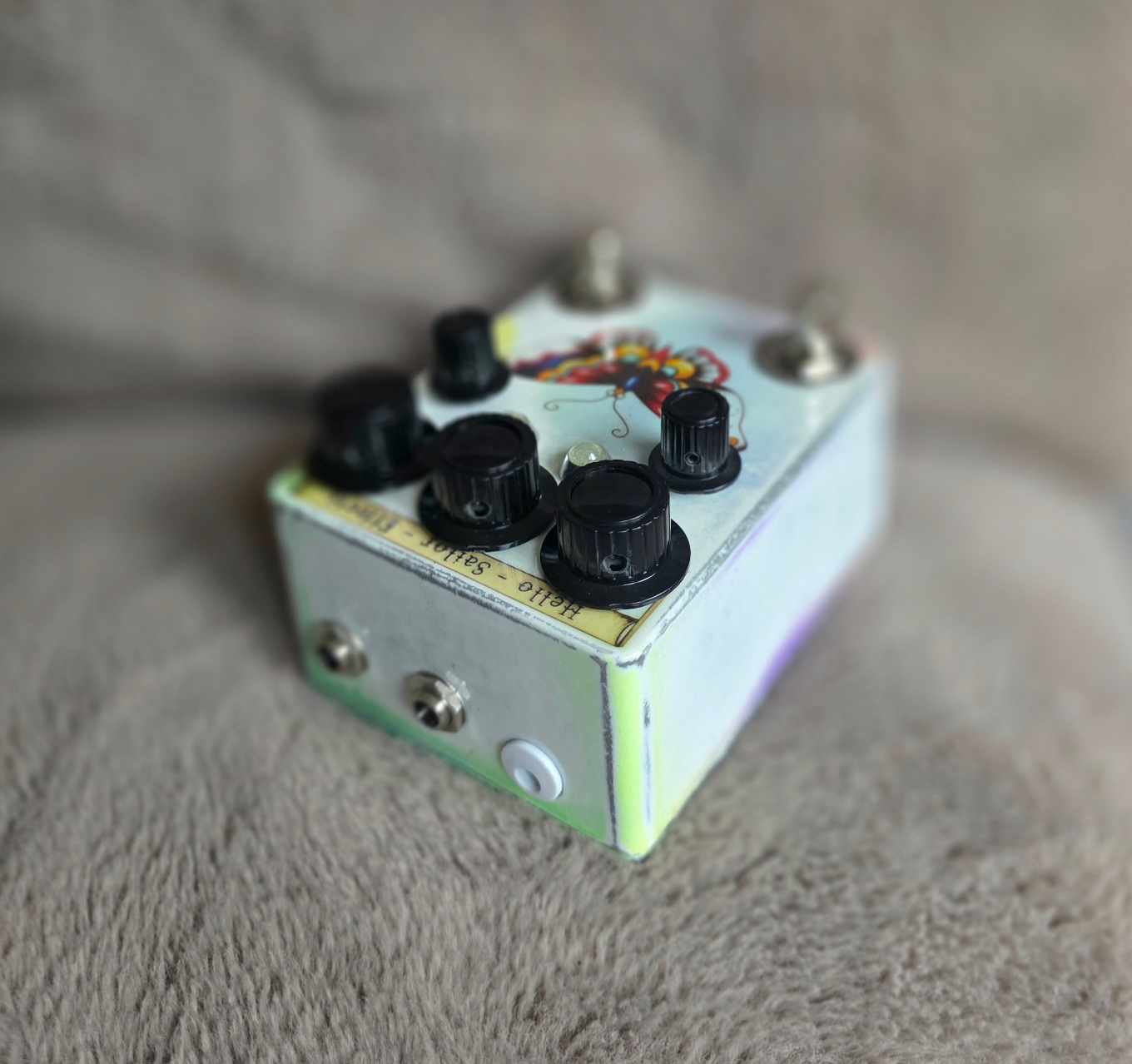
FreeRange | NKT CV7087 Germanium Rangemaster and Kossoff Drive | Handwired | Butterfly Nitrocellulose Finish
£350.00
1 in stock
Description
Description of Product
If I could only have one boost pedal, it would be a Rangemaster. And if I could only have one overdrive, it would be my Kossoff Drive.
The FreeRange is what happens when I put my two favourite circuits together in one enclosure.
For me, this is 70s rock in a box.
The Rangemaster has been responsible for some of my favourite guitar sounds of all time. It is an incredibly simple circuit, but the way it changes what reaches the next gain stage makes it far more useful than the name treble booster might suggest.
The Kossoff Drive is my flagship overdrive, developed around the sound and, more importantly, the playing style of Paul Kossoff from Free.
One of the things I have always loved about Kossoff’s playing is how much control he had over his sound without constantly changing settings. His guitar volume and picking attack were doing much of the work. That is exactly what I wanted from this circuit.
What makes the Kossoff Drive particularly important to me is how I build and tune it.
Every gain stage is individually hand tuned.
I use an audio probe to listen to what is happening at each stage of the circuit, then use a potentiometer during the tuning process to dial in the operating point until the gain sounds right to my ears.
It is not simply a case of following a schematic, soldering everything together and hoping for the best.
I want the stages to work together. Too much gain in one place can make the sound congested. Not enough somewhere else and it loses some of the character I am looking for.
That is the bit that matters to me. Getting each stage working at the right point so the whole circuit responds properly.
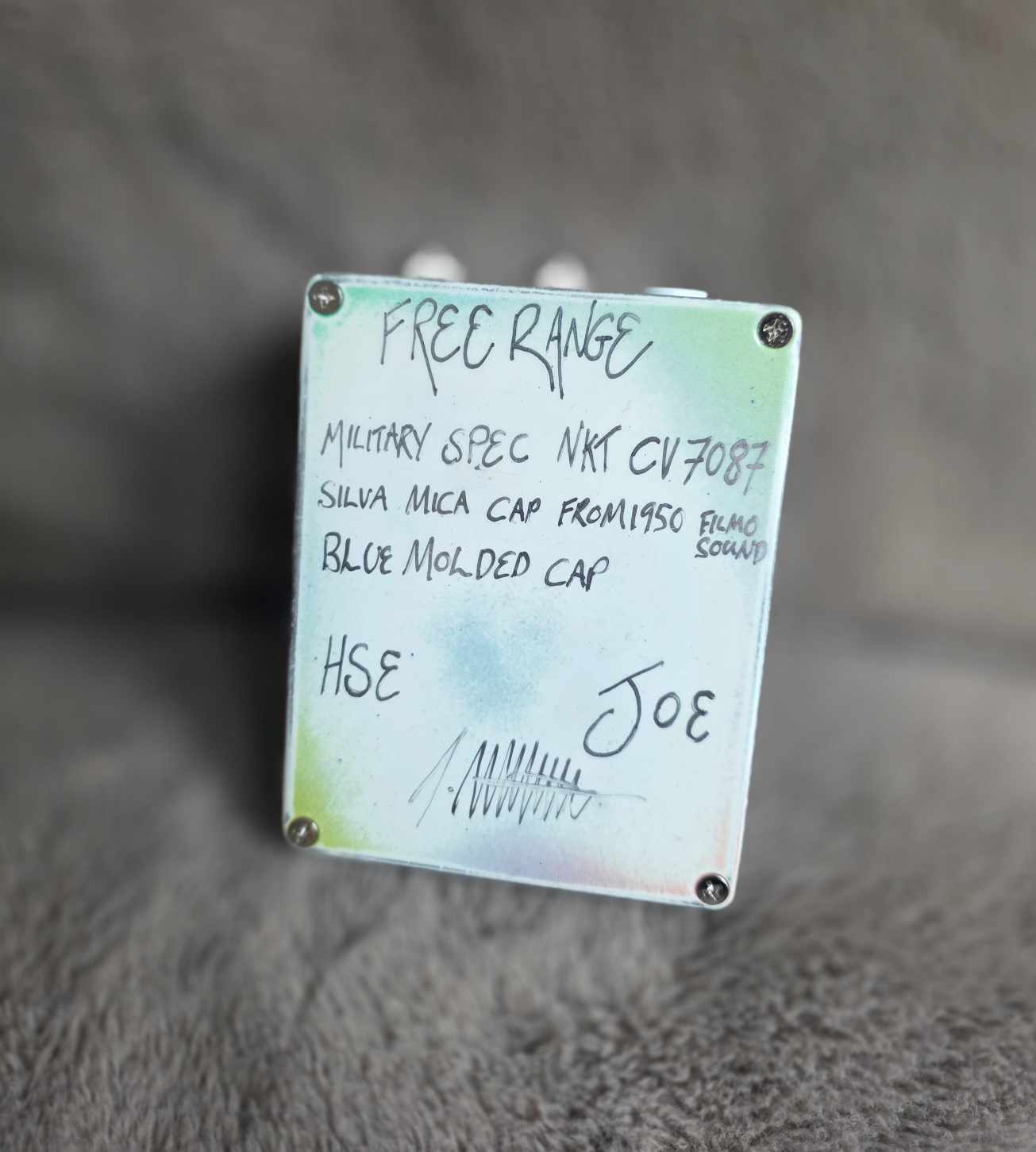
The Rangemaster side of this particular FreeRange uses a military specification Newmarket NKT CV7087 germanium transistor, with its own gain control.
The NKT CV7087 is one of my preferred germanium devices for these builds. The Rangemaster circuit is particularly sensitive to transistor selection and the conditions in which it operates, so I pay close attention to how each one responds.
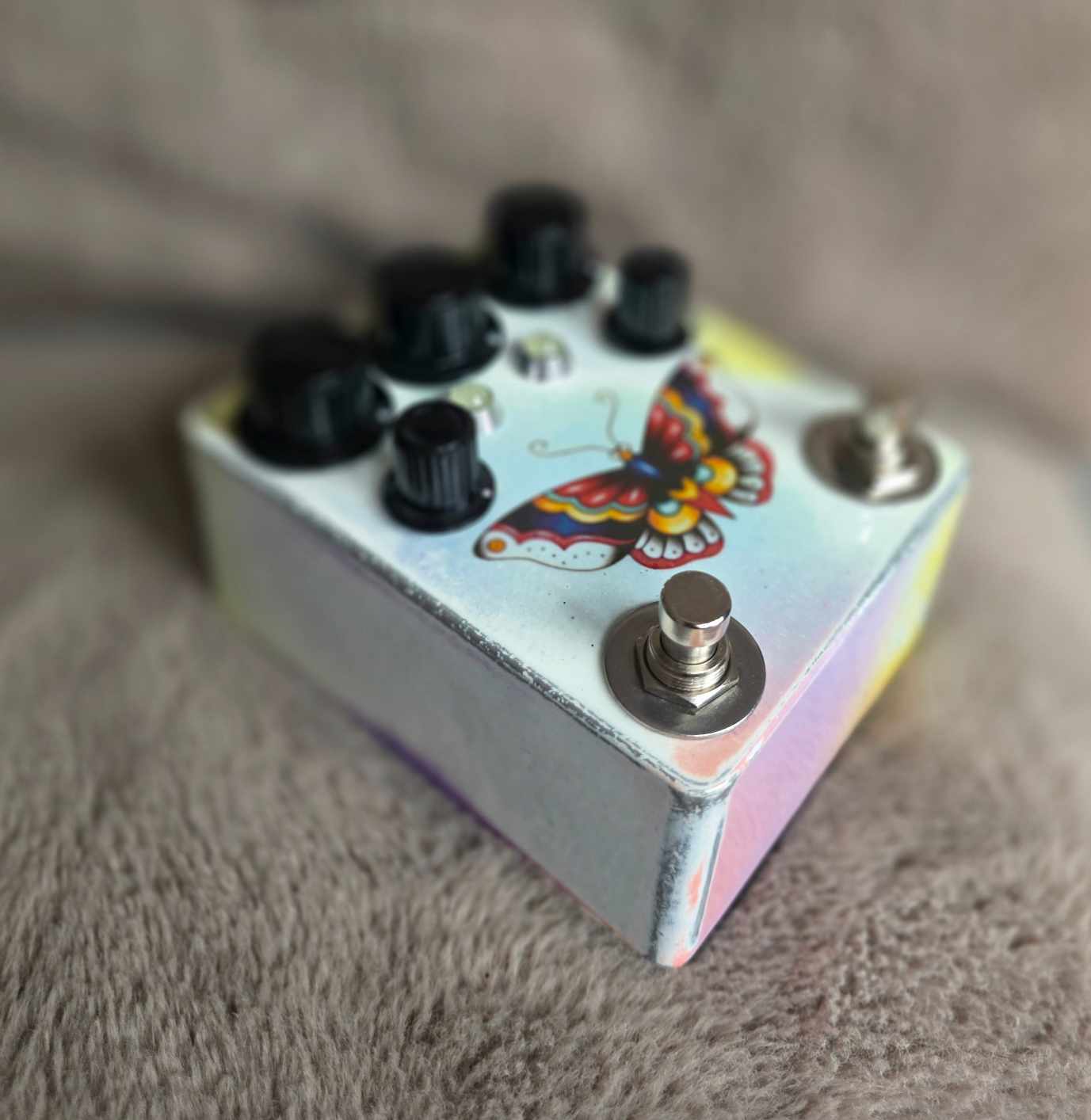
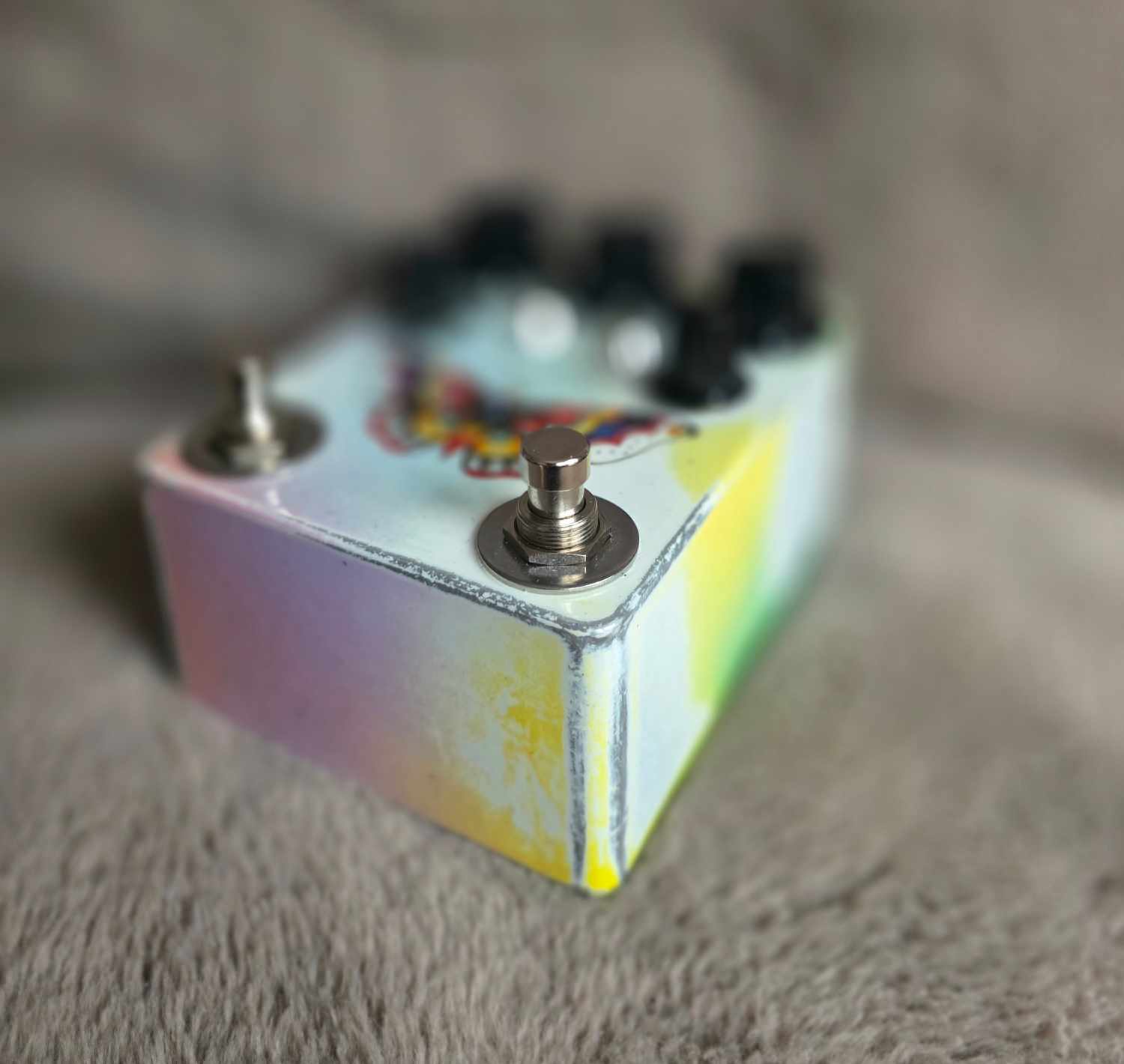
The two circuits have independent footswitches, allowing the Rangemaster and Kossoff Drive to be used separately or together.
Inside, everything is handwired on traditional tagboard using a mixture of vintage and carefully selected components.
This build includes a vintage silver mica capacitor recovered from a 1950 Filmosound, along with a vintage blue moulded capacitor. The underside of the enclosure is individually handwritten with details of these components and the NKT CV7087 transistor.
I have always liked using parts that have a genuine connection to the equipment of the period. Not because an old capacitor automatically sounds better, but because I enjoy building new equipment using the same types of components and construction methods found in the originals.
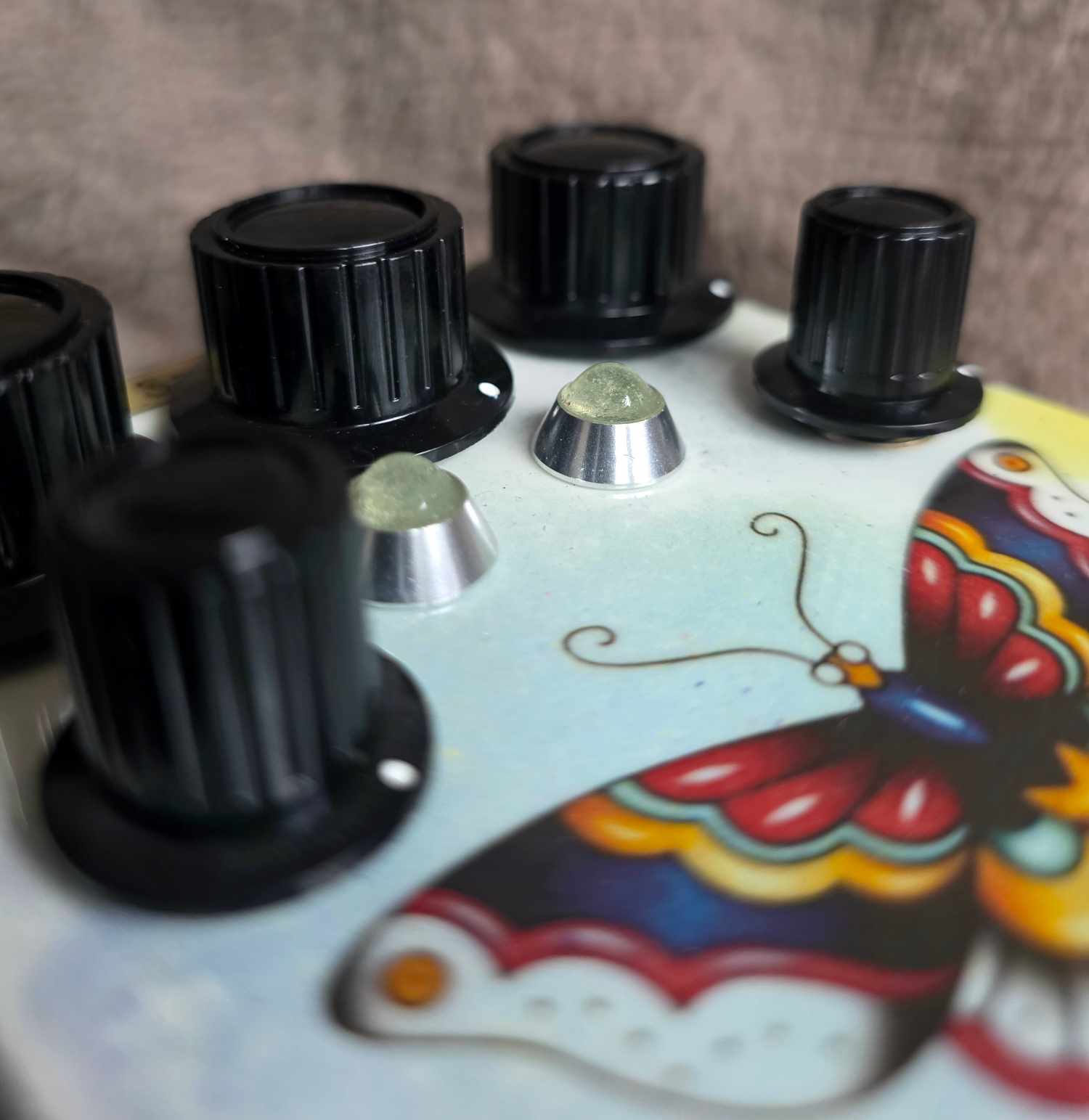
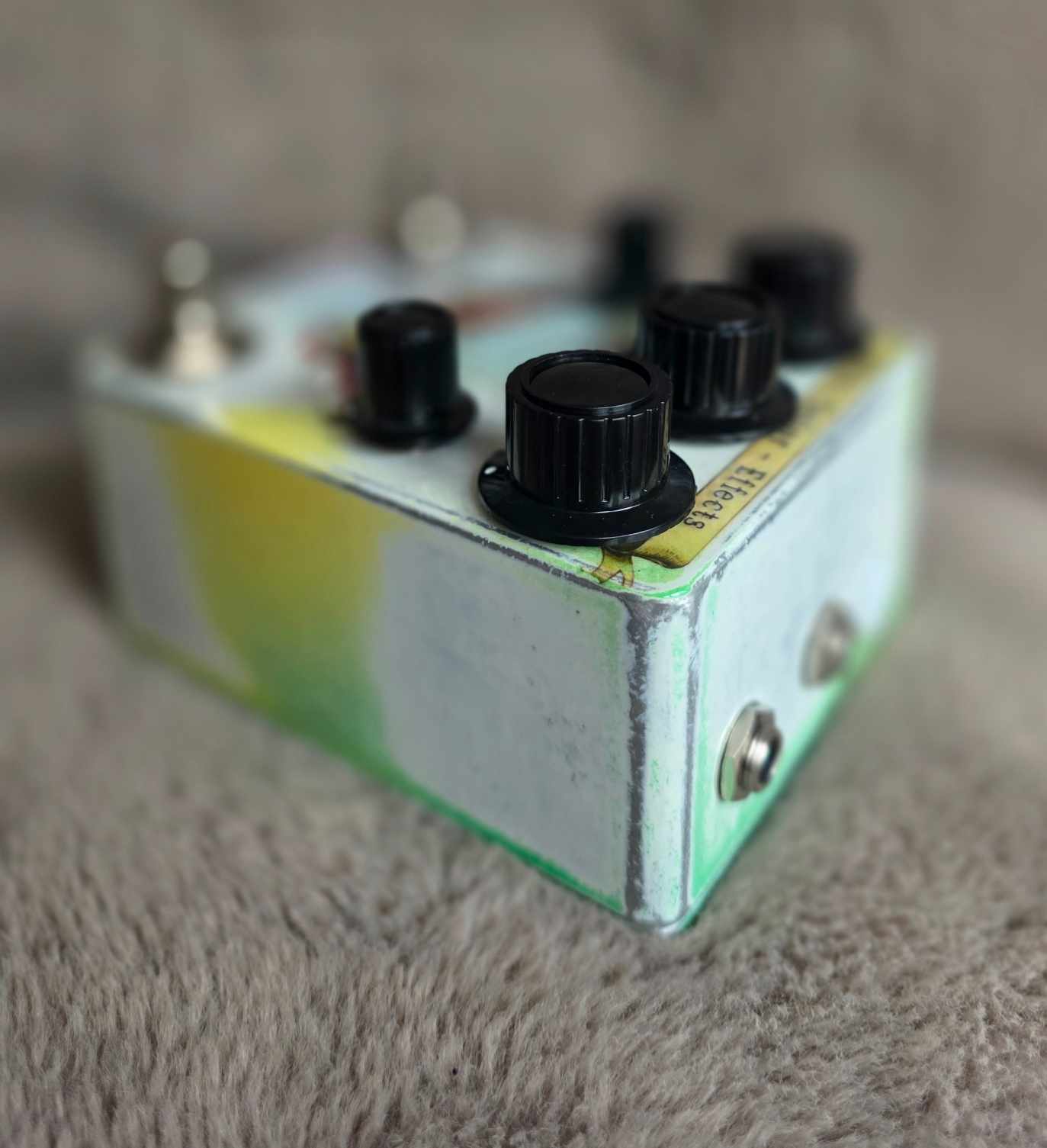
The enclosure is finished in nitrocellulose lacquer with butterfly artwork.
Nitrocellulose will gradually develop marks and character through handling and use. That is part of the reason I like working with it. The finish will change as the pedal gets older, making each build increasingly individual.
Like all my pedals, this is a one off.
Description of Sound
The FreeRange is really about the relationship between the two circuits.
On its own, the Rangemaster does what a good germanium treble booster should.
It changes the frequency content hitting the next gain stage, reducing some of the lower frequencies while bringing the upper midrange forwards.
Into an amplifier that is already beginning to break up, this can make quite a difference.
The bottom end tightens up, individual notes become more pronounced and the guitar takes on that familiar cutting, vocal character associated with so many of the British rock recordings of the late 60s and early 70s.
The gain control allows you to adjust the behaviour of the Rangemaster rather than simply treating it as a fixed boost.
Then there is the Kossoff Drive.
This is the circuit I normally set for my full lead sound with the guitar volume completely open.
From there, I work backwards.
Roll the guitar volume down and the signal driving the circuit is reduced. The amount and character of the overdrive changes, allowing you to move towards a more restrained rhythm sound without having to touch the pedal.
Pick lightly and it settles down.
Dig in and the sound becomes rougher, harder and more saturated.
The circuit responds to what you put into it, and I think that is far more important than simply having lots of gain available.
But the real reason I built the FreeRange is what happens when you combine the two.
With the Rangemaster feeding the Kossoff Drive, you are changing both the level and the frequency content entering the overdrive.
The Rangemaster can push the Kossoff Drive harder, bringing the midrange forwards and changing the way the gain stages respond.
This is where that familiar 70s British rock sound begins to appear.
Think about the way those old recordings have a guitar sound that is thick and driven, but still has definition. Individual notes come through, even when the guitar is being played hard.
That is what I have been chasing with this combination.
It is not simply a case of switching on two pedals and getting twice as much distortion.
The Rangemaster changes what the Kossoff Drive is being asked to amplify. That changes the gain character, the amount of saturation and how the notes sit together.
And you still have the guitar volume control and your picking attack to work with.
You can use the Rangemaster alone to drive an amplifier, use the Kossoff Drive on its own for that controllable overdrive, or combine them for the fuller gain sound.
There is a lot of usable ground between those settings.
Paul Kossoff was the original inspiration for the overdrive, but the FreeRange is about considerably more than trying to reproduce one guitarist’s sound.
It is about giving the player control over how the gain develops.
For me, that is what makes these two circuits work so well together.
Real World Testimonials
“I love that I can use the Rangemaster and Kossoff Drive Channels independently”
Guitar Pedal X, Stefan Karlsson, FreeRange owner review.
This is a one off Hello Sailor Effects FreeRange combining my two favourite circuits.
A military specification NKT CV7087 germanium Rangemaster with gain control, feeding my individually hand tuned Kossoff Drive.
Completely handwired on traditional tagboard, using vintage components including a silver mica capacitor recovered from a 1950 Filmosound and a vintage blue moulded capacitor.
Finished in nitrocellulose lacquer with butterfly artwork and individually handwritten component details on the underside.
I will build more FreeRange pedals.
I will not build another exactly like this one.
Throughout November, all Hello Sailor Effects pedals are available with 20% off using code HSE20.
Available at hellosailoreffects.com/shop
If it speaks to you, it is available.
Reviews
There are no reviews yet.