
Hello Sailor Effects Brian May Treble Booster with Ceramic CIL BC108B Blue Metallic
£250.00
1 in stock
Description
Description of Product
This pedal came from a much larger question.
How can a circuit containing one transistor and only a handful of components become such an important part of Brian May’s sound?
To find out, I built a Brian May treble booster for the Hello Sailor Effects YouTube channel, converting the verified vero layout into my own traditional tagboard construction. I then changed the input capacitor, listened through clean and driven amplifiers, and compared a selection of silicon transistors under the same conditions.
The transistor I kept returning to was a rather unusual CIL BC108B.
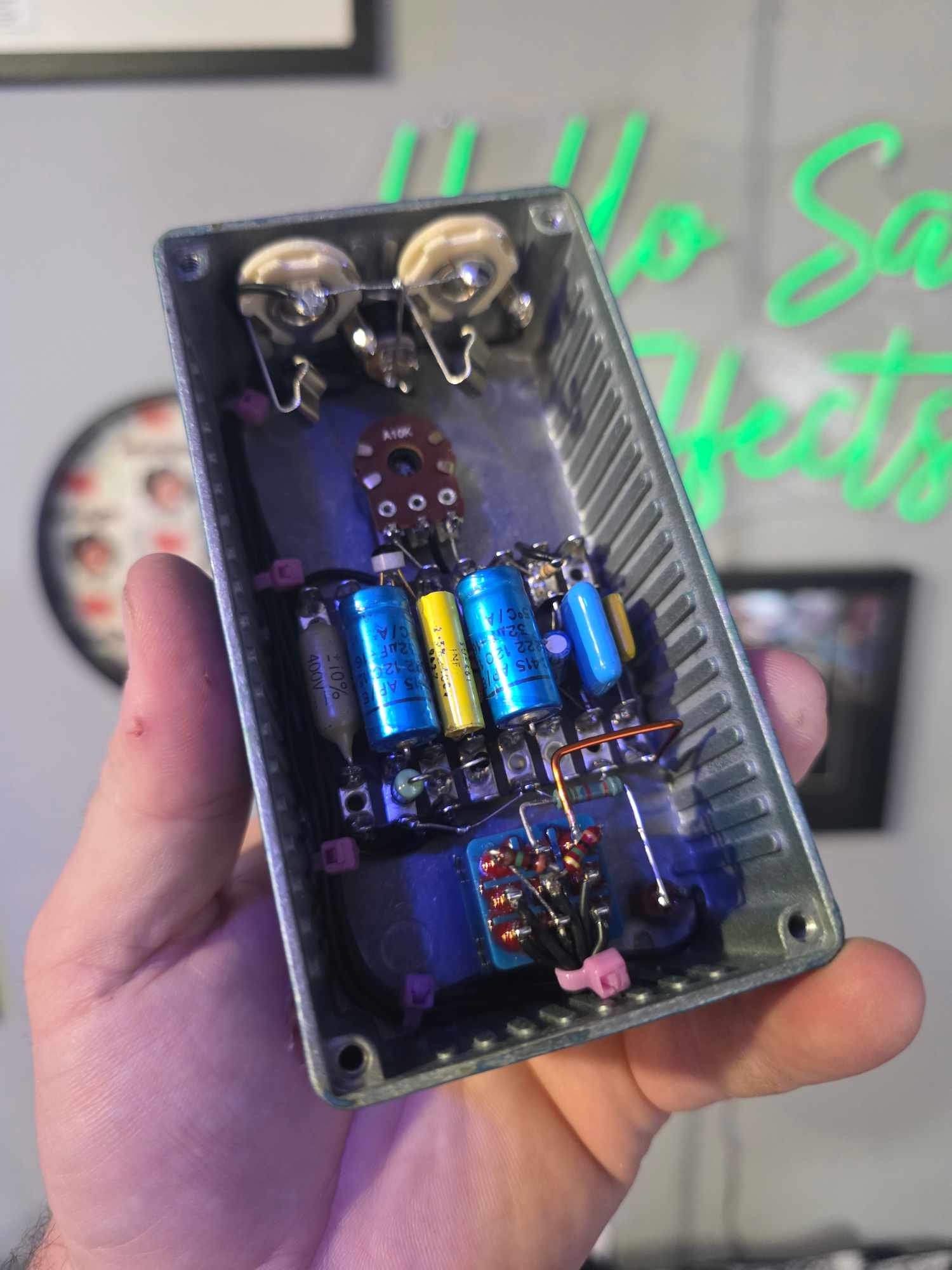
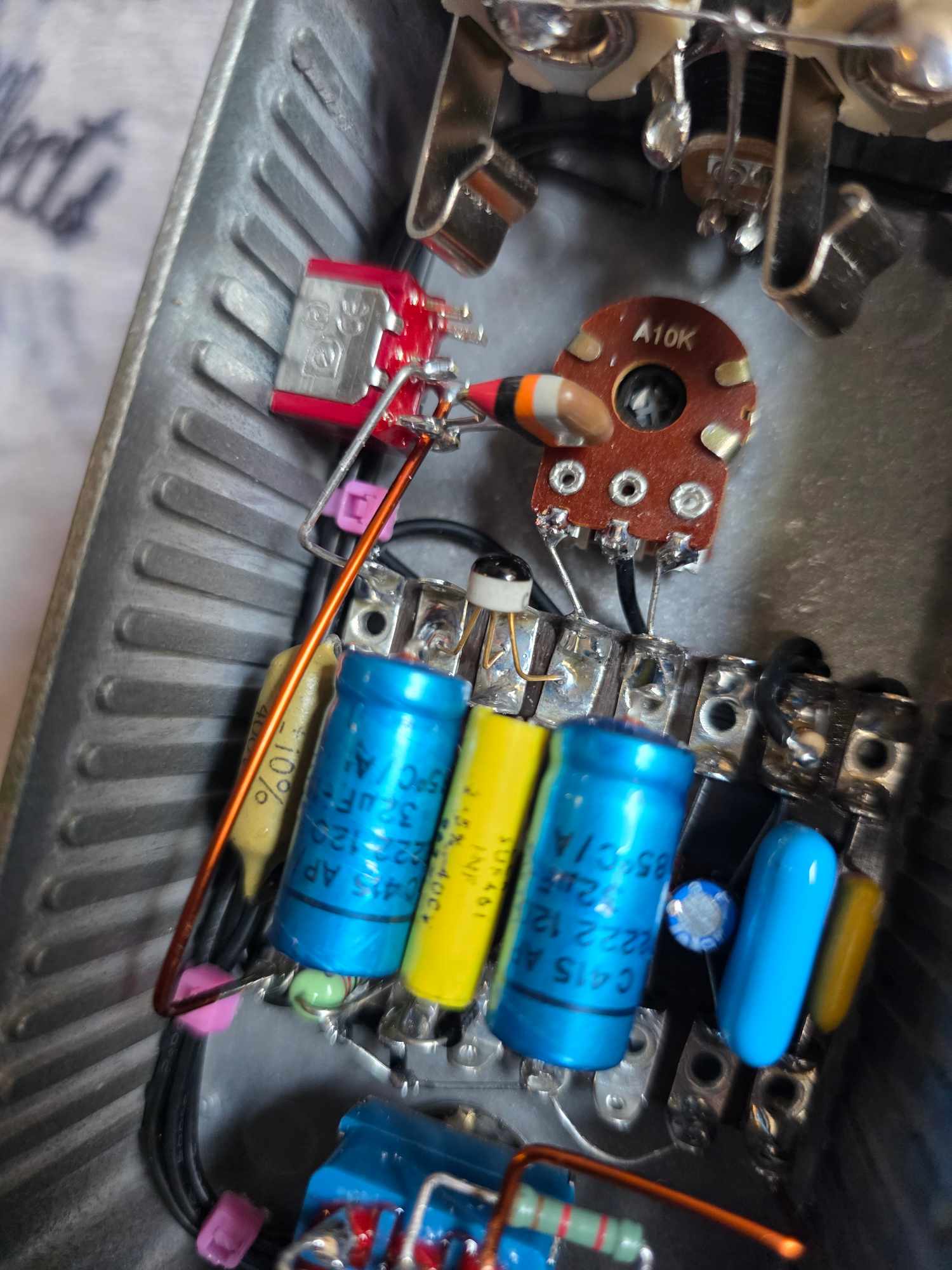
Electrically, it is a silicon NPN transistor measuring around 150 hFE. Physically, it is unlike any ordinary BC108B I have encountered. It has a white ceramic body, a black cap and gold plated pins, a form of construction normally associated with specialist industrial and high reliability electronics rather than guitar pedals.
The gold plating was not added for tone. It was used because gold resists corrosion and remains solderable after long periods in storage. What makes these transistors interesting is not a promise of hidden magic, but the care and expense represented by their construction.
I found ten of them in an unmarked collection of old components. The seller did not know what they were, and despite looking since, I have never found another matching group.
Several other transistors worked perfectly well in the circuit, including the specified BC182L. The CIL BC108B simply gave me the response I preferred when the comparisons were finished. It was slightly more settled through the upper mids and produced the most convincing balance between clarity, attack and sustain.
That is why one has been permanently fitted to each of these pedals.
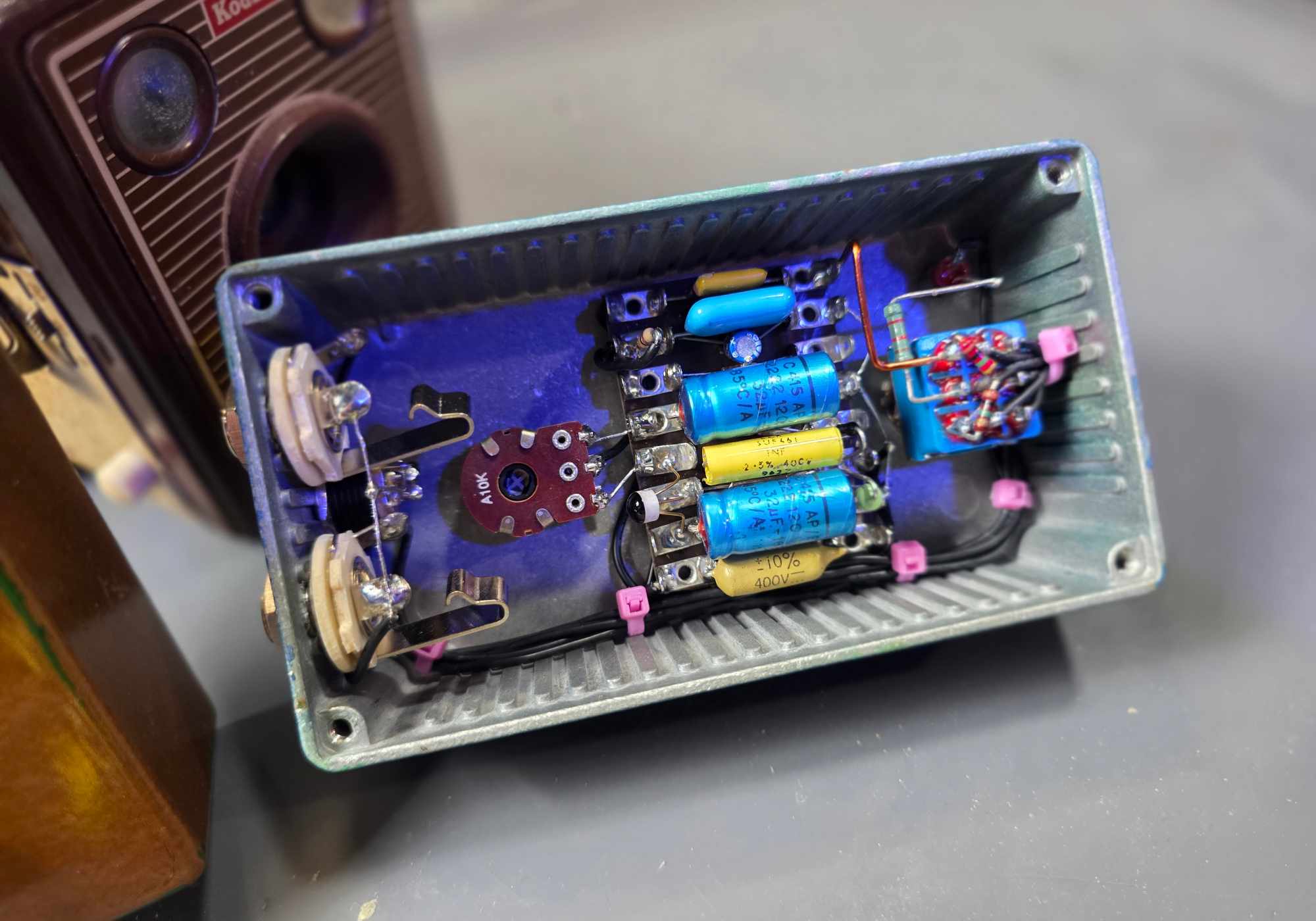
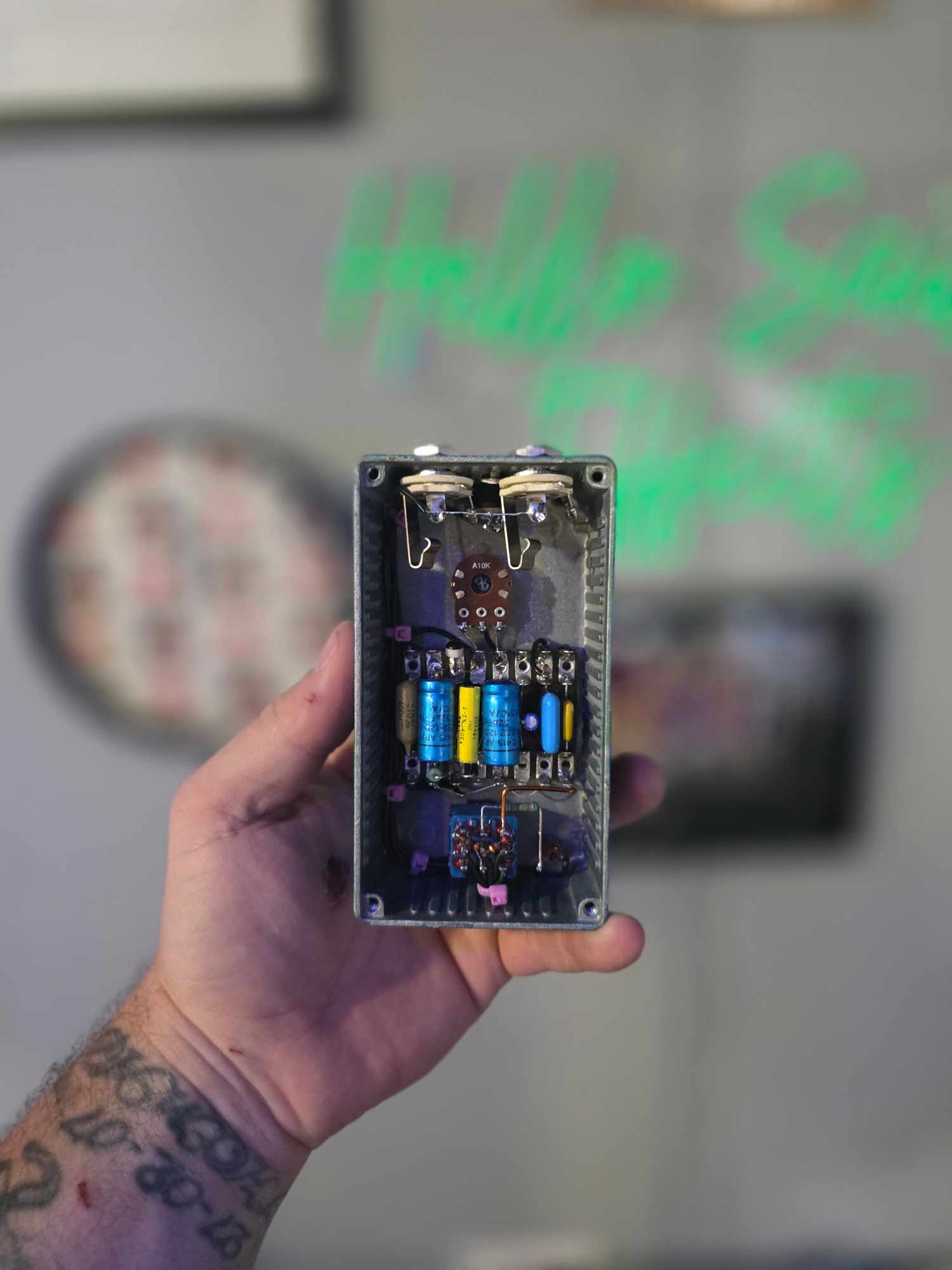
Every circuit is built by hand on traditional tagboard, with the components positioned and wired individually in my workshop. There are no production boards and no automated assembly. The construction inside each enclosure is the same construction shown throughout the video.
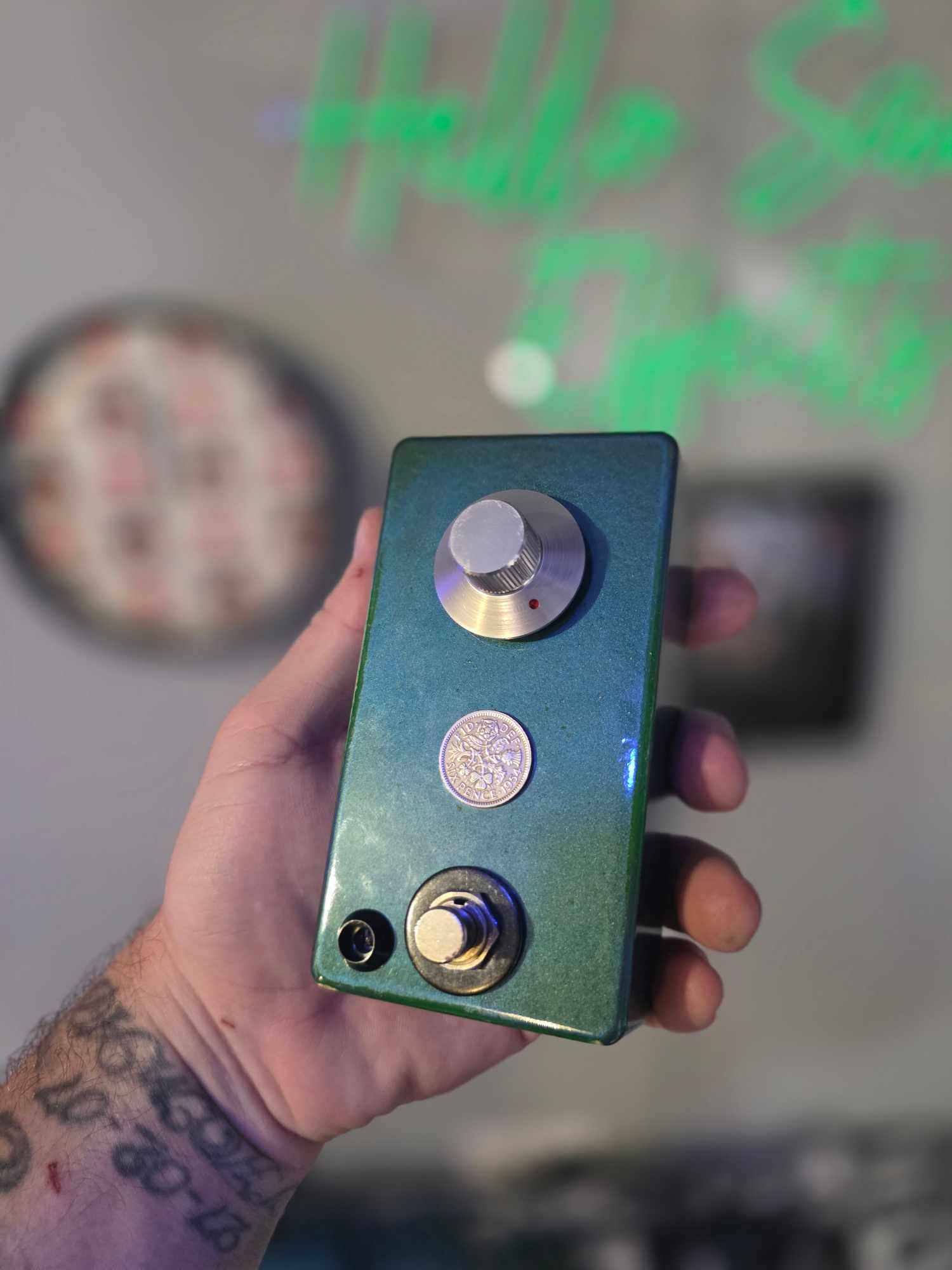
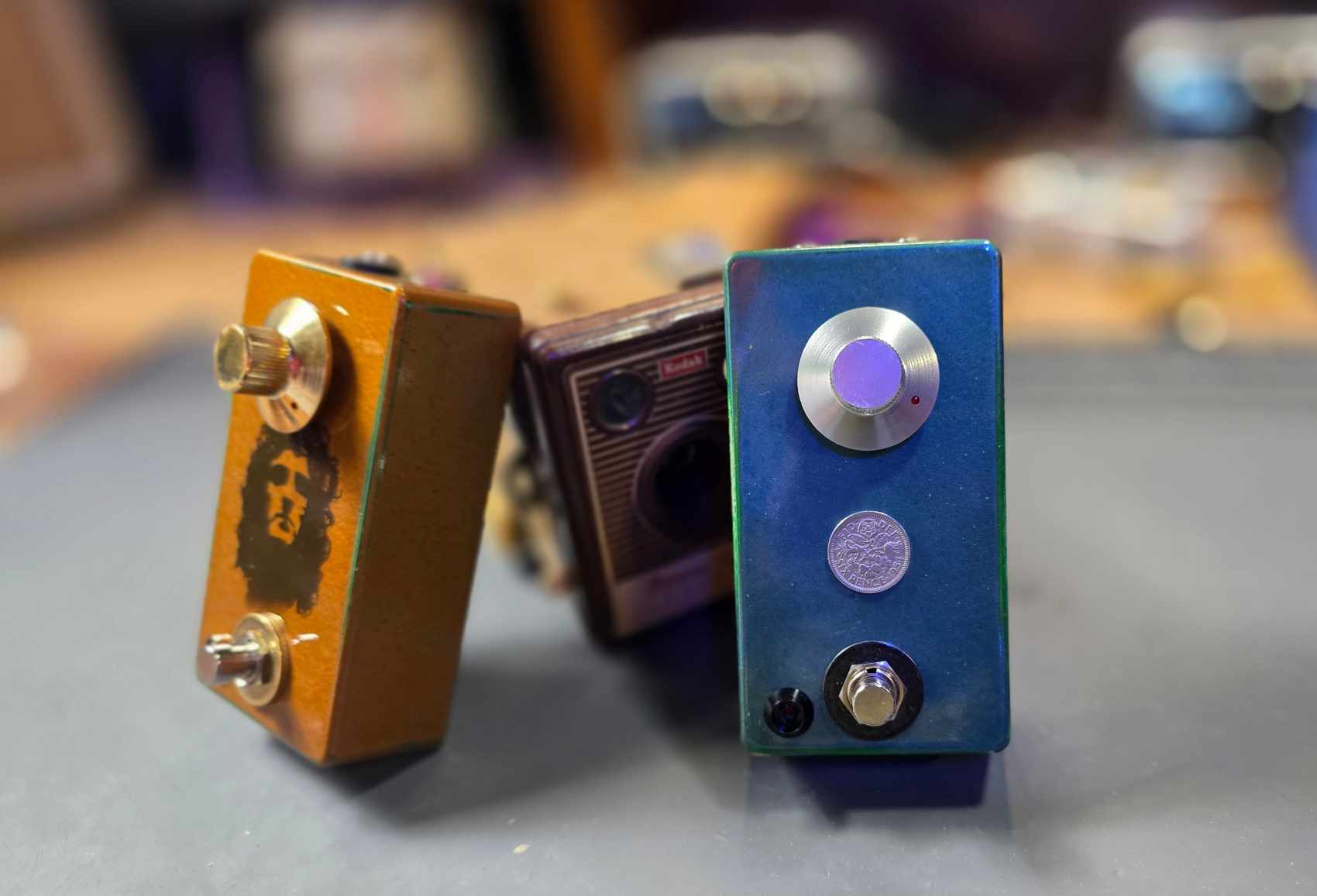
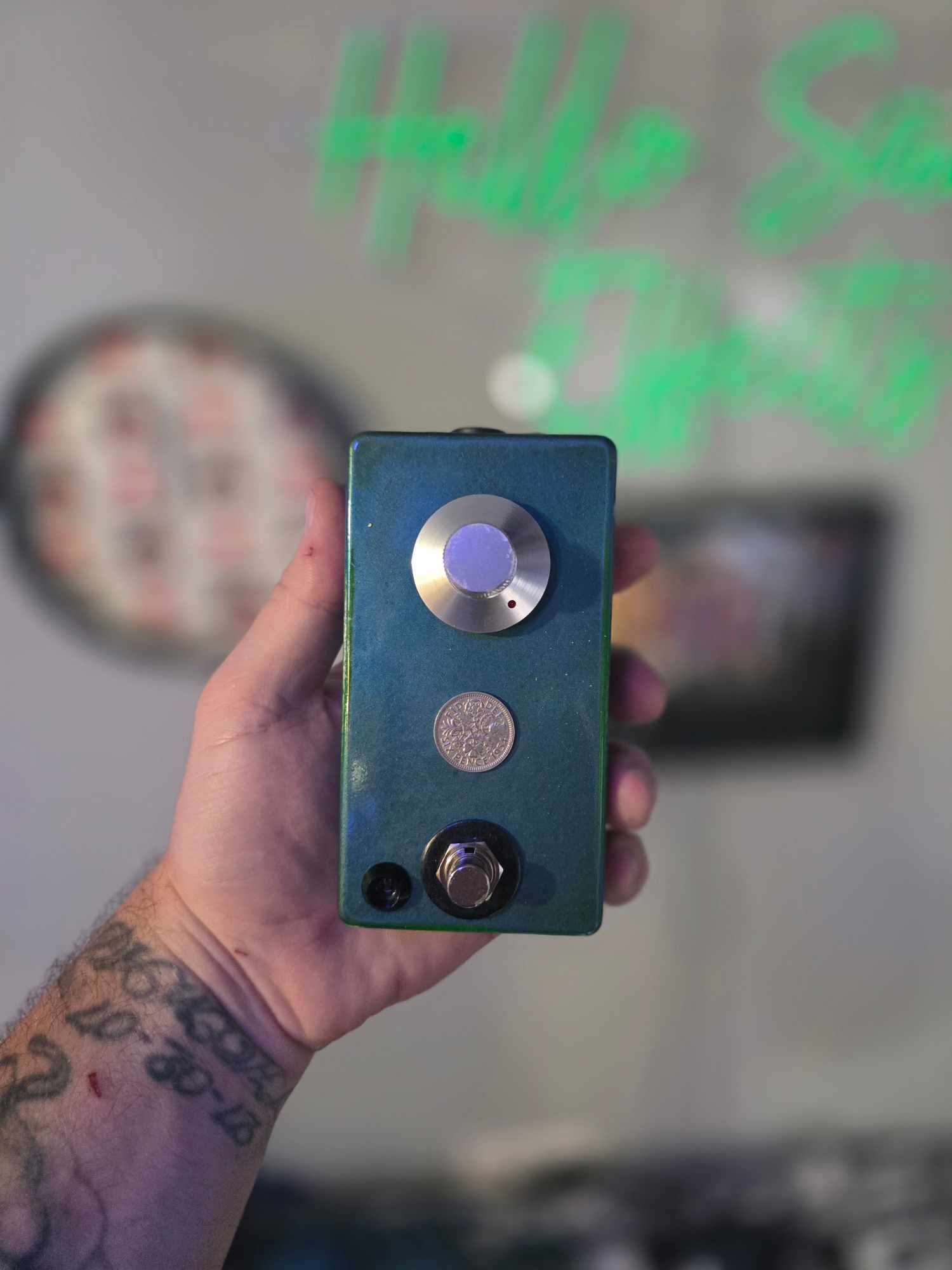
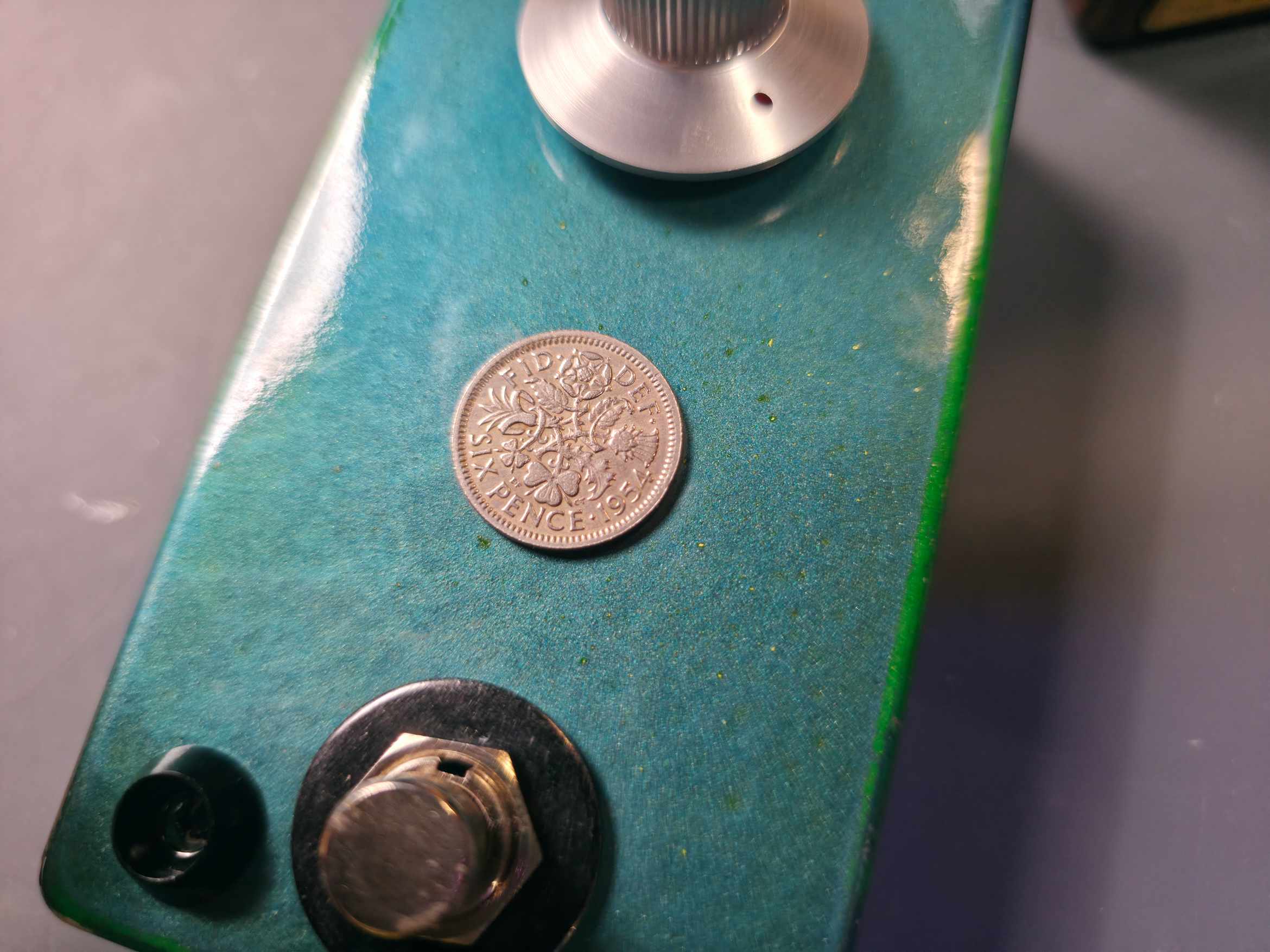
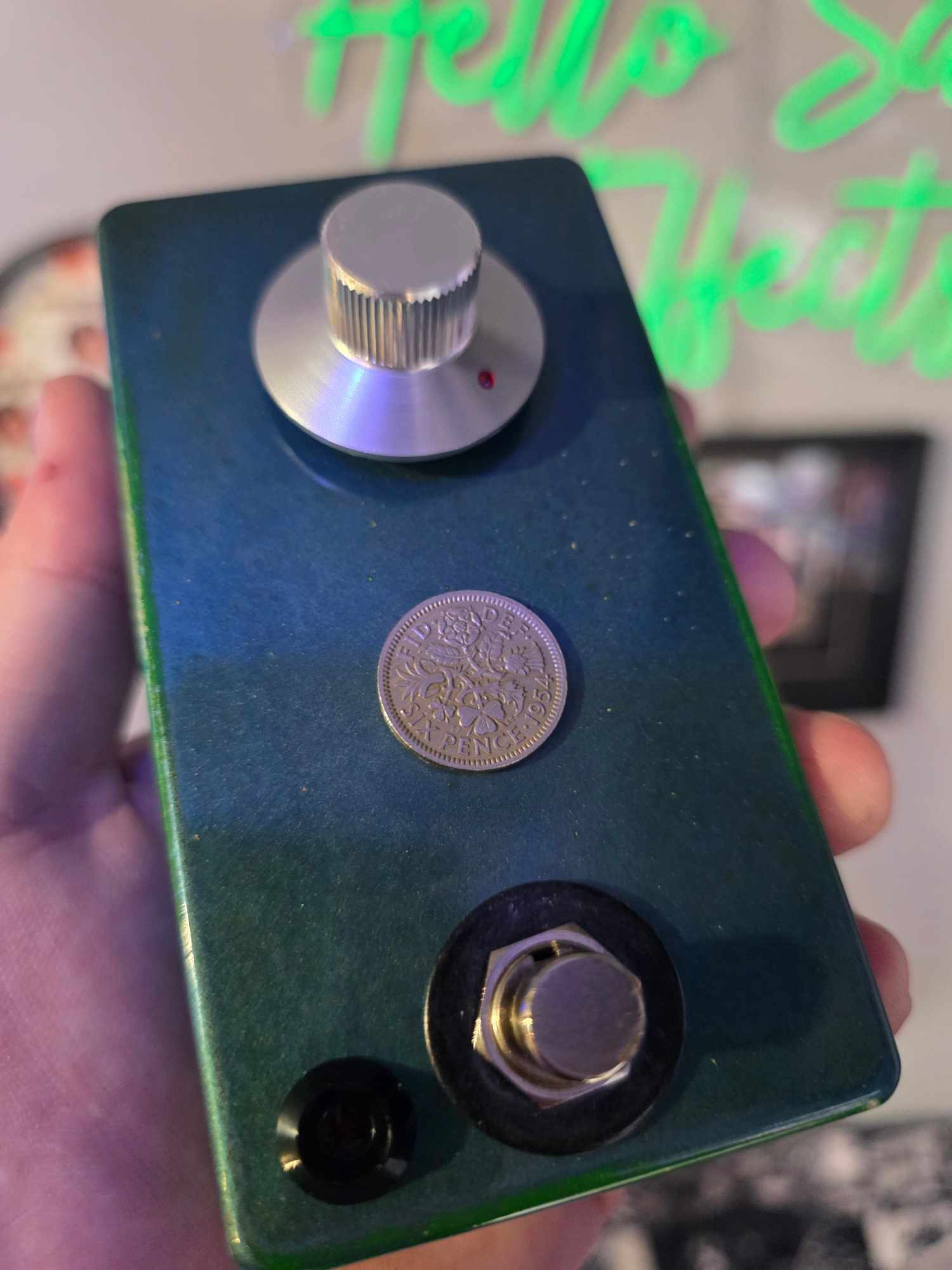
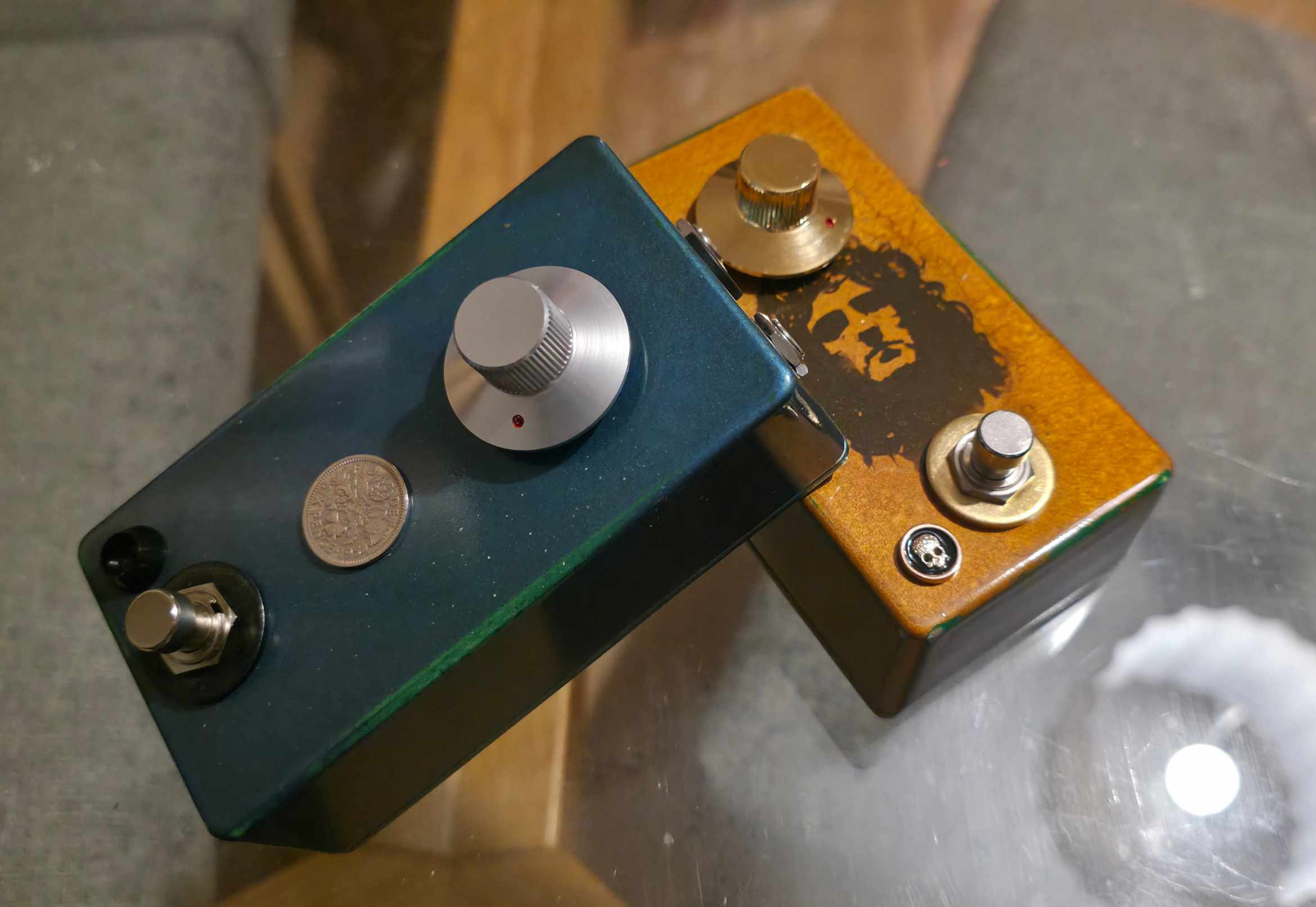
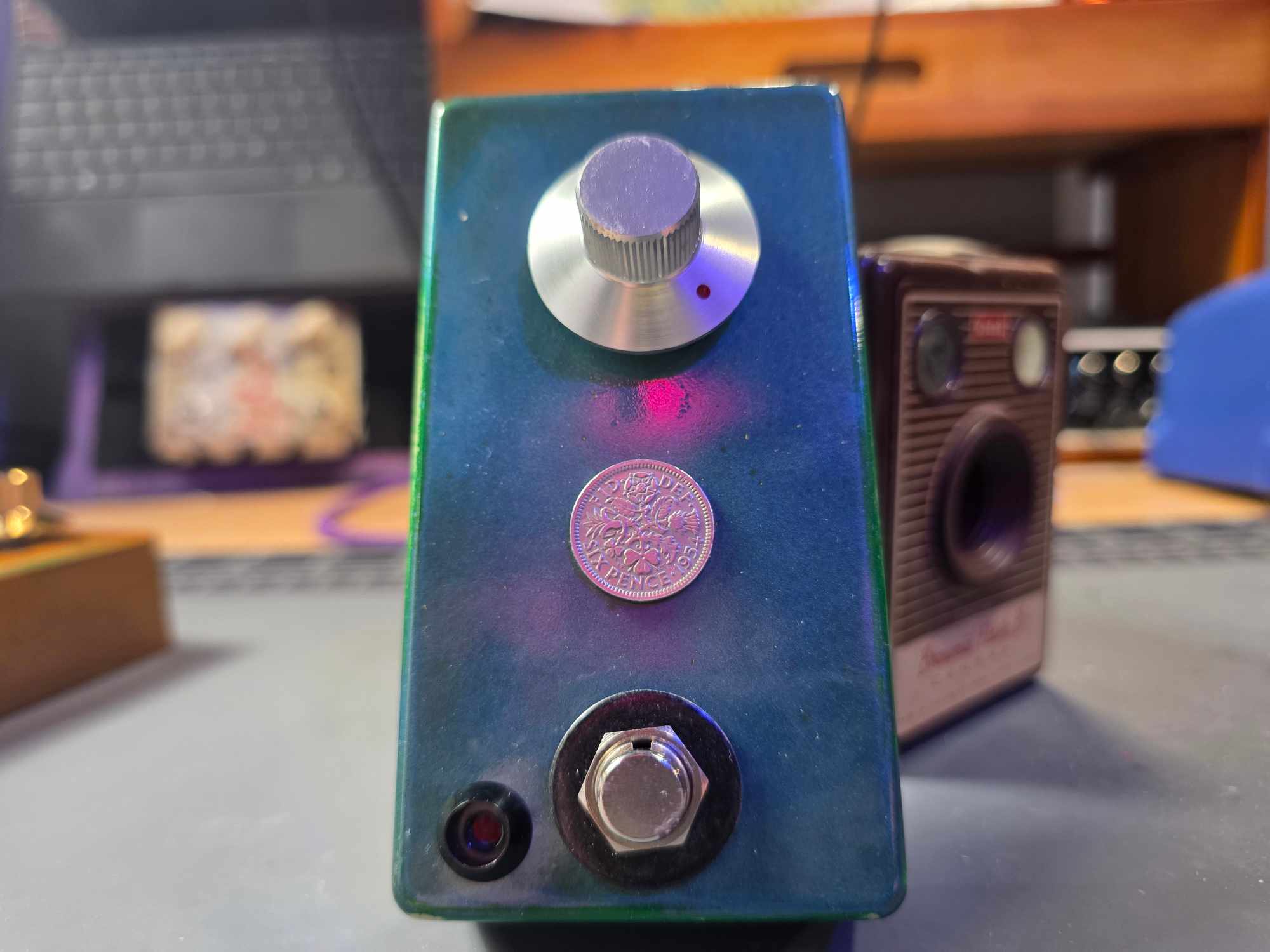
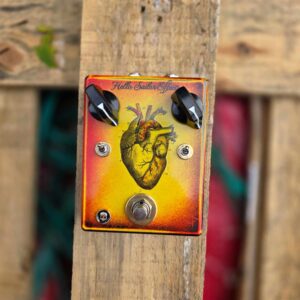
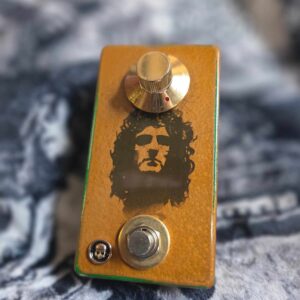
This version is finished in aged metallic blue with sixpence artwork and silver knob.
Both pedals use the same circuit, construction and component selection.
Description of Sound
This is not a clean boost designed to leave the rest of your rig untouched.
Its purpose is to change what reaches the amplifier.
The small input capacitor removes much of the lower frequency content before the signal is amplified. On its own, particularly through a completely clean amplifier, that can make the pedal sound bright, lean and quite direct.
The reason becomes clear when the amplifier is already beginning to work.
By holding back the low end, the pedal stops the front of the amplifier from becoming loose or crowded. The upper mids are pushed forwards, individual notes become easier to separate and the amplifier produces a more focused form of overdrive.
With an edge of breakup amplifier, chords become tighter and more immediate. Turn the amplifier further and the pedal moves into the vocal, sustained lead character associated with Brian May’s treble booster rig.
It does not recreate that sound independently. The guitar, pickups, amplifier, speakers and playing remain part of the result. What it does is place the amplifier in the right part of the conversation.
The single control governs the amount of signal sent into the amplifier. Lower settings add definition and help the guitar sit forwards without substantially increasing distortion. Higher settings push the amplifier harder, giving more compression, sustain and harmonic movement.
The response also follows the guitar volume control well. Turning the guitar down reduces the aggression and gives a clearer, lighter sound. Bringing the guitar back up restores the full push without needing to return to the pedal.
It works best with an amplifier that has some warmth and movement already present. Through a flat clean platform it is revealing and unapologetically bright. Through an amplifier near breakup, its purpose becomes much easier to understand.
Real World Testimonials
“My rig now has 2 epochs: before HSE Rangemaster, and after HSE Rangemaster.”
Reverb feedback
“Excellent Rangemaster. One of the best and useful ones I’ve played.”
Reverb feedback
“Top notch! Best Rangemaster clone I’ve played!!!”
Reverb feedback
Two of these aged metallic blue pedals were built during the making of the Brian May treble booster video.
Each contains one of the ceramic CIL BC108B transistors selected during the filmed comparison and each is wired by hand on traditional tagboard.
I do not know whether I will find another group of these transistors, so this particular version will not be repeated once the two pedals have found their homes.
Two aged metallic blue versions exist.
If one of them speaks to you, it is available.
Reviews
There are no reviews yet.