








Hello Sailor Effects Clyde McCoy Dual Inductor Wah
£300.00
Out of stock
Description
Description of Product
The wah is one of those pedals that looks like there cannot possibly be much going on inside it.
Then you start changing things.
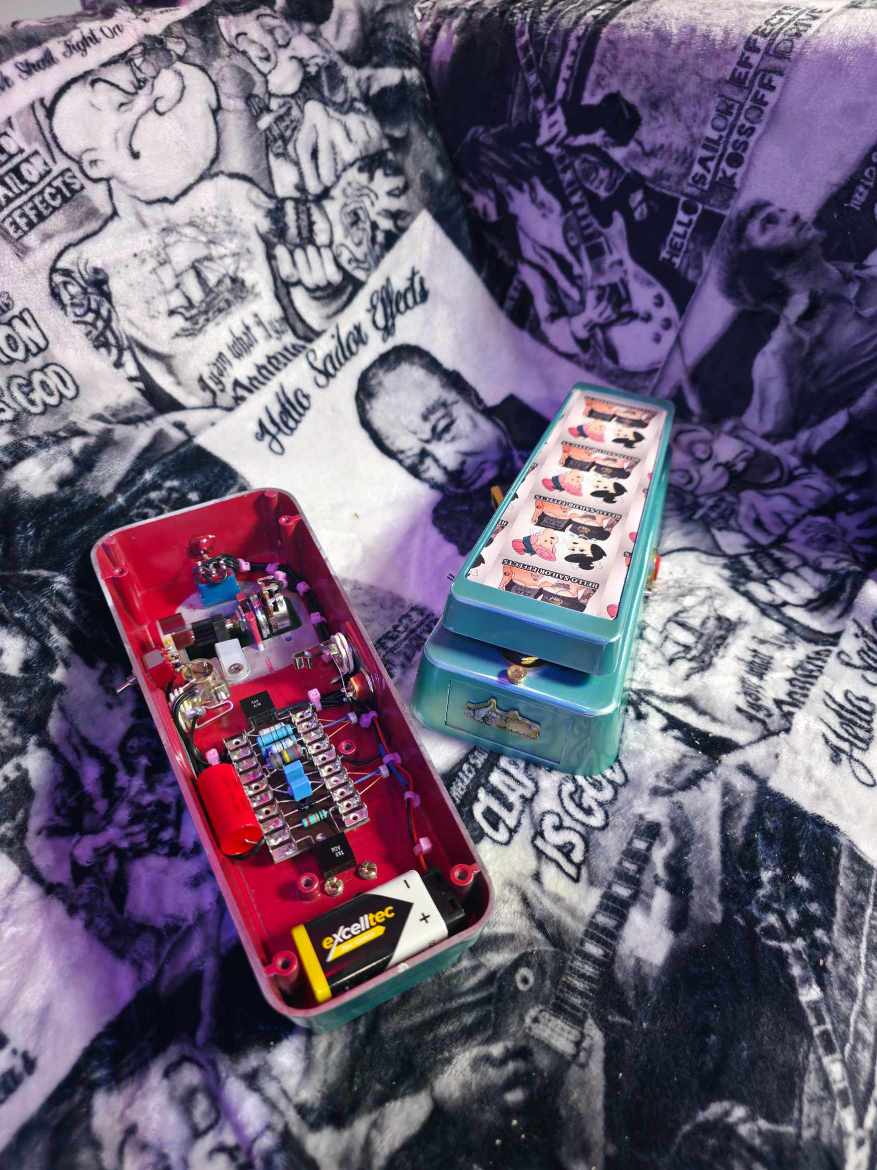
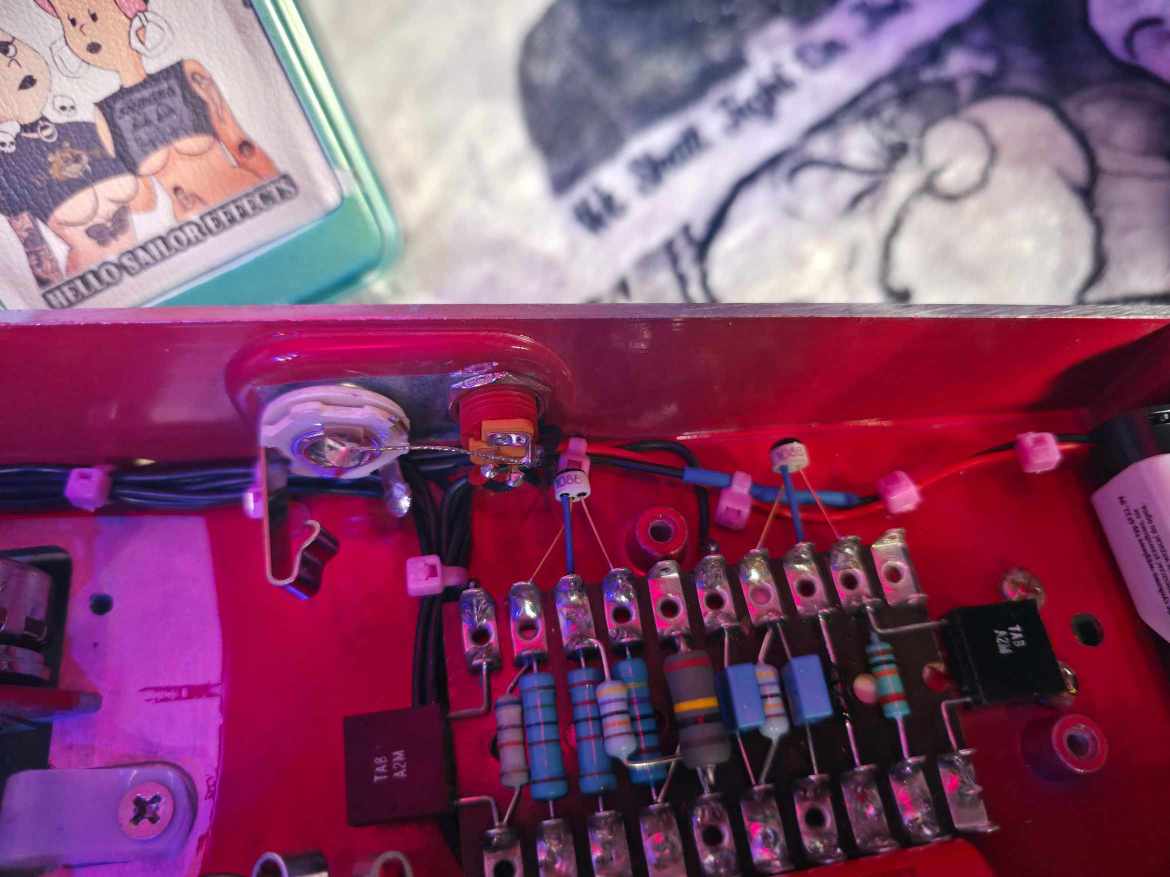
This one came from me wanting to go right back to the beginning and build the early Clyde McCoy wah circuit properly, by hand, on tagboard. The circuit traces its lineage back to the first commercial wah pedals that appeared in 1967.
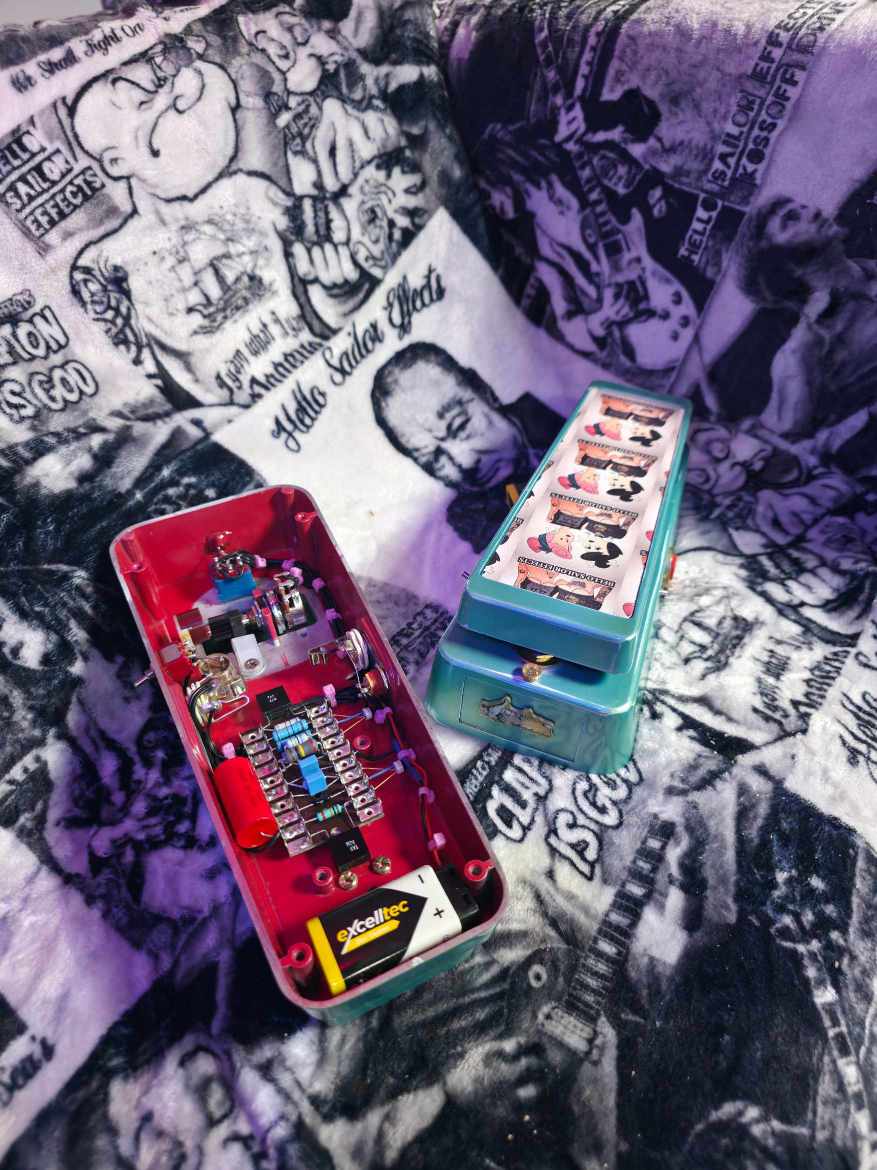
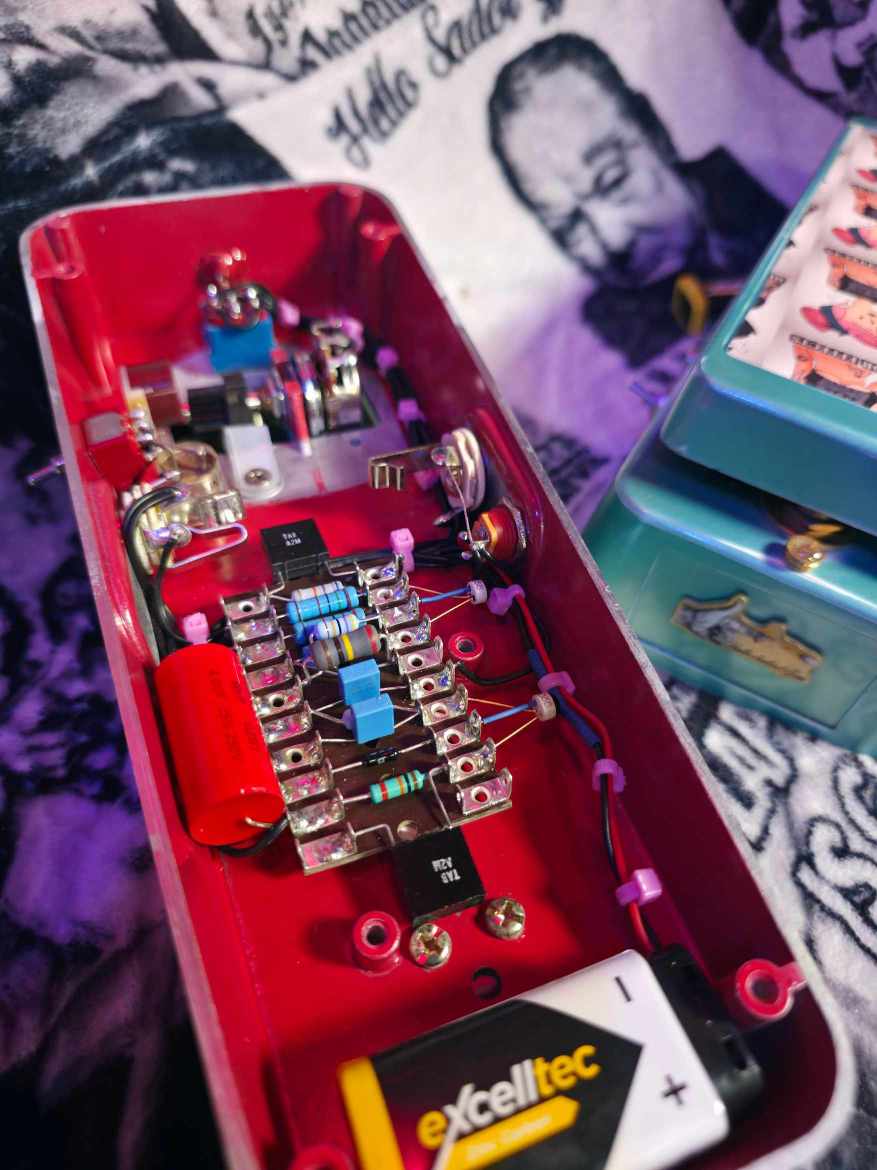
There are no PCBs inside these.
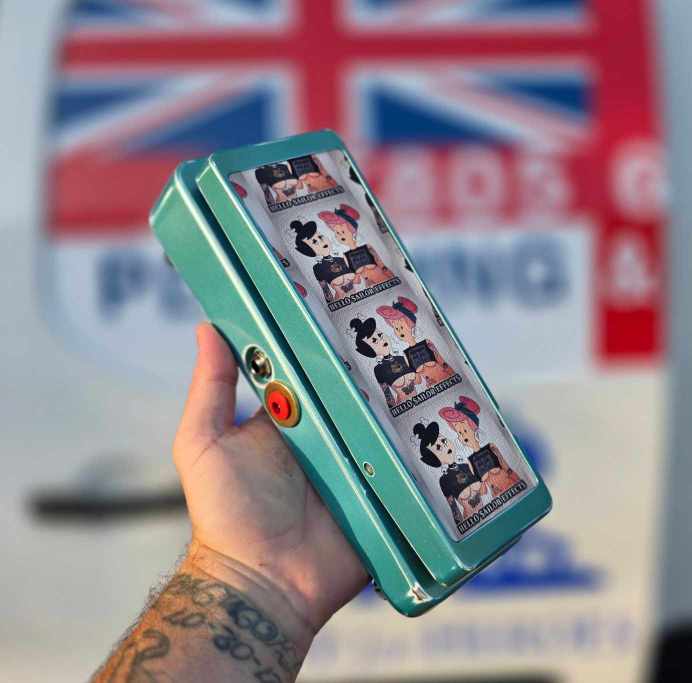
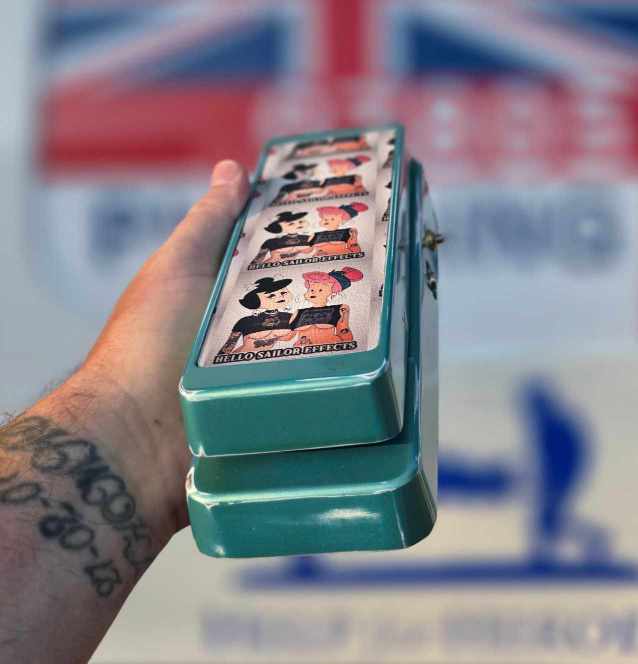
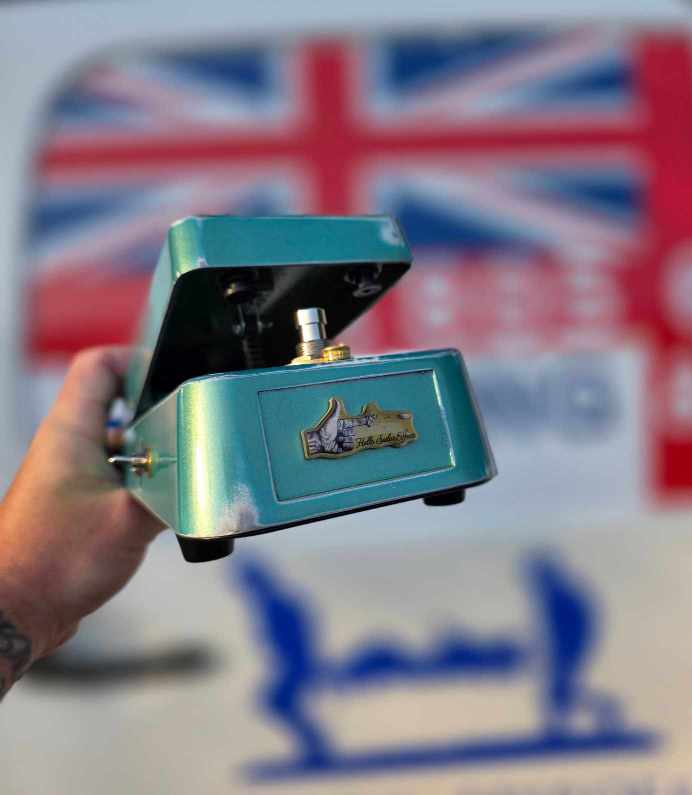
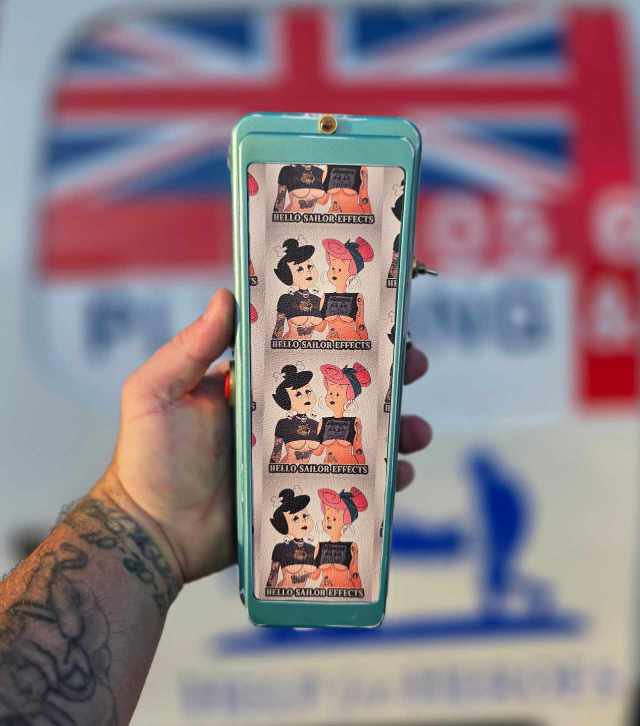
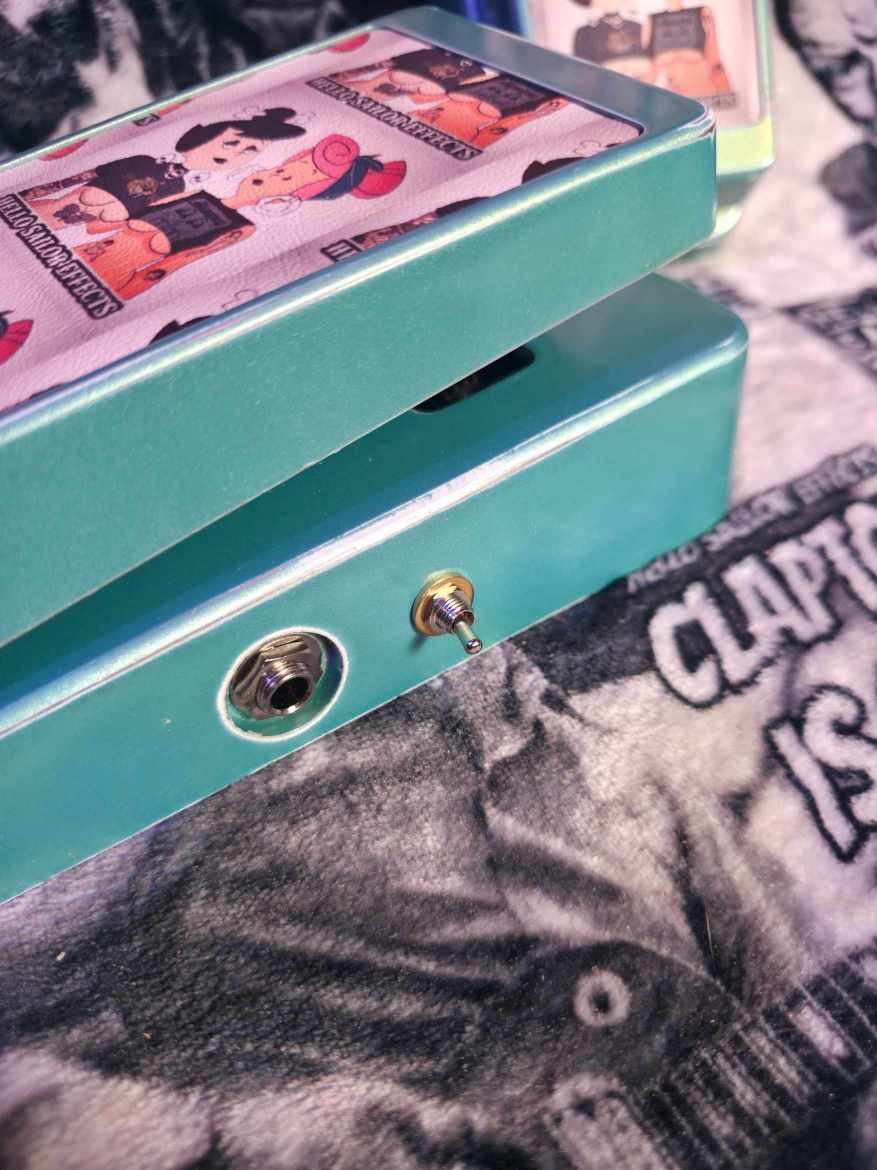
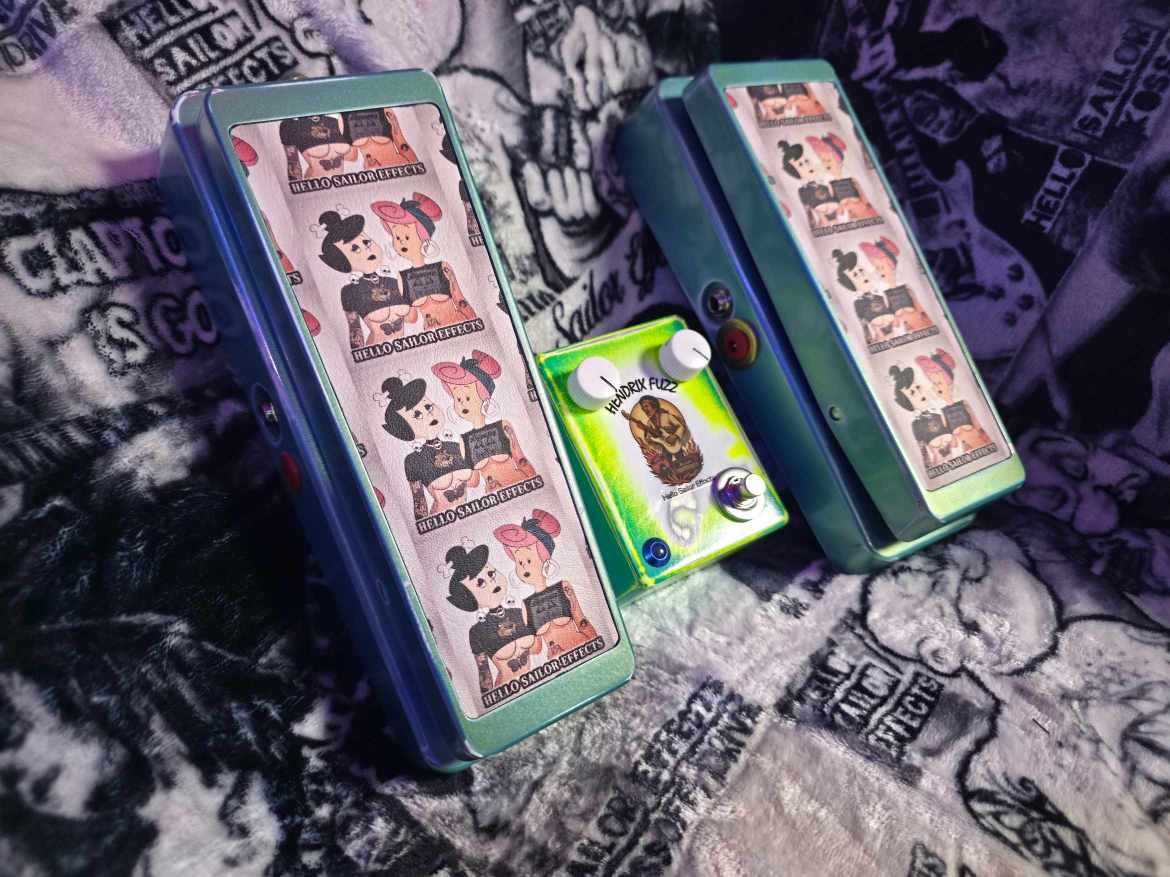
Every component is hand wired onto tagboard, then the whole thing is built into a full size wah enclosure that I have sprayed in Mermaid Green nitrocellulose lacquer and aged by hand.
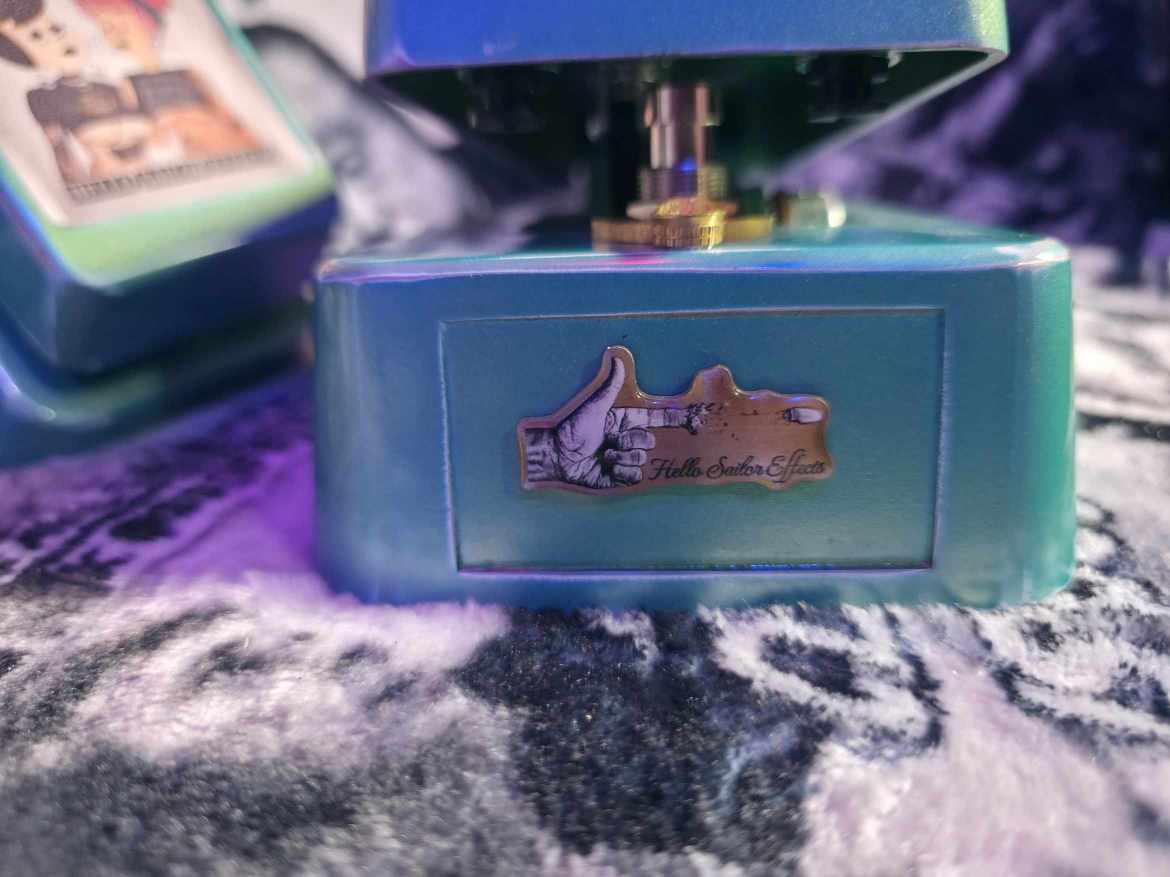
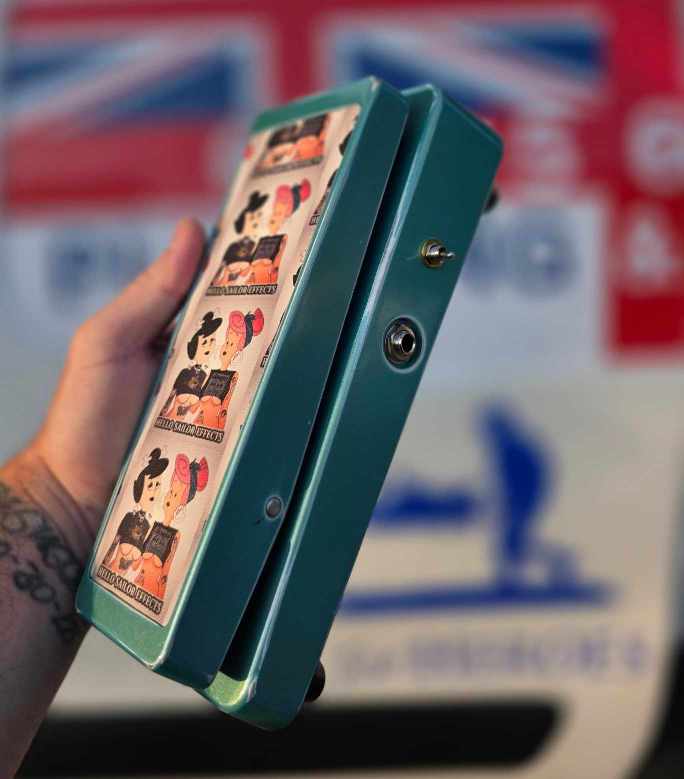
The treadle is a custom Hello Sailor Effects leatherette treadle with the Flintstones rock chicks artwork. The front carries the metal Hello Sailor Effects shooting finger badge.
It is deliberately a bit ridiculous.
I like that.
But underneath all of that is a very simple old circuit and one experiment that changed this pedal far more than I expected.
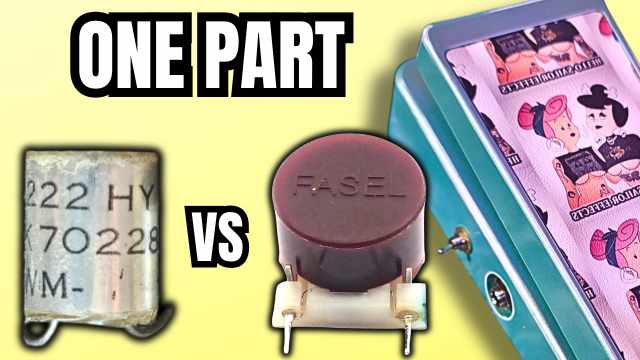
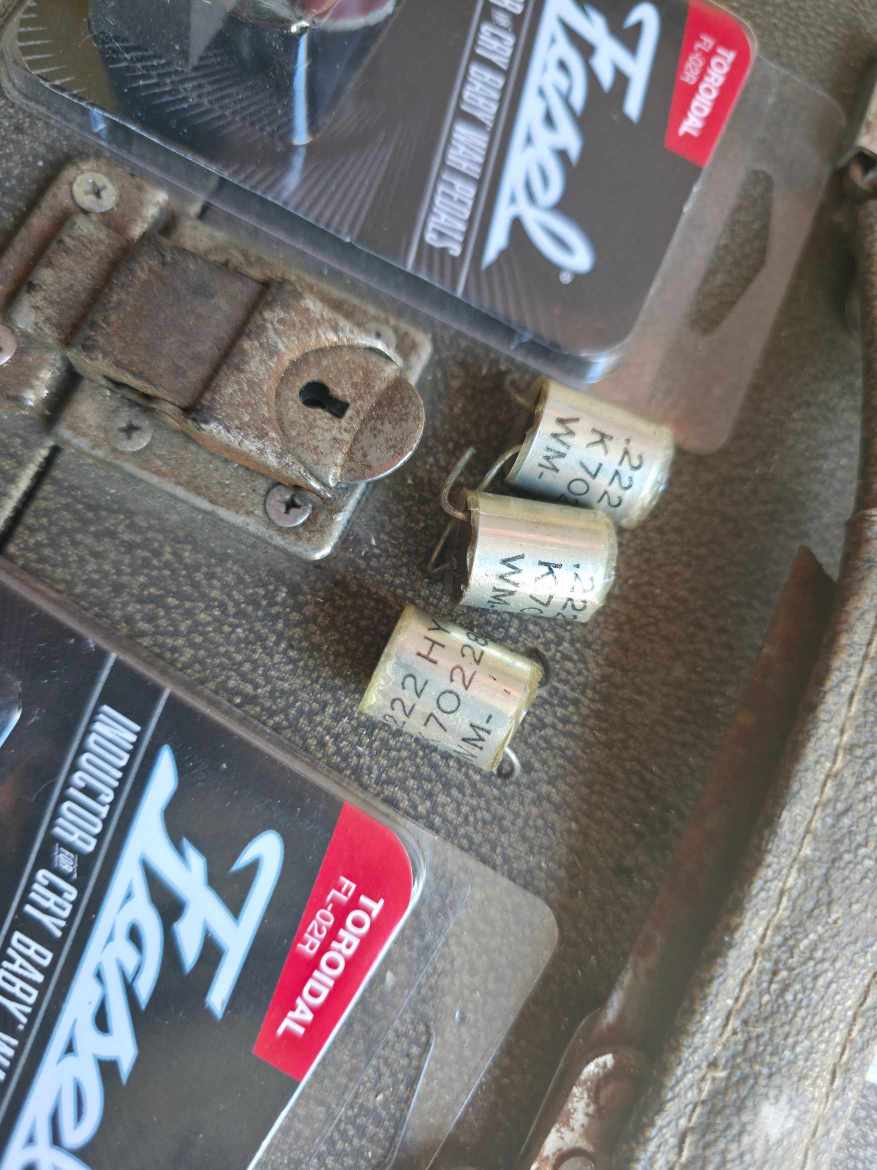
There are two inductors inside it.
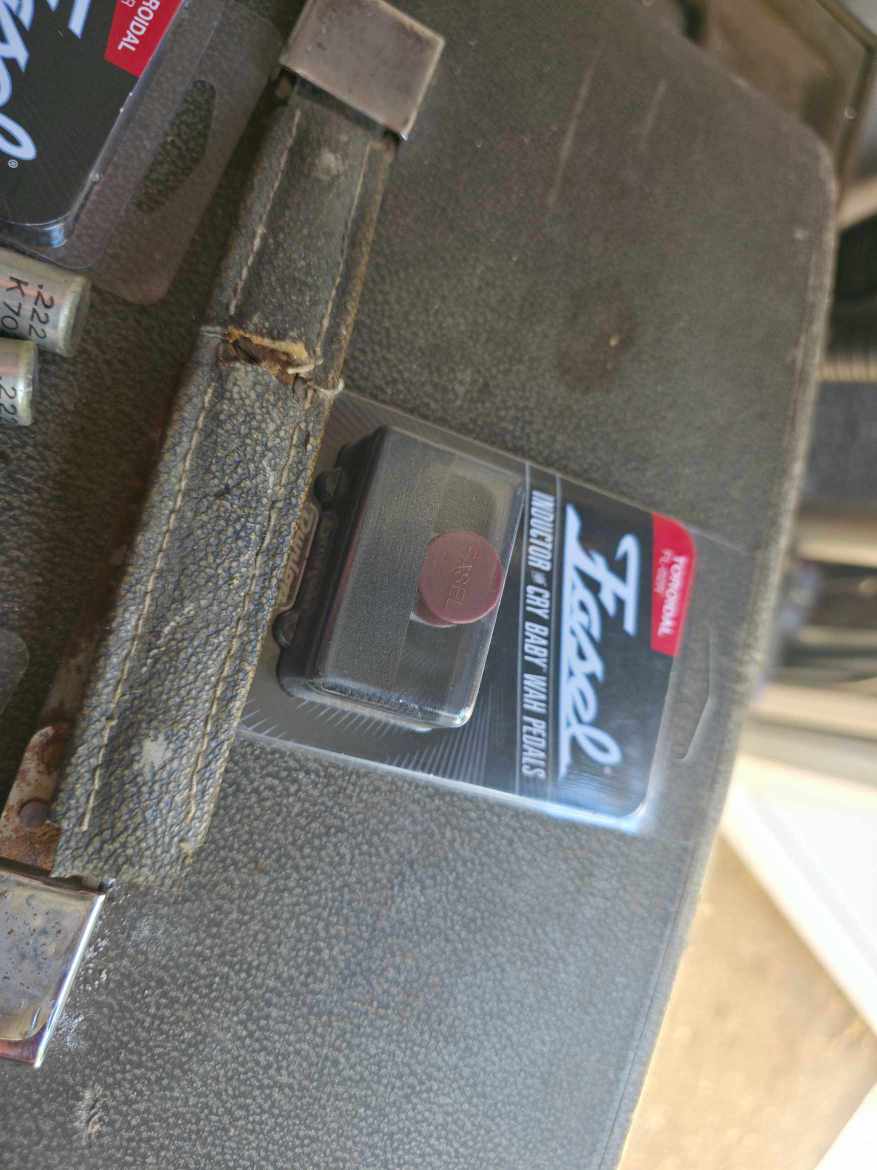
One is a modern Dunlop red Fasel.
The other is a vintage inductor from my own stash.
A small switch on the side changes between them.
Nothing else changes.
Same circuit.
Same capacitors.
Same resistors.
Same pot.
Same guitar.
Same amp.
Just the inductor.
And they do not sound remotely the same.
That was the reason I left both of them in.
Dunlop themselves describe the inductor as fundamental to the voice of a wah, and their red Fasel is used specifically for its clear, harmonically rich response.
Description of Sound
The Clyde McCoy circuit is different from the wah sound a lot of us have become used to.
It feels older.
The sweep is vocal and very obviously centred around the guitar rather than just giving you a huge bright sweep at the top.
That character is part of why the original Clyde McCoy has become such an important wah. Both VOX and Dunlop still describe the early circuit in terms of its vocal, expressive sweep rather than simply frequency range.
With the red Fasel selected, this is the side I prefer.
There is more body through the sweep and the pedal feels easier to control under your foot. It has the proper wah movement I hear in my head without becoming horribly sharp at the top.
Then you flick the switch.
The vintage inductor changes the whole thing.
It seems to pull a chunk of the mid range away and leaves this strange hollow voice behind.
I keep wanting to call it nasal, but that is not quite right.
It is thinner, stranger and considerably more old fashioned sounding.
For me personally, the red Fasel wins.
Quite easily.
But that is also why I kept the vintage one.
The interesting part of this pedal is being able to hear just how much one component changes the behaviour of exactly the same wah circuit.
That matters more to me than simply adding another knob.
Real World Comments On The Clyde McCoy Sound
“I have an old Clyde McCoy Vox wah that is my gold standard.”
Gearspace forum member
“I still regret it, it sounded so good.”
Owner discussing a genuine 1967 Clyde McCoy after selling it, Fractal Audio forum
“The red Fasel wah inductor sounded more vocal sounding, with more lows and a smooth high end to it.”
Harmony Central forum member, discussing the red Fasel in a wah circuit
Build Details
Fully hand wired tagboard construction
Early Clyde McCoy wah circuit
Dual switchable inductors
Dunlop red Fasel inductor
Vintage inductor from my own parts stash
Full size wah enclosure
Mermaid Green nitrocellulose lacquer
Hand aged finish
Custom Hello Sailor Effects leatherette treadle
Flintstones rock chicks artwork
Hello Sailor Effects metal shooting finger badge
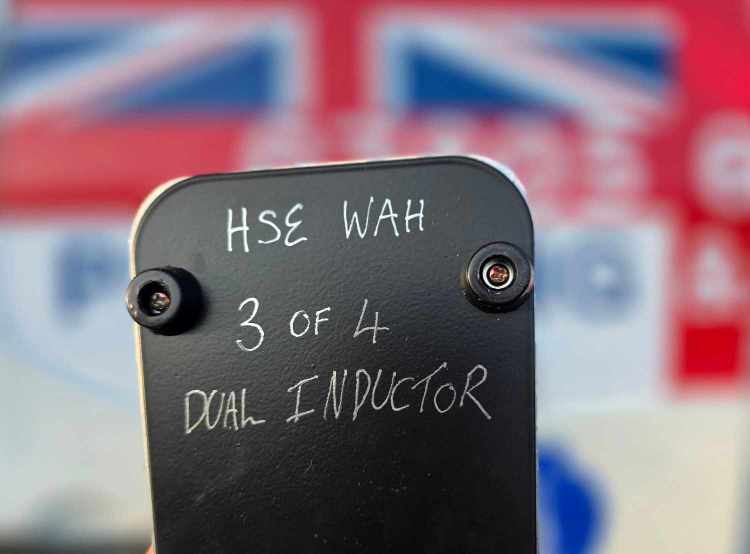
Only four built
******************
I built four of these.
That is the entire run.
I do not intend to repeat this exact format again.
The full size enclosure, custom treadle, nitro finish, tagboard build and the vintage inductors make these considerably more involved than something I would want to turn into a regular production pedal.
They exist because I wanted to build the old Clyde McCoy circuit, listen to what actually changed it, and make something around it that felt like mine.
Four came out of that.
Once those four have gone, this version is finished.
Reviews
There are no reviews yet.