
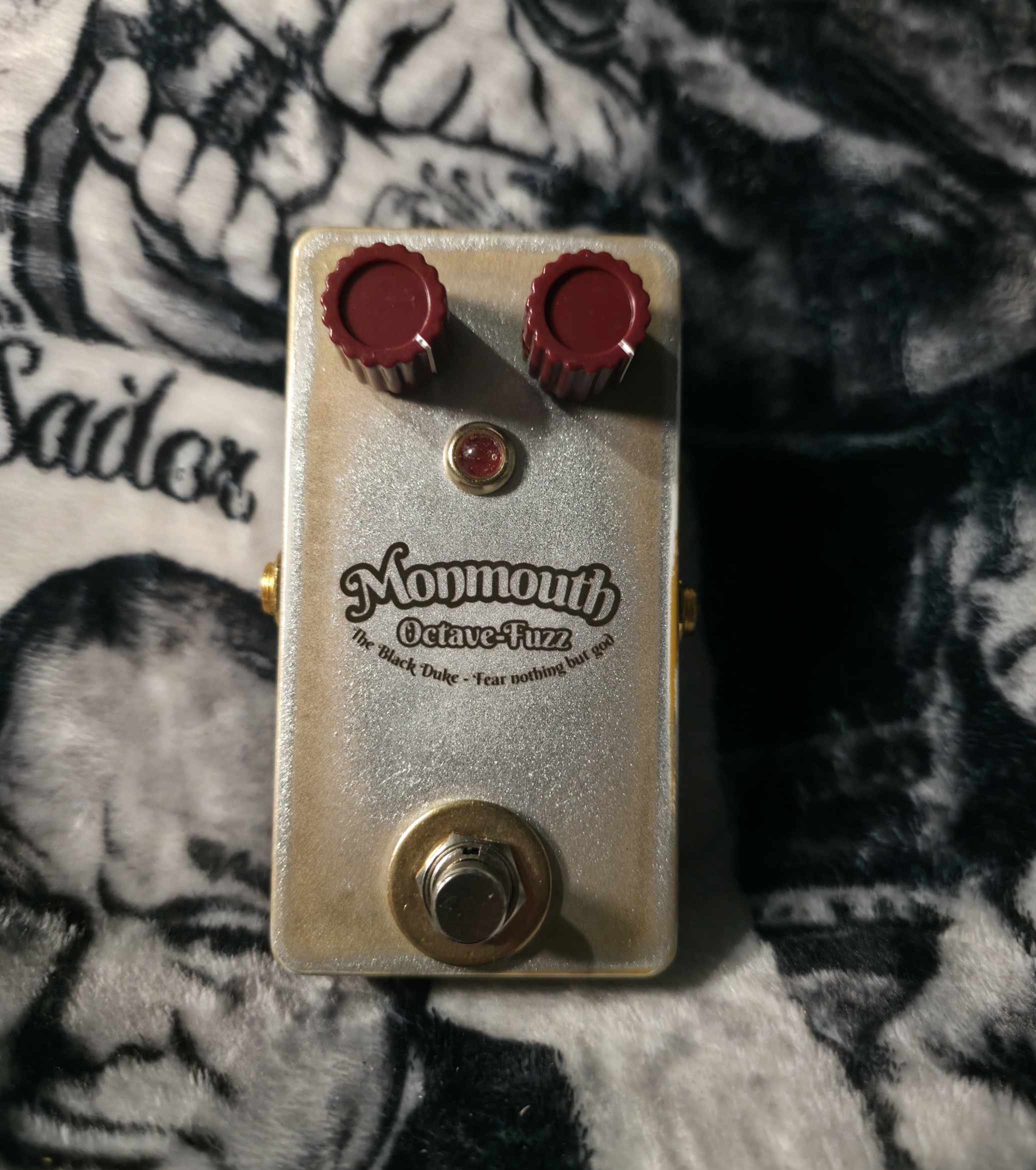
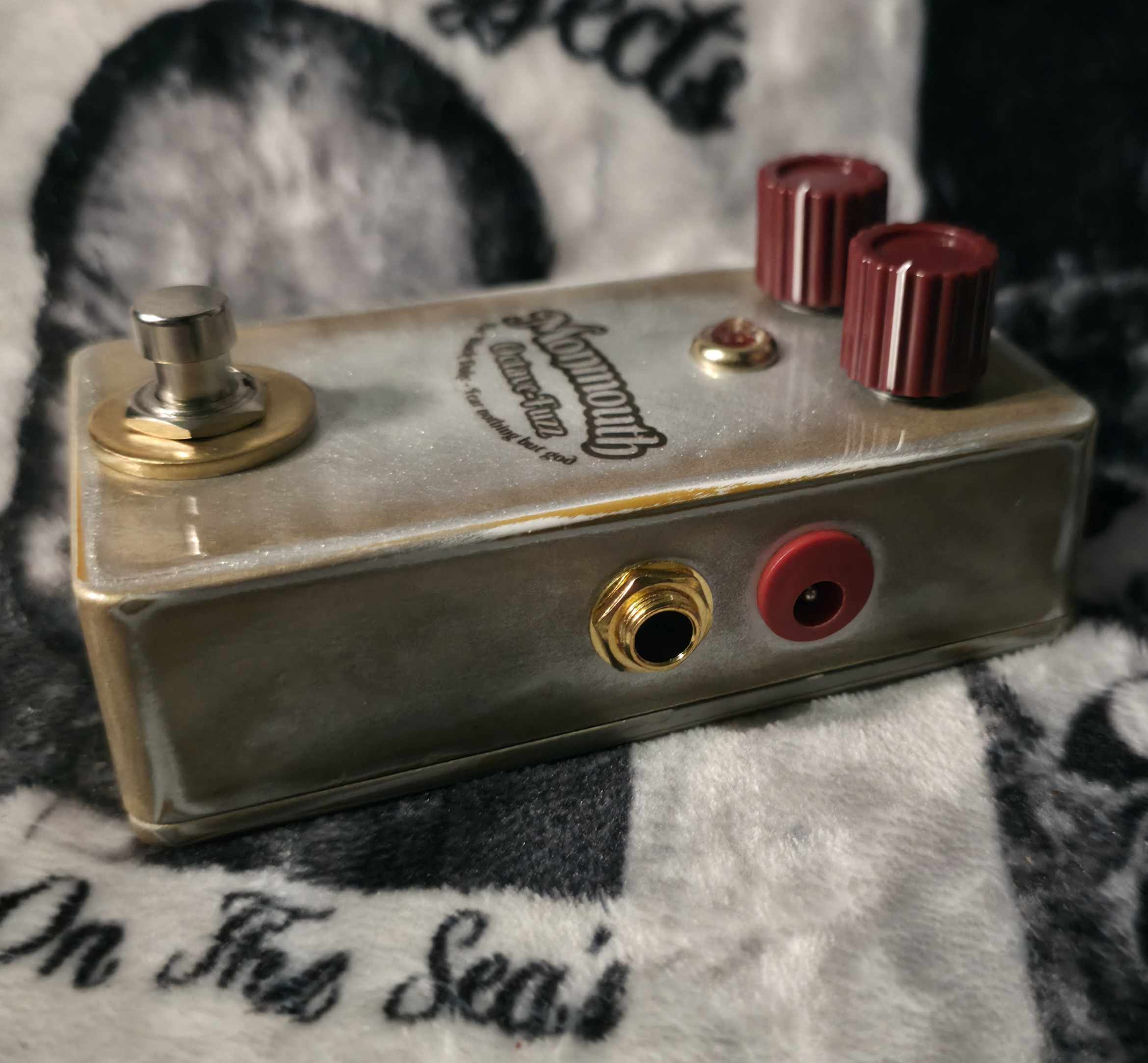
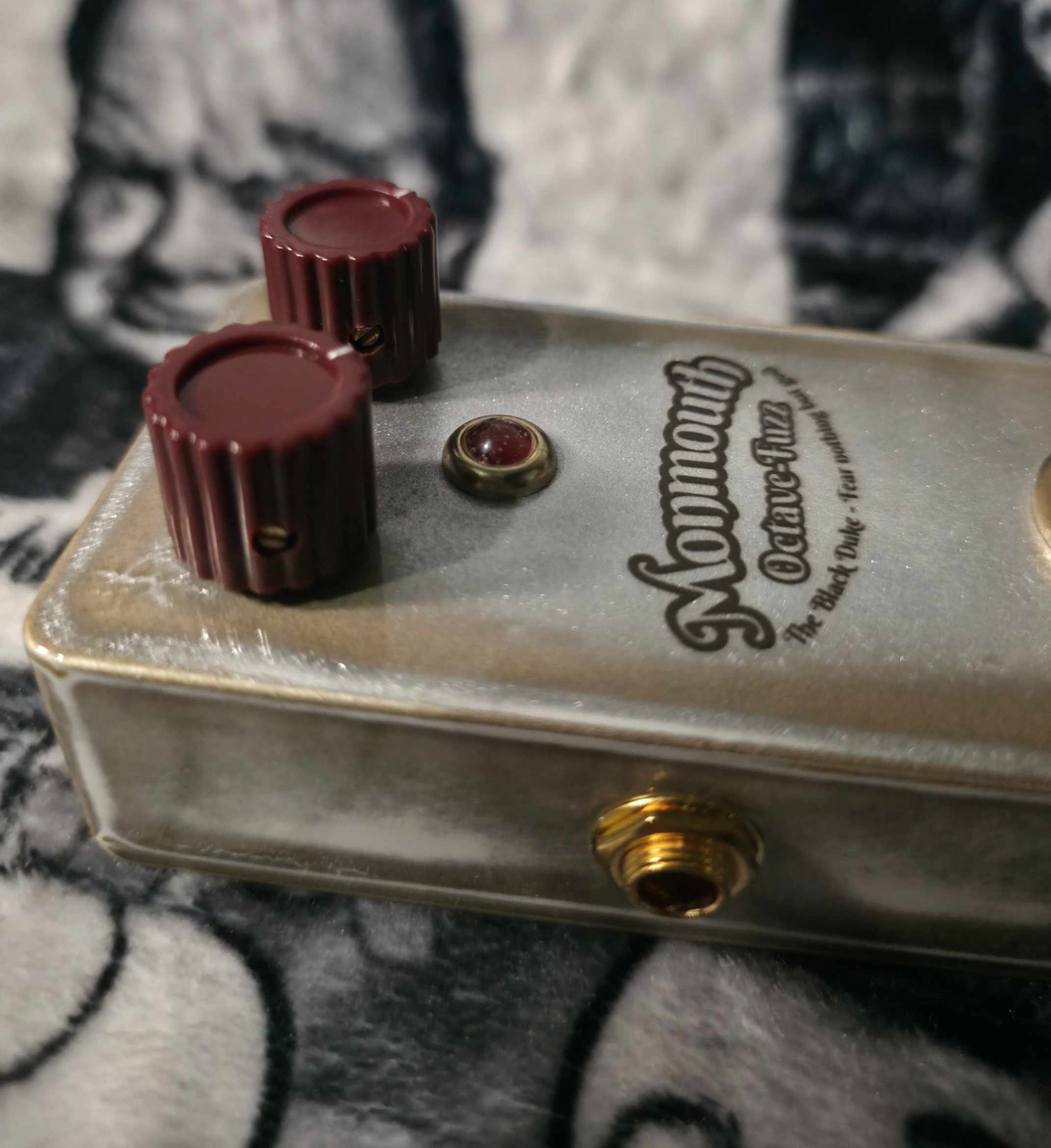
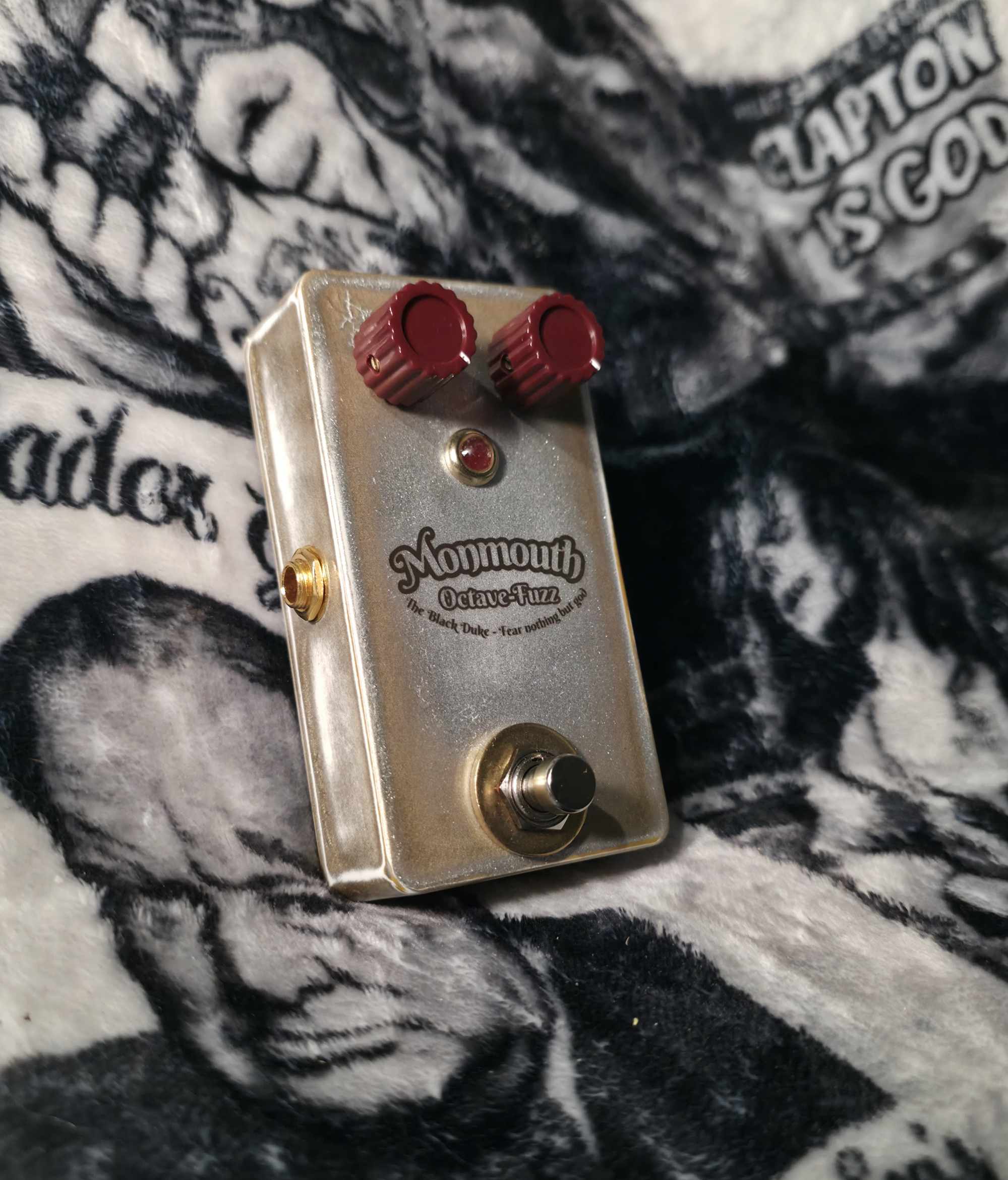
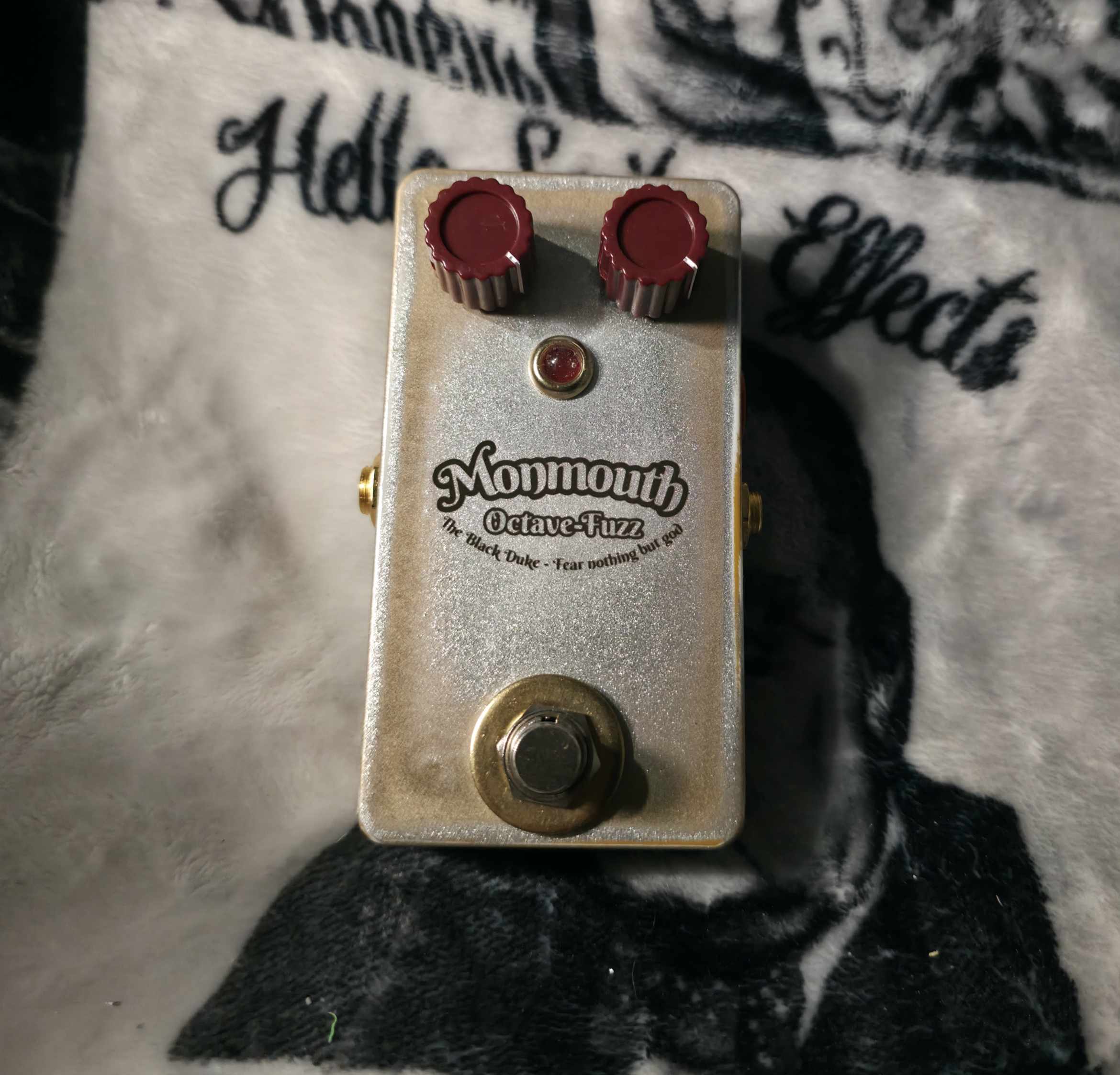
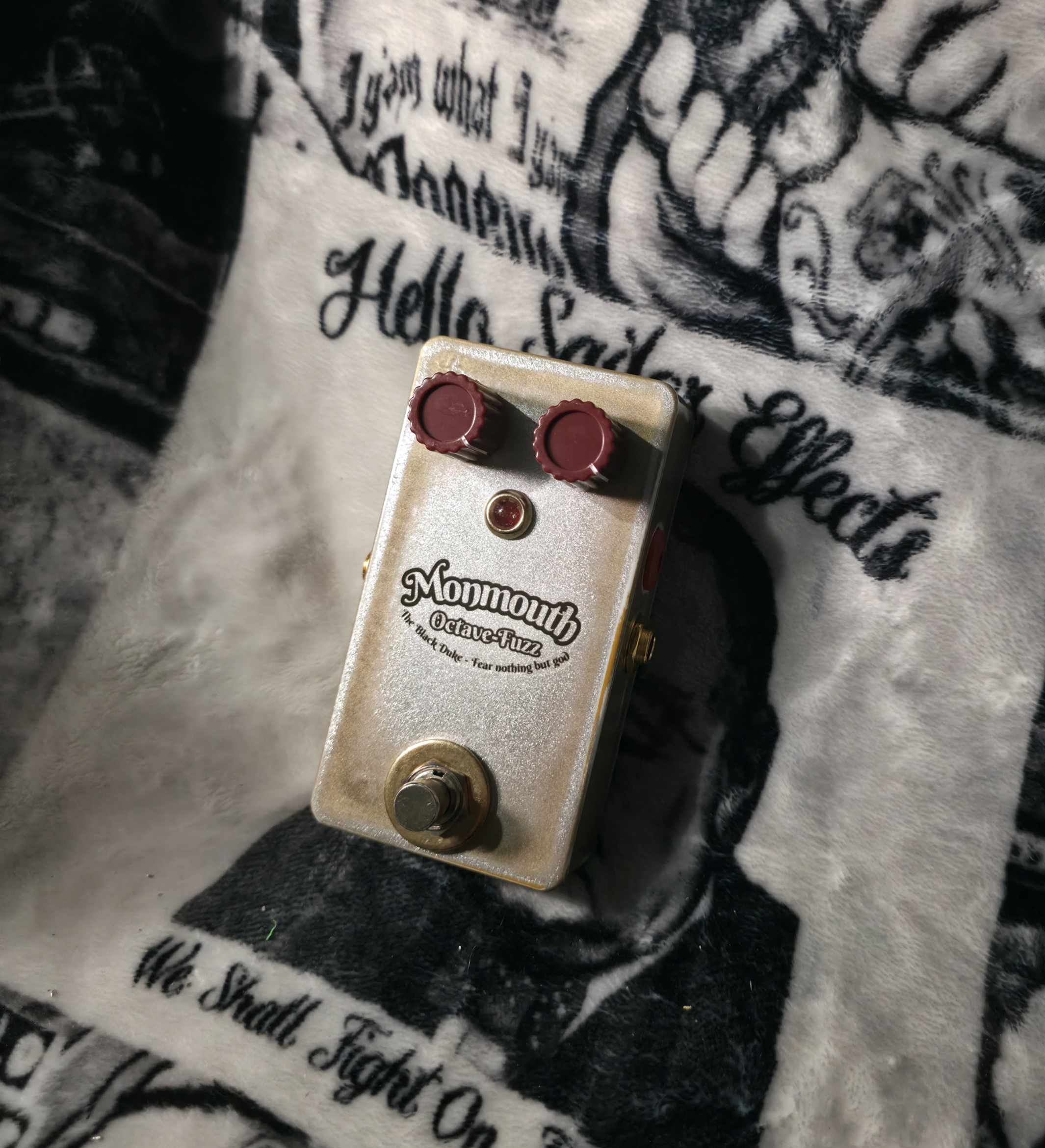
Monmouth Octave Fuzz Mullard OCP71 Germanium Octave Fuzz
£180.00
1 in stock
Description
Description of Product
This build came out of a behaviour problem, not a circuit idea.
Octave fuzz is one of those sounds that feels right for a moment, then disappears the second you change pickup or move up the neck. Most versions are not wrong. They are just built around assumptions that do not quite hold up when you actually play them.
The Monmouth Octave Fuzz is centred around a Mullard OCP71. It is used here as a straight germanium transistor, not for its light sensitivity. In a closed pedal that part does nothing. What matters is the device itself.
There is a long standing belief from the time that the best performing germanium devices were selected for use as phototransistors, with the rest ending up in standard applications. Whether that was formal process or factory habit, the parts that survived in that category tend to have a certain consistency and feel that is hard to replace.
That is what this build leans into.
Everything around it is kept simple and deliberate. Hand wired on tagboard. Values chosen to let the transistor behave naturally rather than forcing it into a fixed response. Modern and vintage components used where they make sense, not where they look correct on paper.
Each enclosure is finished by hand in nitrocellulose lacquer. Not a uniform coat. Each one settles differently. Each one carries its own artwork. No two are repeated in exactly the same way.
This is not a production pedal. It is a small number of builds centred around a specific type of device and the way it responds.
Description of Sound
This is an octave fuzz that does not sit still.
On the right notes it blooms into a clear upper octave that feels separate from the fundamental. Move slightly and it softens or disappears. That is not instability. That is the circuit responding to what it is being given.
With single coils it leans into that classic upper octave character. With humbuckers it becomes thicker and more resistant, with the octave appearing when the note, pickup, and position line up.
Your volume control matters here. Roll it back and it opens up, becoming more reactive and less compressed. Push it and it tightens, with the octave coming in and out rather than sitting permanently on top.
Into an amp that is already working, it starts to feel complete. The octave locks in on certain phrases and then drops away, leaving the fuzz underneath to carry the note.
You do not switch the octave on. You find it.
Each of these is built around an individual Mullard OCP71 and finished by hand.
They are one off pieces rather than a repeatable model.
If this way of working with an octave makes sense in your rig, it is there to be used.
Reviews
There are no reviews yet.