


Rangemaster Treble Booster 1965 General Electric Germanium and 2N4964 Silicon Aged Rose Gold with Veni Vidi Vici Artwork
£250.00
1 in stock
Description
Description of Product
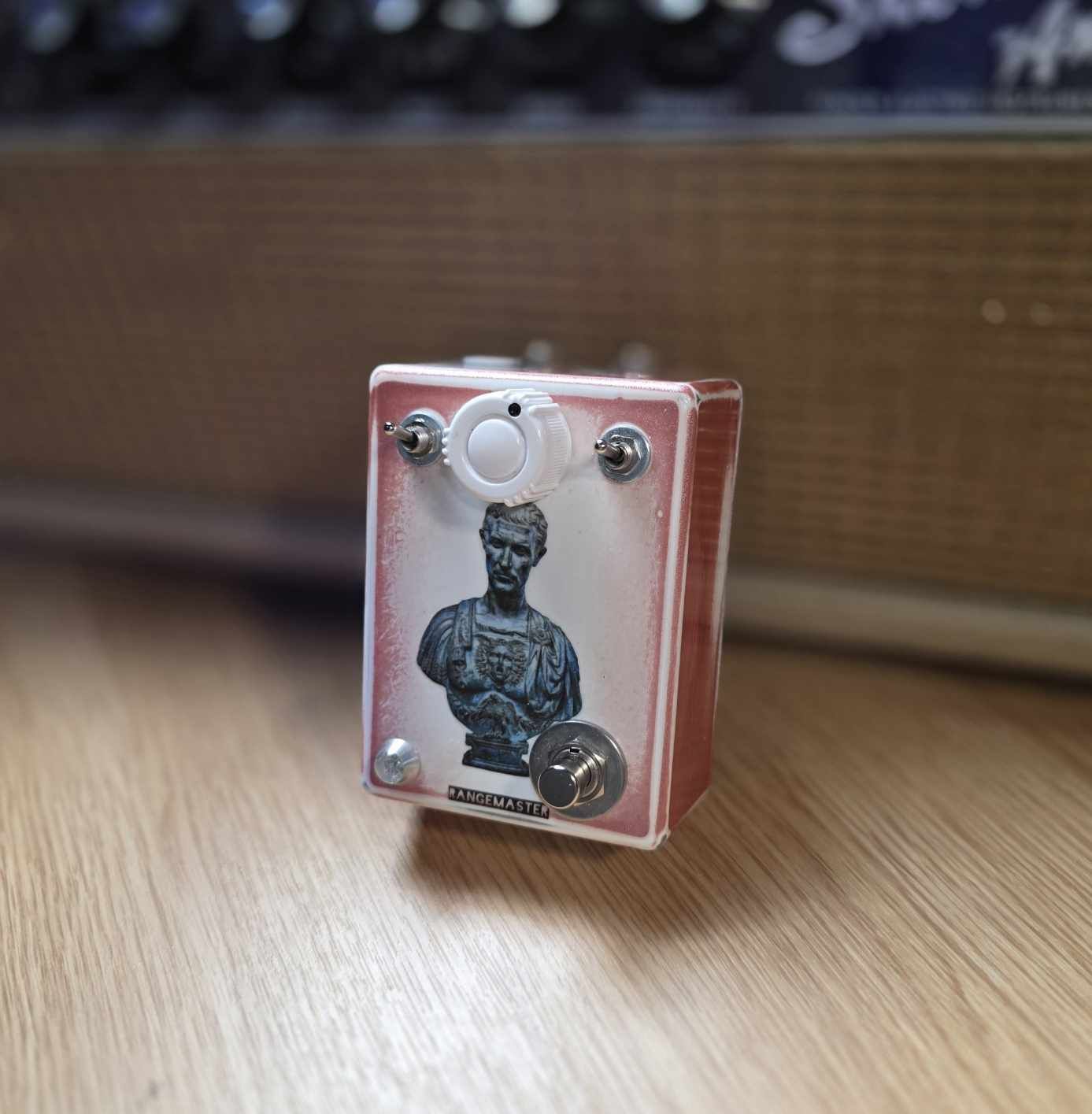
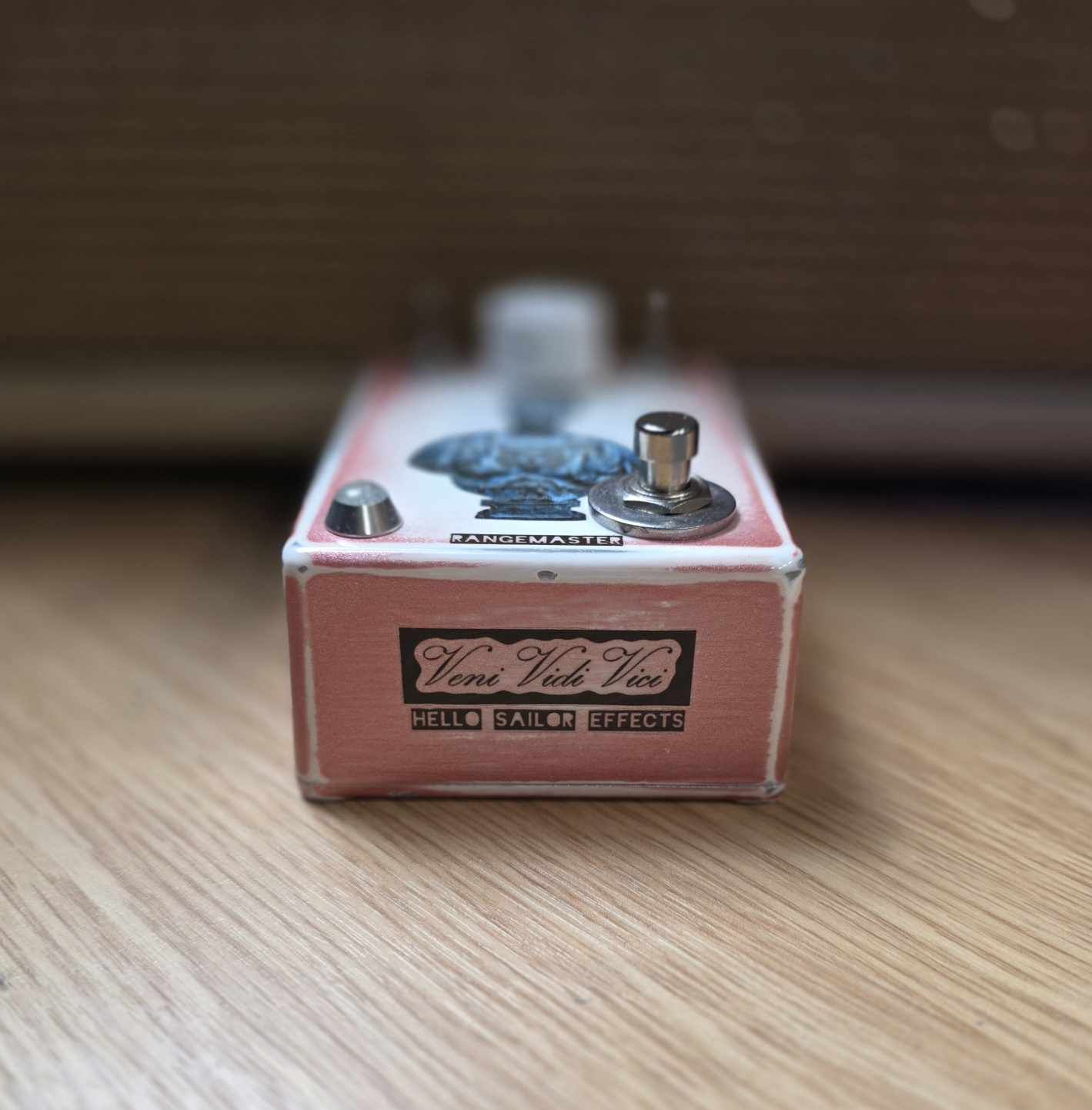
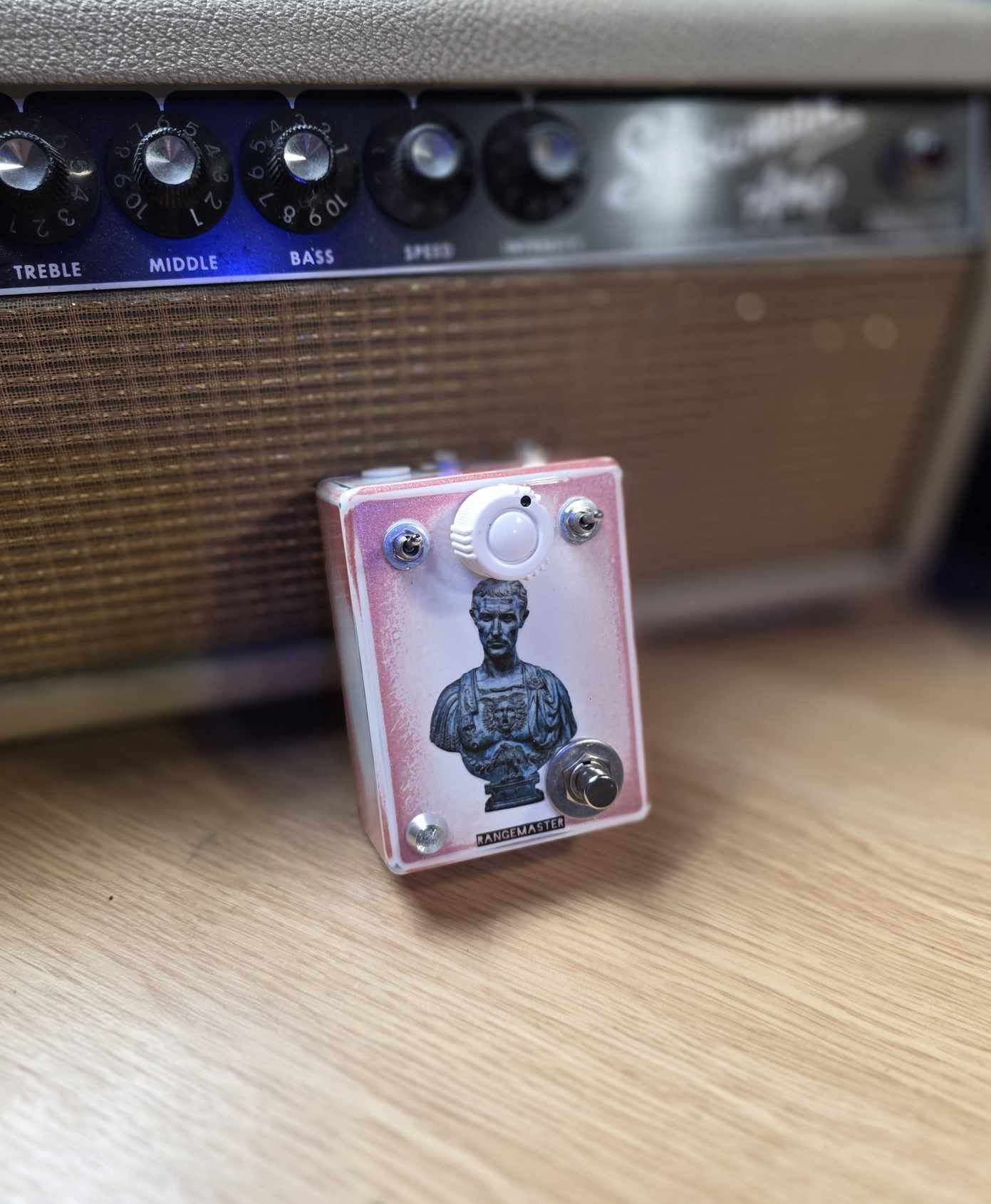
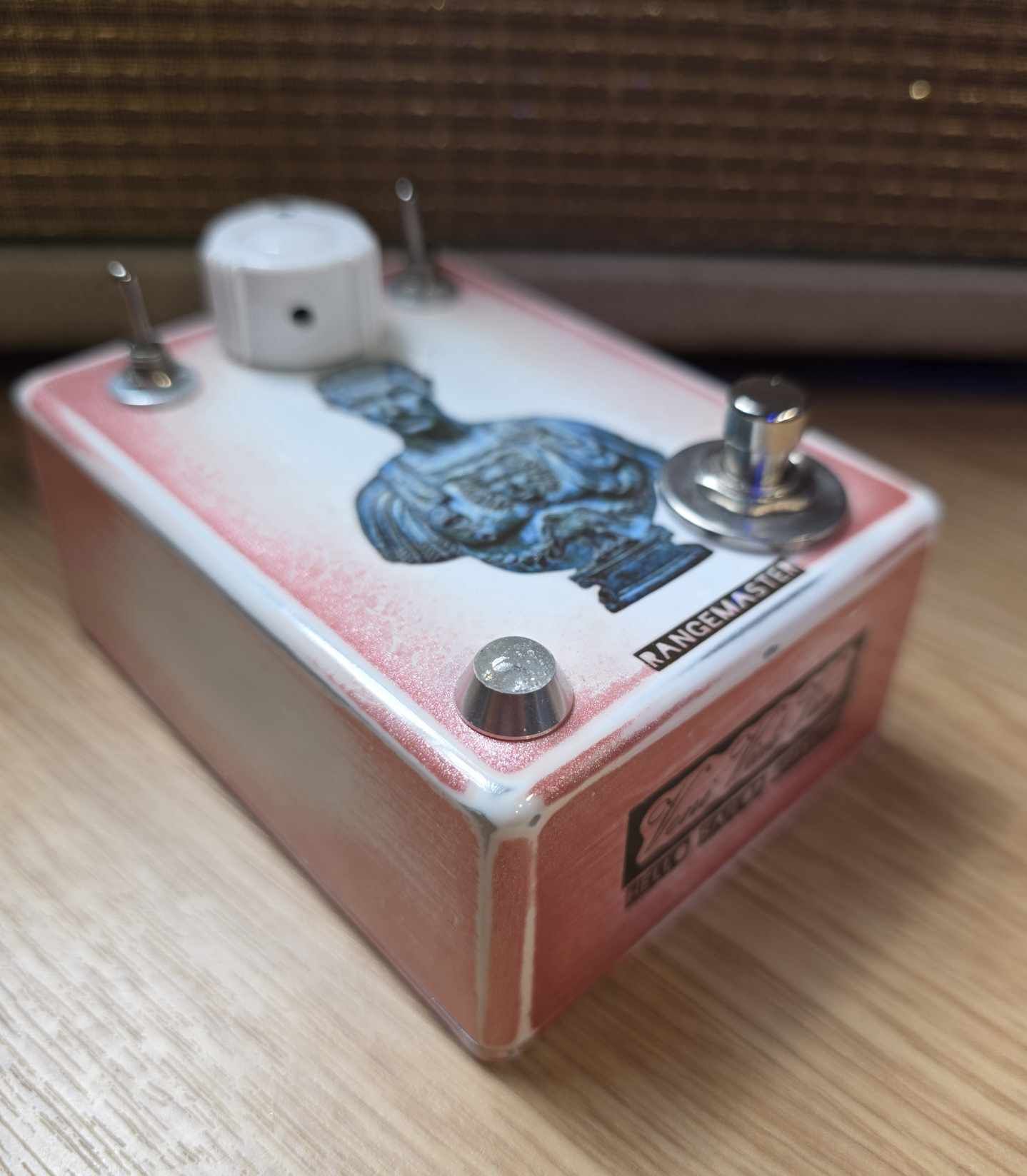
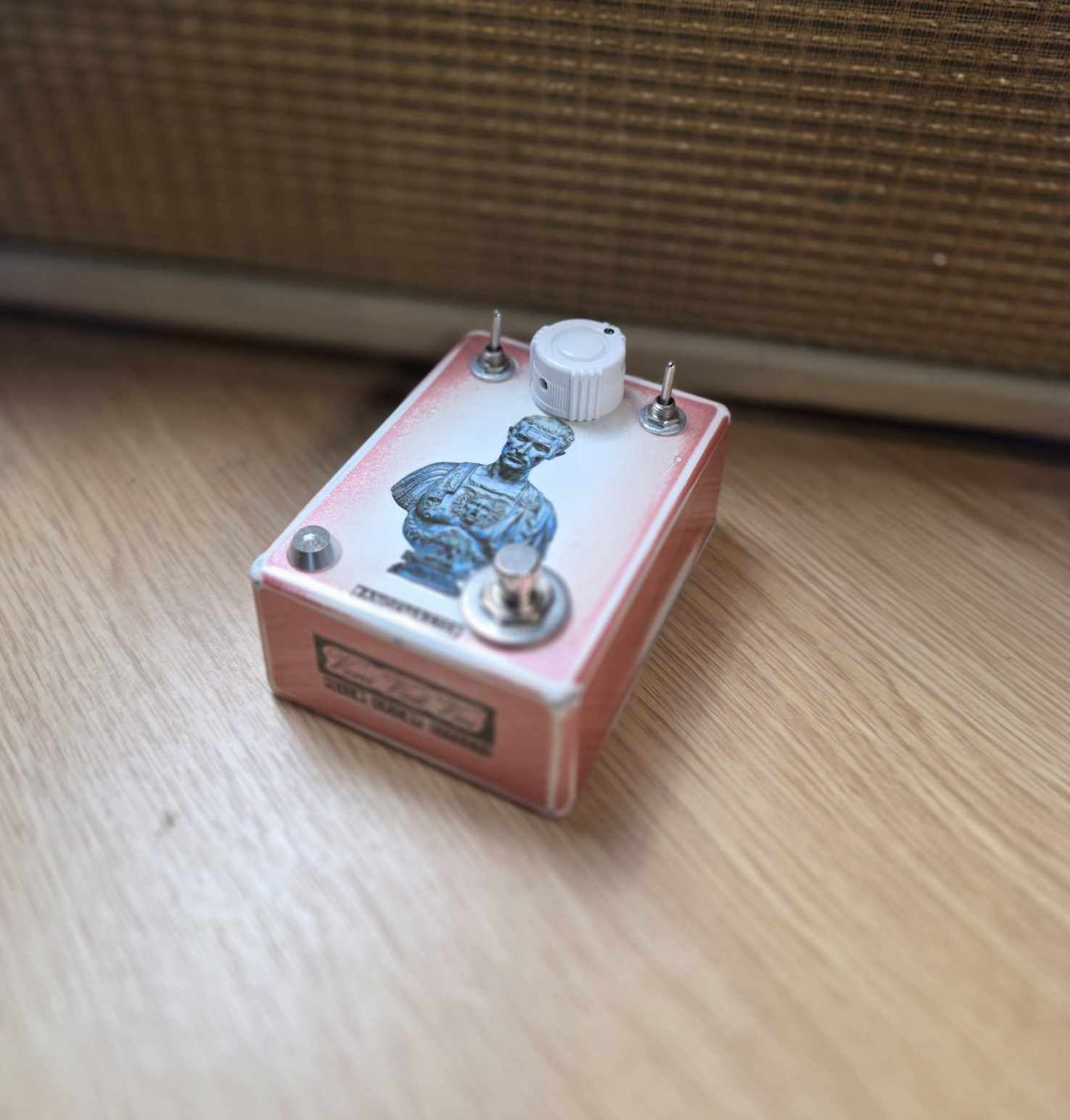
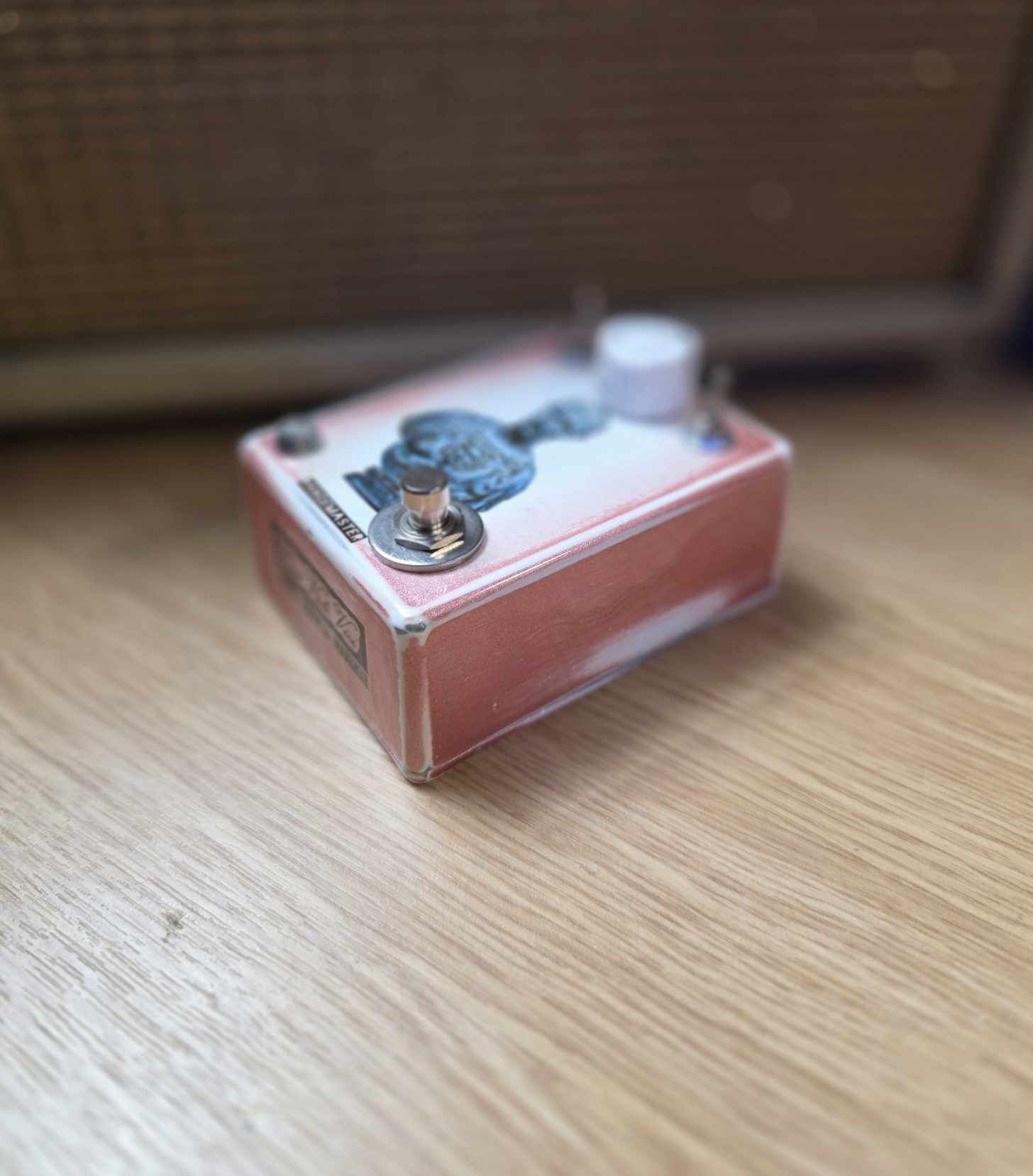
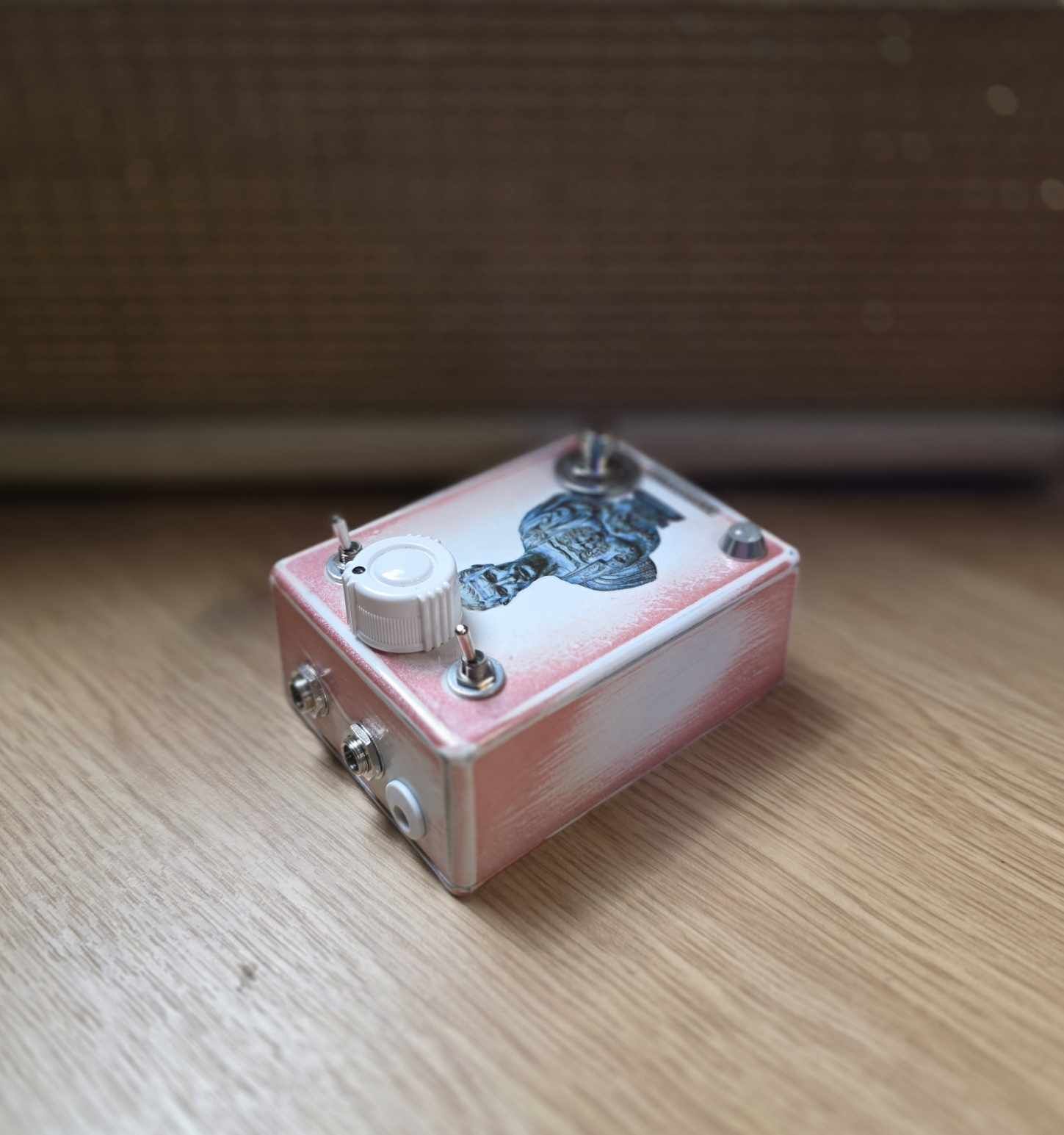
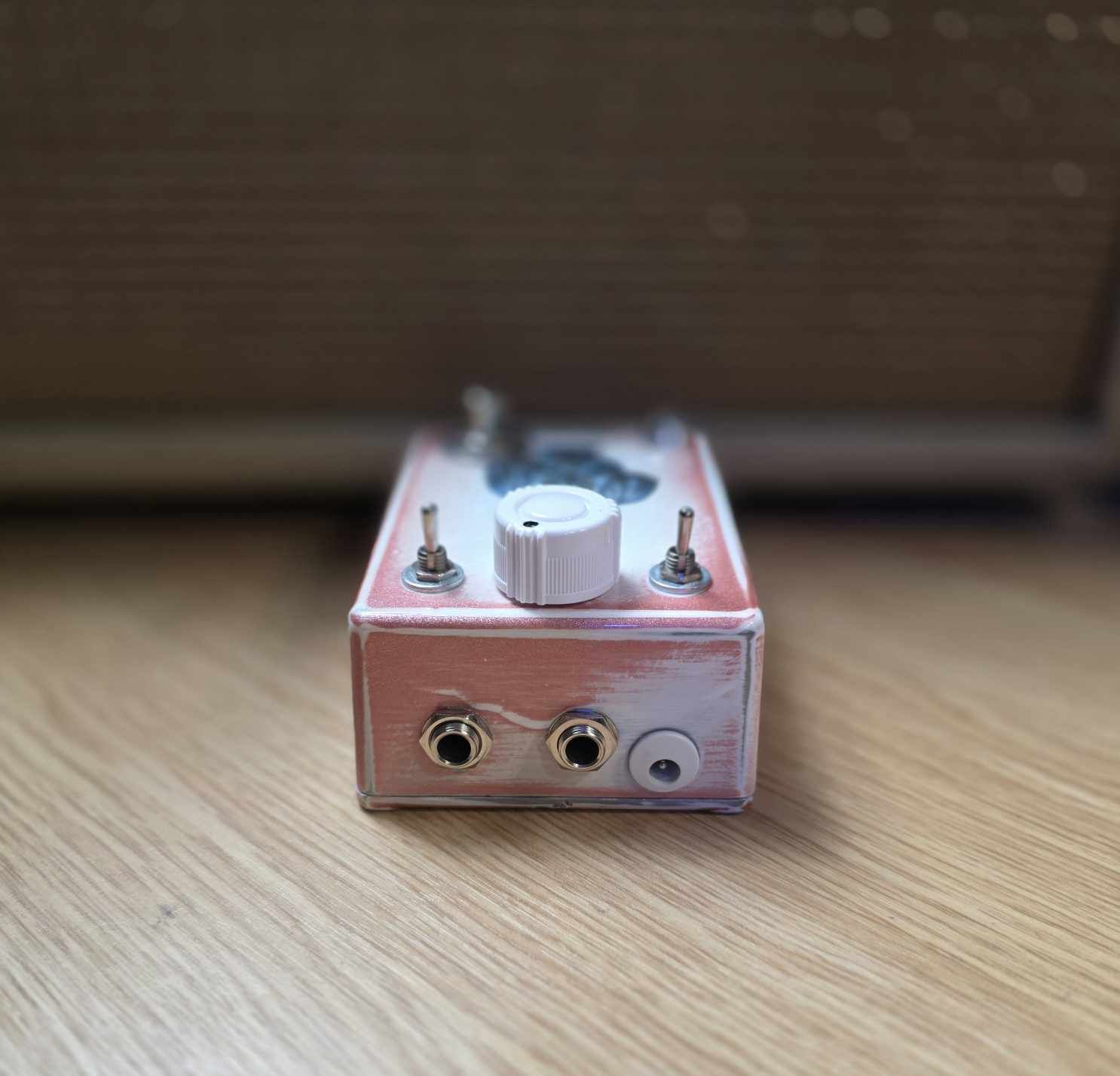
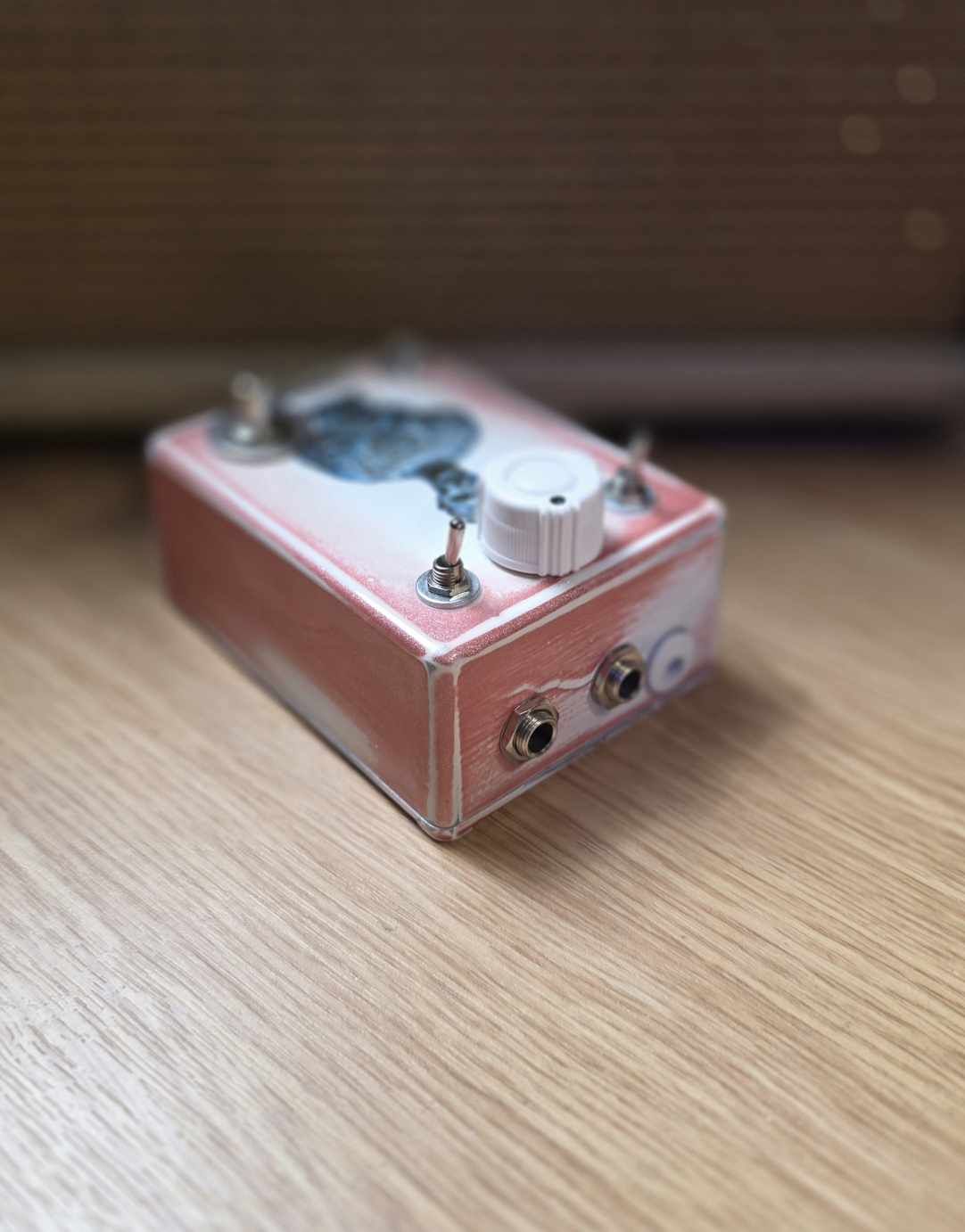
This Rangemaster is built inside a compact enclosure finished in aged rose gold nitrocellulose lacquer with Julius Caesar Veni Vidi Vici artwork.
The finish carries a soft worn appearance rather than a bright metallic shine. Edges show subtle ageing through the lacquer so the enclosure feels like something that has already lived on a pedalboard.
The artwork references the phrase Veni Vidi Vici associated with Julius Caesar. It sits naturally against the rose gold finish and gives the pedal a strong visual identity without overwhelming the enclosure.
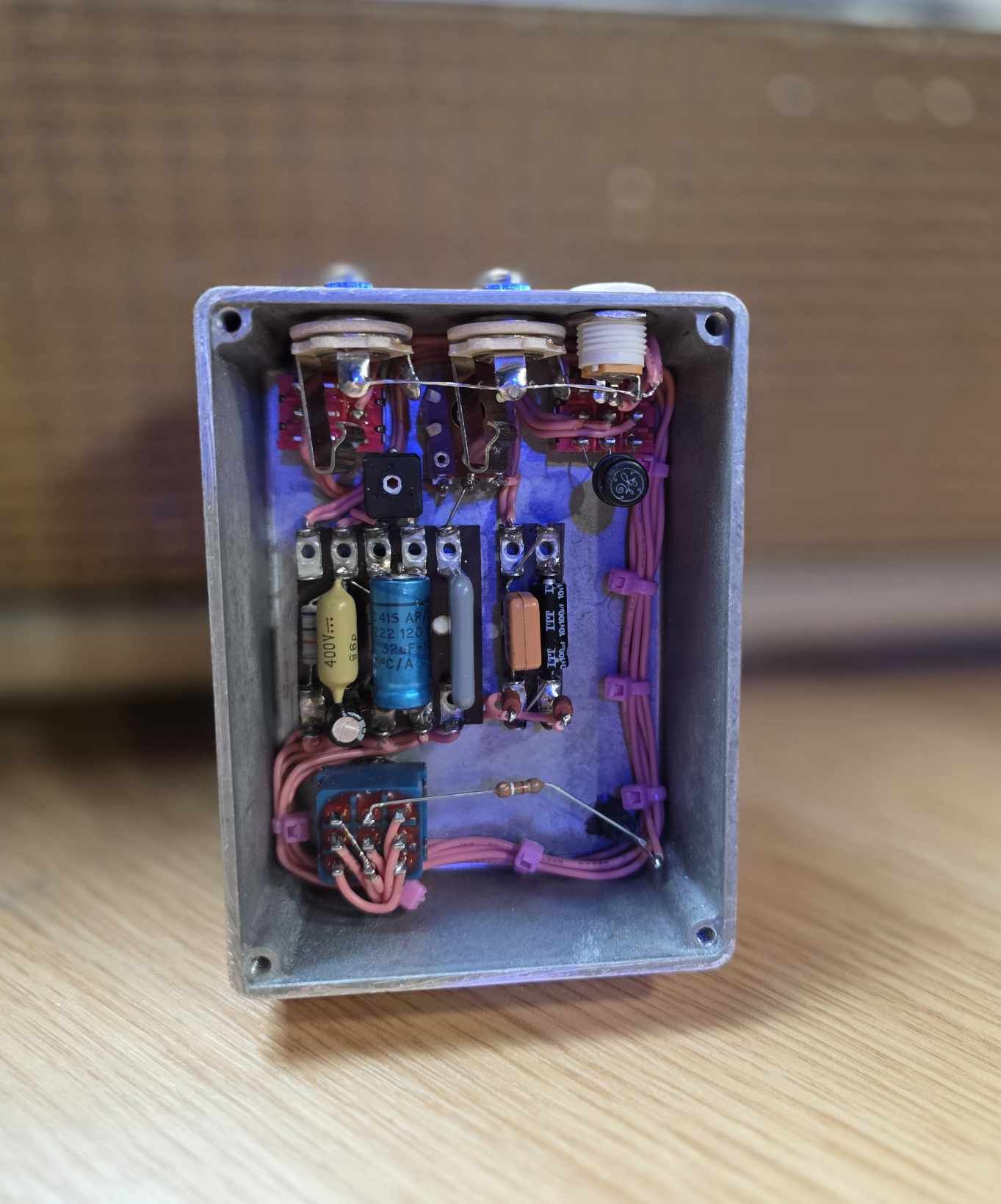
Inside the pedal the circuit is built in the traditional Rangemaster style and hand wired on tagboard. Despite the relatively small enclosure the internal components are deliberately oversized.
A Mullard mustard capacitor sits within the signal path alongside a large ITT silver mica capacitor used in the frequency shaping network. These parts were widely used in amplifier circuits during the valve era and are known for their stability and consistent behaviour.
Two transistor options are available within the circuit.
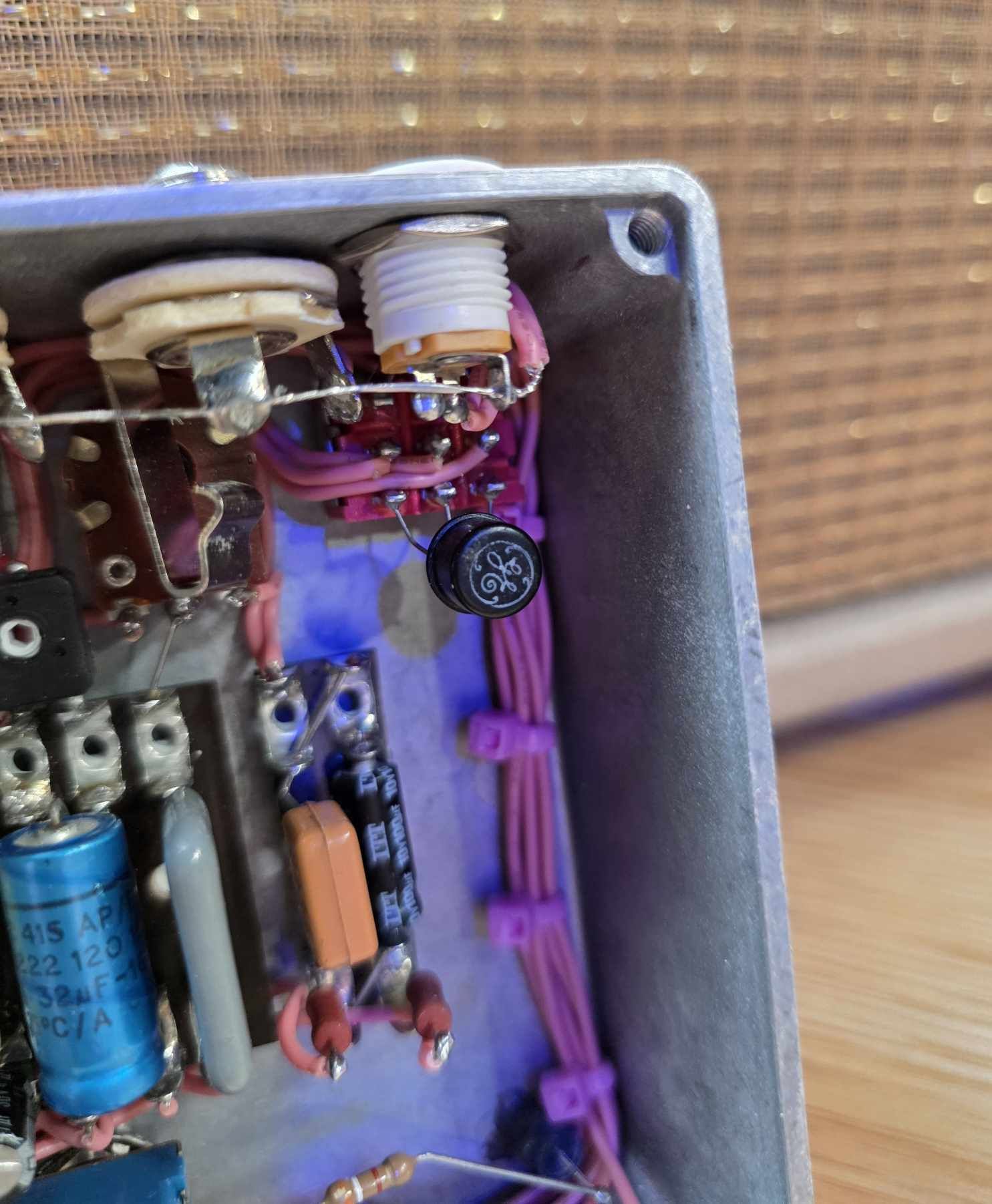
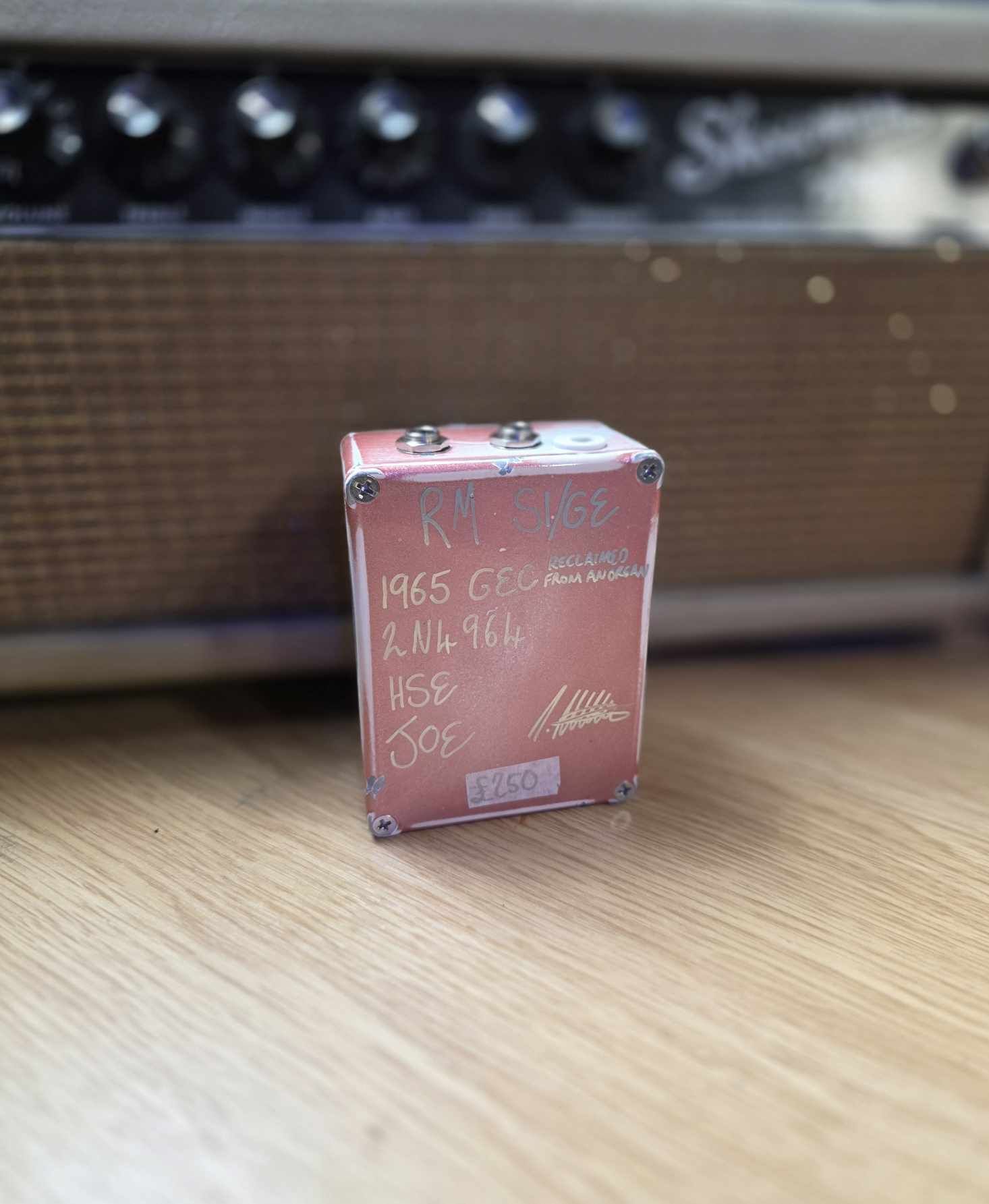
The germanium position uses a 1965 General Electric transistor reclaimed from an organ amplifier. Devices from this period were produced during the early germanium manufacturing era and each one behaves slightly differently. The transistor has been individually tested and biased before installation.
The silicon position uses a NOS gold pin 2N4964 transistor. Early silicon devices like this provide a firmer attack and a more consistent response while still retaining the musical behaviour that works well in a booster circuit.
A transistor selection switch allows the pedal to move between these two devices so the character of the booster can be changed depending on the amplifier and guitar.
A second switch selects the EQ behaviour.
The mid range setting focuses the boost around the frequencies where a guitar naturally sits in a mix. The full range setting opens the circuit up and allows a broader push into the amplifier input.
The entire circuit is built on tagboard and wired by hand. The layout remains visible and serviceable in the same way early amplifier circuits were built.
Considering the size of the enclosure and the scale of the components inside it is a tightly packed build.
This particular combination of parts and finish exists as a single piece.
Description of Sound
The Rangemaster circuit works by pushing the first gain stage of a valve amplifier harder while shaping the frequency range that reaches it.
With the germanium transistor selected the pedal produces a softer and slightly rounder attack. Notes bloom gradually and the boost interacts strongly with the guitar volume control. Backing the guitar volume down cleans the sound while retaining the tonal colour the circuit introduces.
Switching to the silicon transistor changes the behaviour noticeably. The attack becomes firmer and the overall response tightens slightly. Notes remain clearly defined even when pushing an amplifier that is already close to breaking up.
The EQ switch allows the booster to sit in two different roles.
In the mid range position the pedal produces the familiar focused push that helps lead lines move forward in a band mix.
In the full range position the pedal behaves more like a broader clean boost, allowing more low end and body through the circuit while still pushing the amplifier input.
Placed in front of a driven valve amplifier the circuit produces the singing sustain and harmonic complexity that made the original Rangemaster circuit so widely used during the late nineteen sixties.
It is a simple design that interacts strongly with the amplifier and guitar connected to it.
Real World Testimonials
“Excellent Rangemaster. One of the best and most useful ones I have played.”
Reverb feedback
“A genius bit of design.”
AM Guitar review
“A treble booster with a lot to offer all guitarists.”
Medium review
This pedal is a single build.
The aged rose gold finish, Veni Vidi Vici artwork, reclaimed 1965 germanium transistor, and the particular combination of components used here will not be repeated in exactly the same way again.
If this version speaks to you, it is available.
check out minute 34:36 to hear one of my Rangemasters in action
Related products
-
Sale!

Silicon Rangemaster Six Position EQ Treble Booster with Illuminated Viking Artwork
Original price was: £250.00.£220.00Current price is: £220.00. -
-
-
Sale!
Silicon Rangemaster Three Position EQ Treble Booster in Sloped Enclosure with Lion Artwork
Original price was: £150.00.£100.00Current price is: £100.00.
Reviews
There are no reviews yet.