



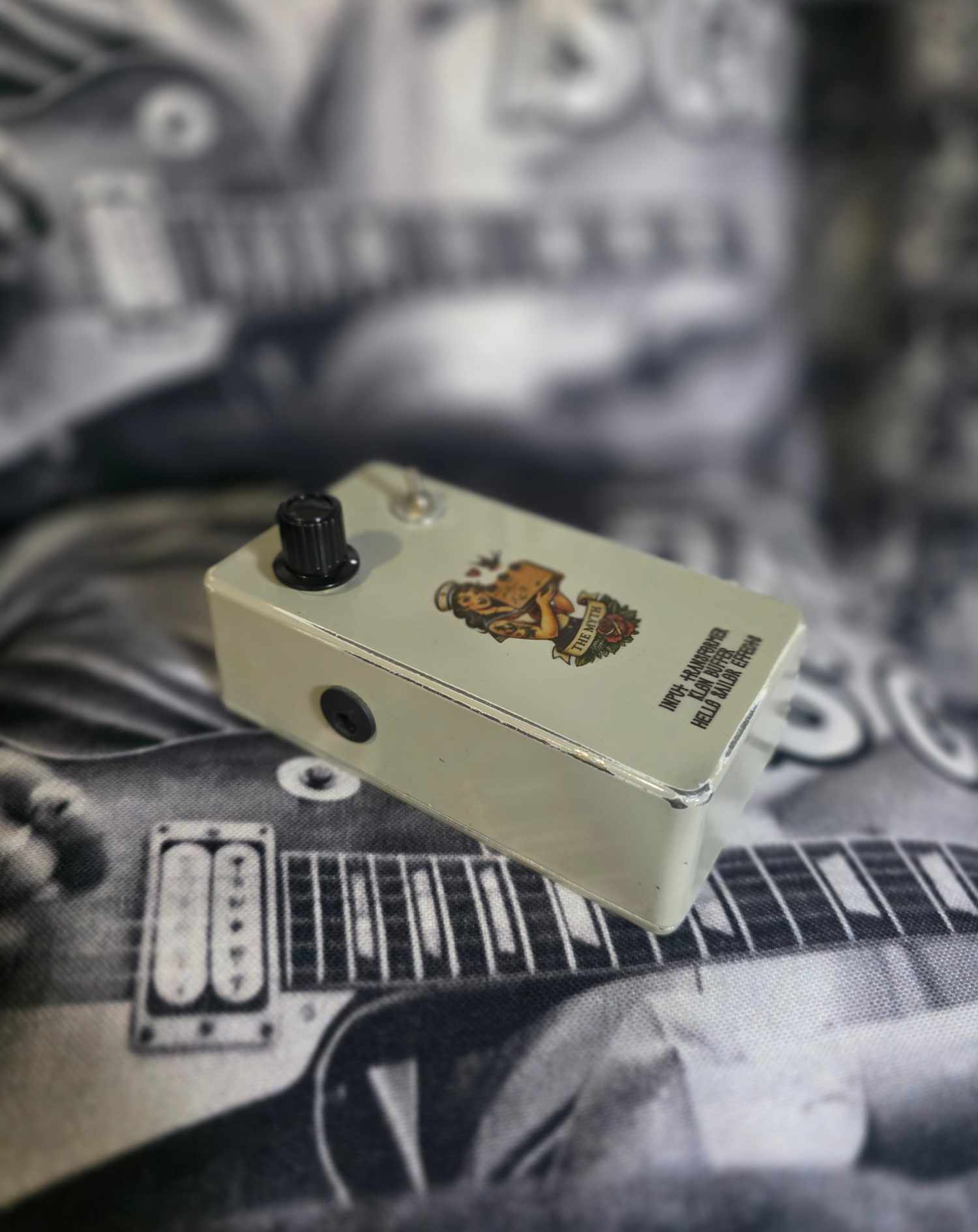
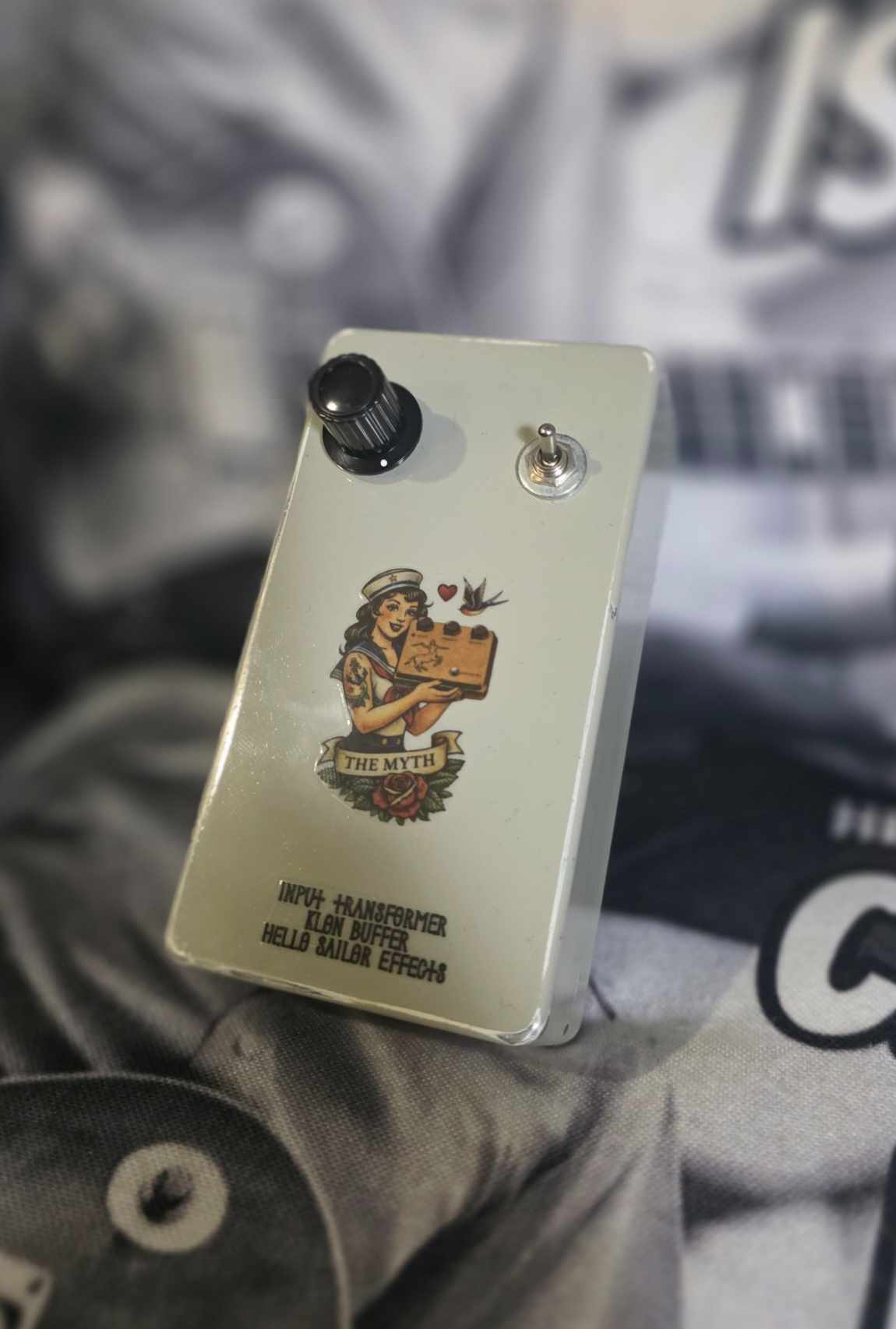
The Myth Klon Buffer and Input Transformer Pickup Simulator
£150.00
2 in stock
Description
Description of Product
If you have ever put a buffer, tuner or another pedal in front of a vintage style fuzz and thought it suddenly sounded wrong, that is not your imagination.
Some fuzz and germanium circuits are extremely sensitive to what they see at their input. Plug the guitar directly into them and everything behaves properly. Put a conventional buffer in front and the relationship changes. The cleanup can change, the top end can become harder and the pedal can stop responding the way it did straight from the guitar.
That is why I built The Myth.
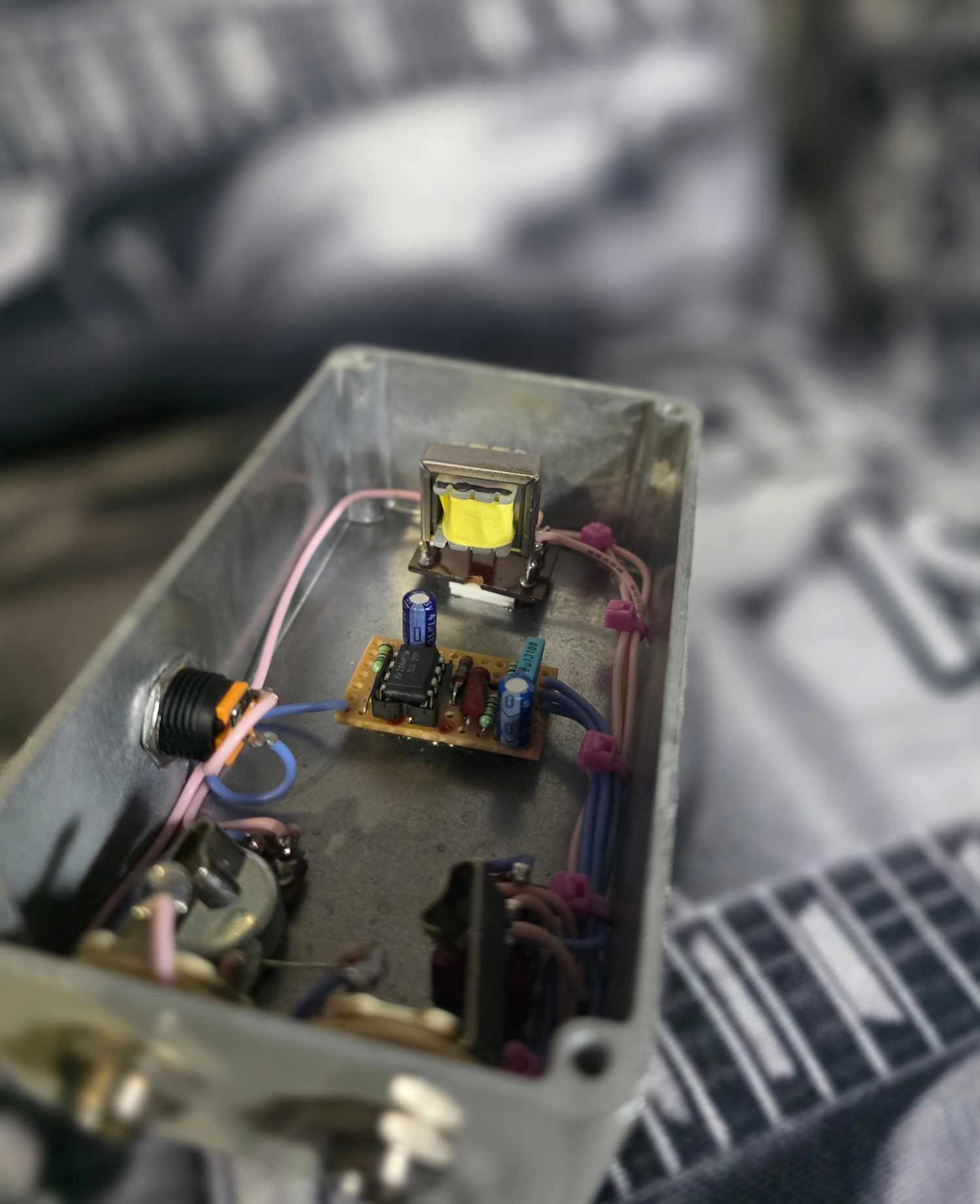
The input is based around one of my favourite buffer circuits, the Klon buffer. That then feeds my input transformer circuit, designed so the pedal that follows sees a source much closer to the impedance relationship it expects from a guitar pickup.
The practical bit is simple.
You no longer necessarily have to arrange the entire pedalboard around one impedance sensitive fuzz pedal.
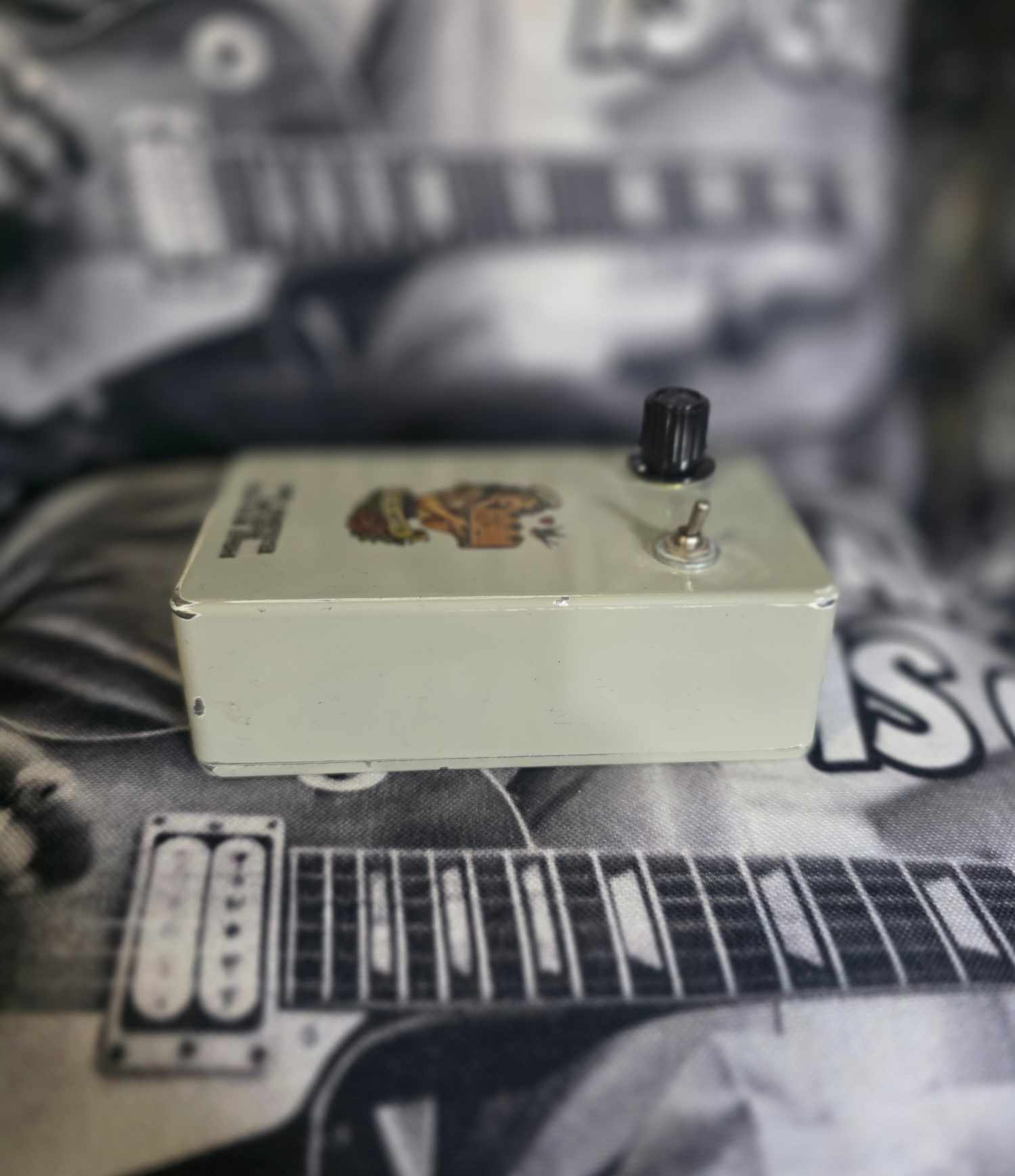
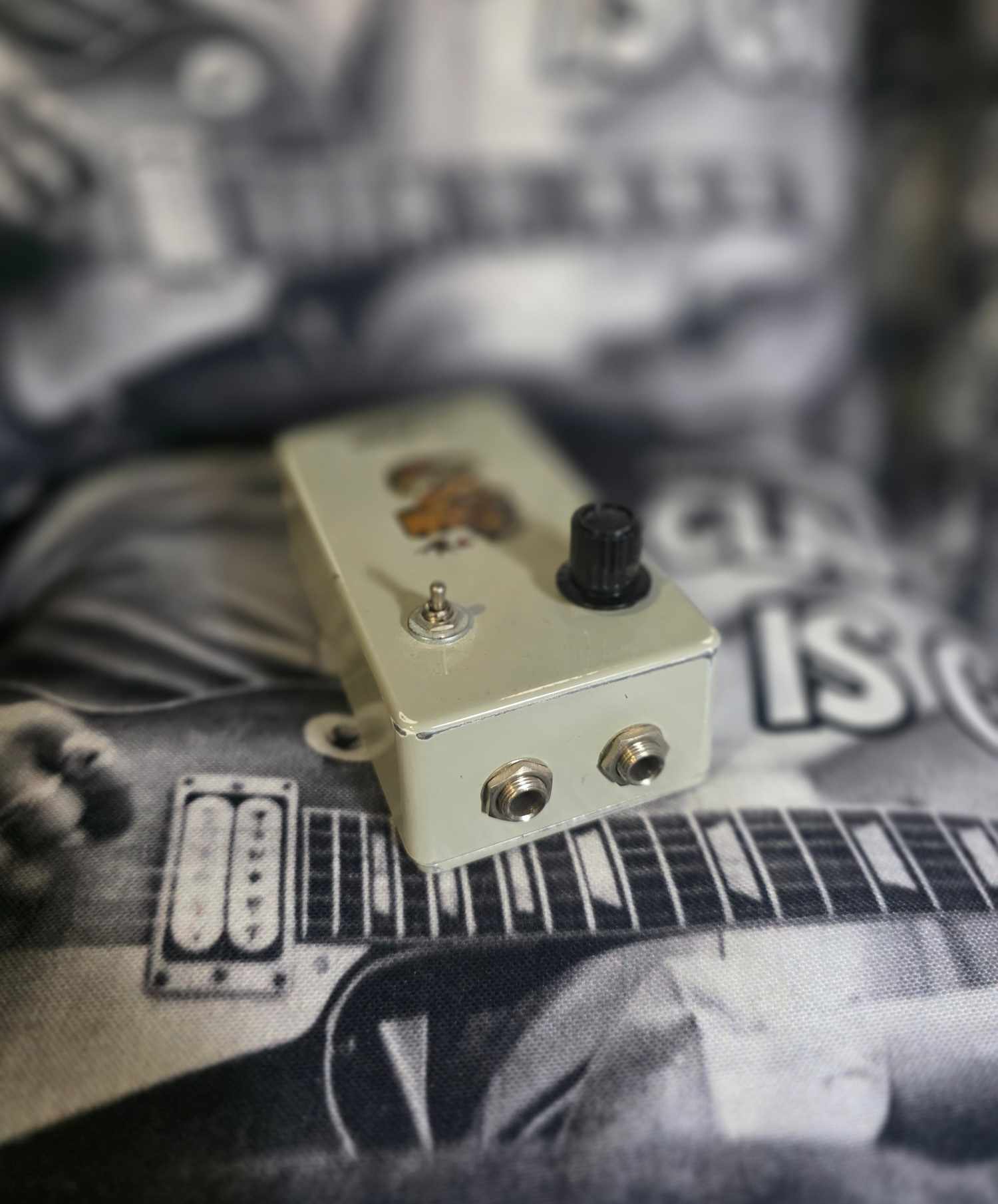
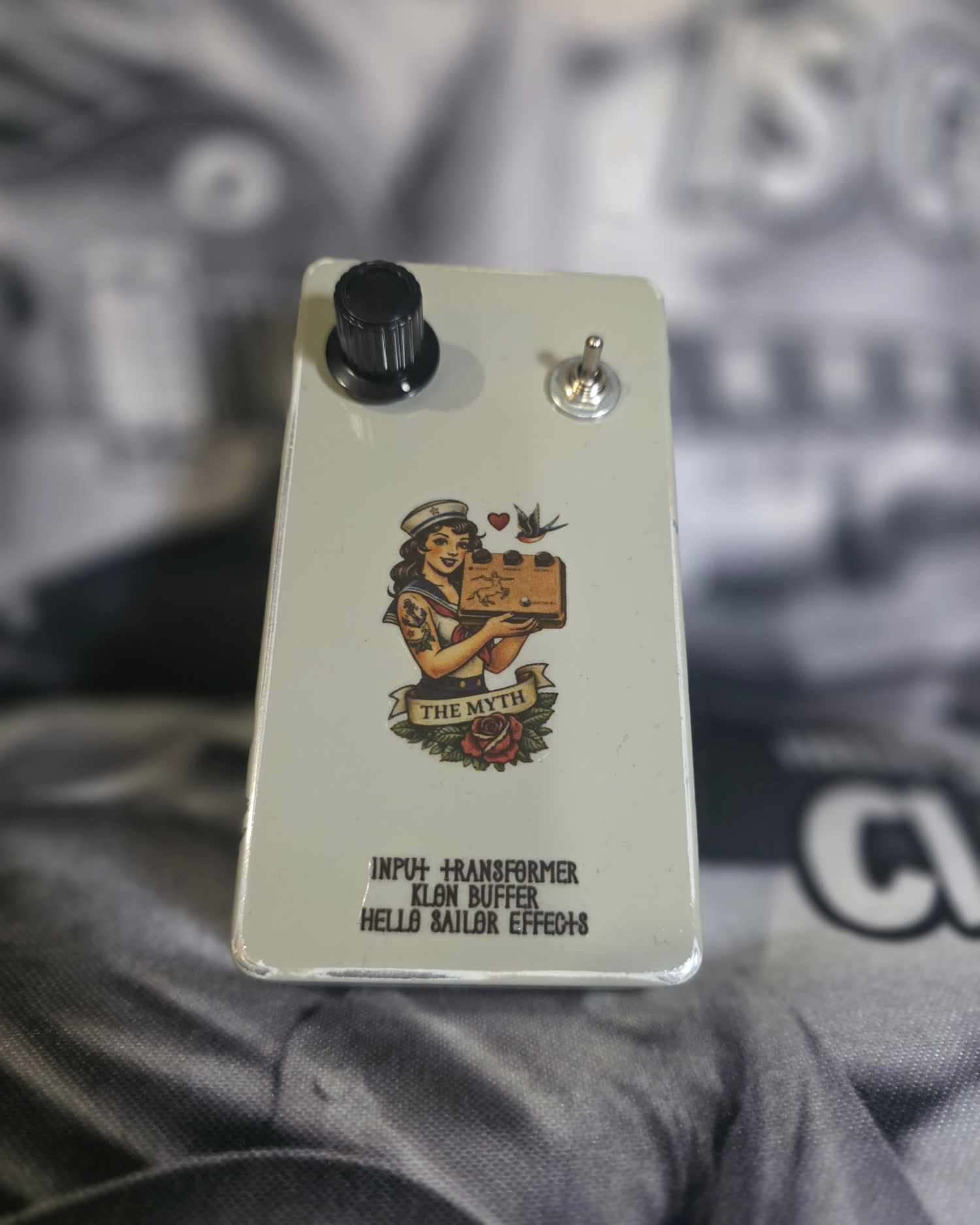
The toggle switch controls the complete circuit.
Switch it off and The Myth is bypassed.
Switch it on and the Klon buffer feeds the transformer circuit.
There is also a volume control. Set it around unity and the circuit can simply sit there dealing with the impedance relationship. Move the control and you can also change how much signal is being sent into the next pedal.
That became one of the more useful parts of the circuit for me. These old circuits can be sensitive not only to what is driving them, but to how hard they are being driven.
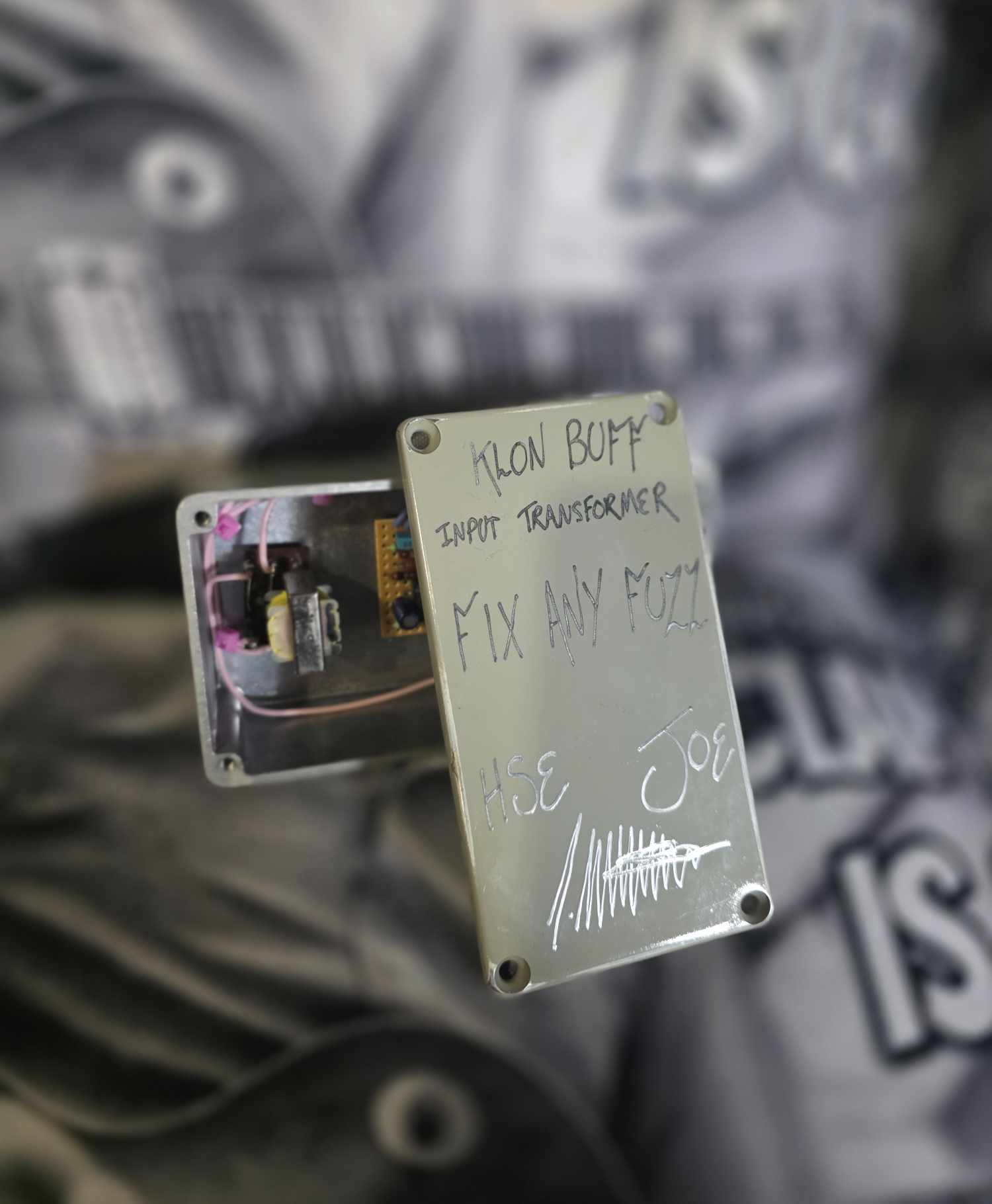
The circuit is hand wired, with the transformer mounted separately inside the enclosure.
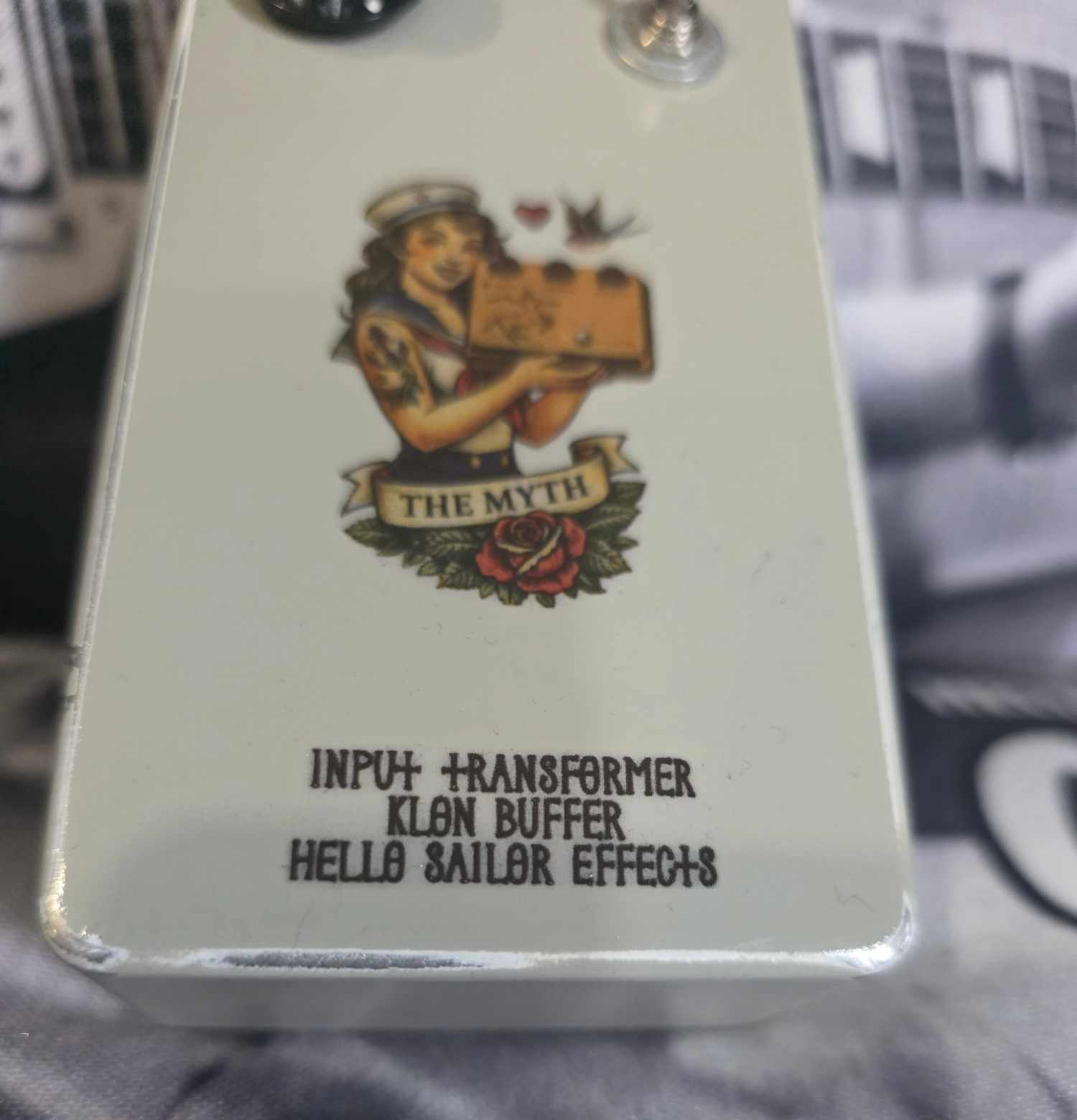
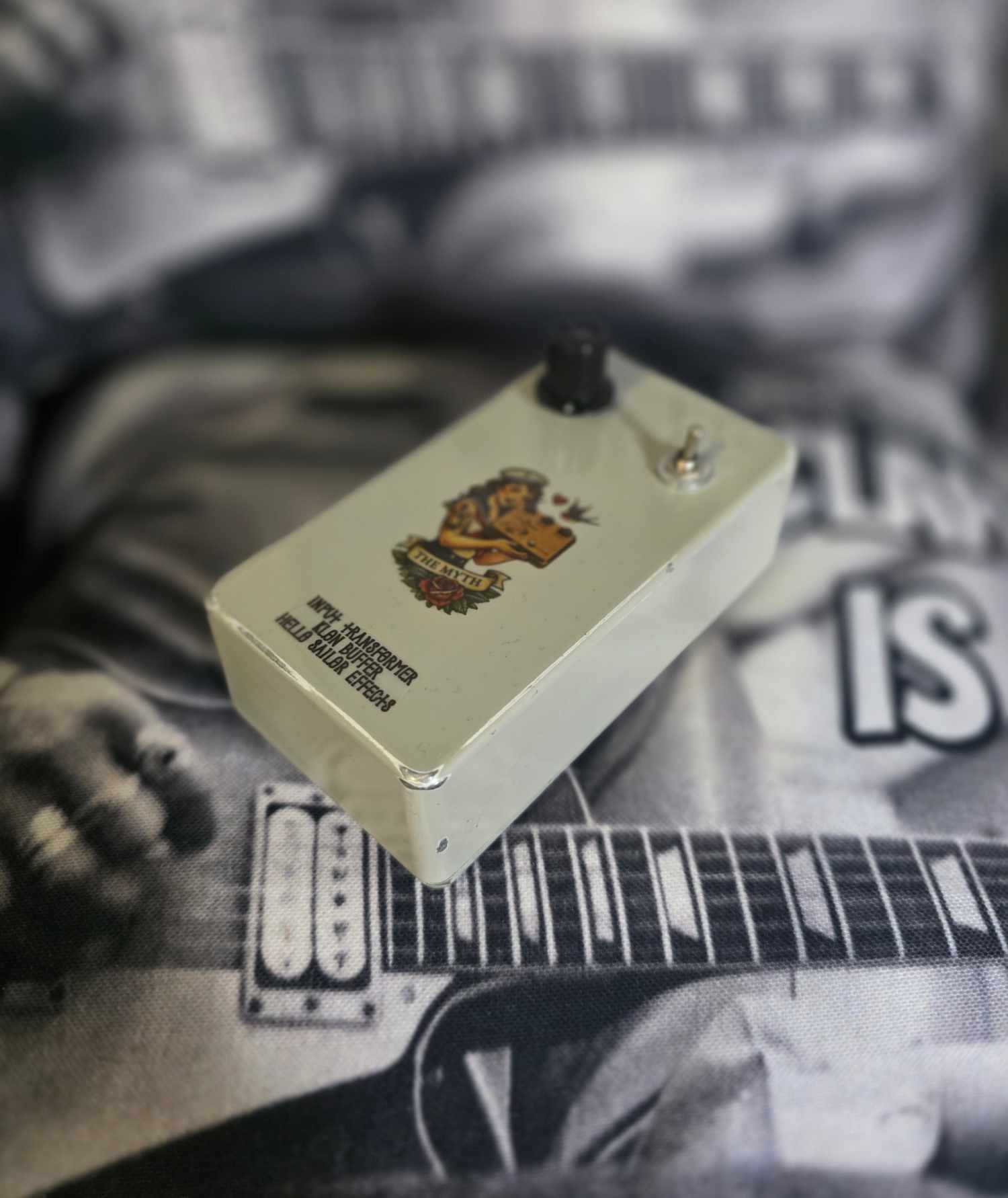
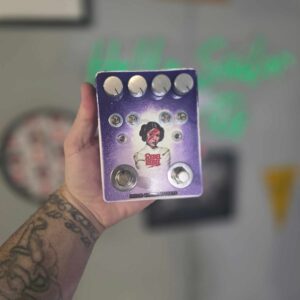
This version is finished in battleship grey with my Hello Sailor Effects take on the Klon artwork and a black Bakelite control knob.
It runs from a standard 9 volt centre negative pedal power supply.
I went through the transformer idea, the impedance problem and why I started using this approach in much more detail here:
Description of Sound
The Myth is not really about adding another effect to the pedalboard.
It is about changing how the pedal after it behaves.
That distinction matters.
If you have an old style fuzz or germanium circuit that sounds right plugged directly into the guitar but becomes thin, bright or simply less responsive when something buffered is placed before it, The Myth was built to address that relationship.
With the circuit switched on, the Klon buffer looks after the signal coming into The Myth and drives the transformer consistently. The transformer then changes what the following pedal sees at its input.
For an impedance sensitive circuit, that can make a very obvious difference.
The guitar volume control can start behaving more naturally again.
The response of the fuzz can change.
And, most importantly for me, you are no longer automatically forced to put that pedal first simply because that is the only place where it behaves properly.
The volume control gives you another way of working with the next pedal.
Keep it around the original guitar level and The Myth can concentrate mainly on the impedance relationship.
Turn it up and you can hear what happens when the following circuit is driven harder.
Pull it back and you can do the opposite.
So although there is only one knob and one switch, there is quite a lot going on electrically.
It looks simple until you listen.
I built a small number of these following my experiments with transformers, buffers and impedance sensitive pedals.
There are three remaining.
Each one is hand wired and this particular battleship grey version with the Klon artwork and Bakelite control will not be repeated exactly.
If you have a fuzz or germanium pedal that has been dictating where everything else has to sit on your pedalboard, this is what I built to deal with that problem.
If it makes sense for your board, the remaining three are available.

Reviews
There are no reviews yet.