




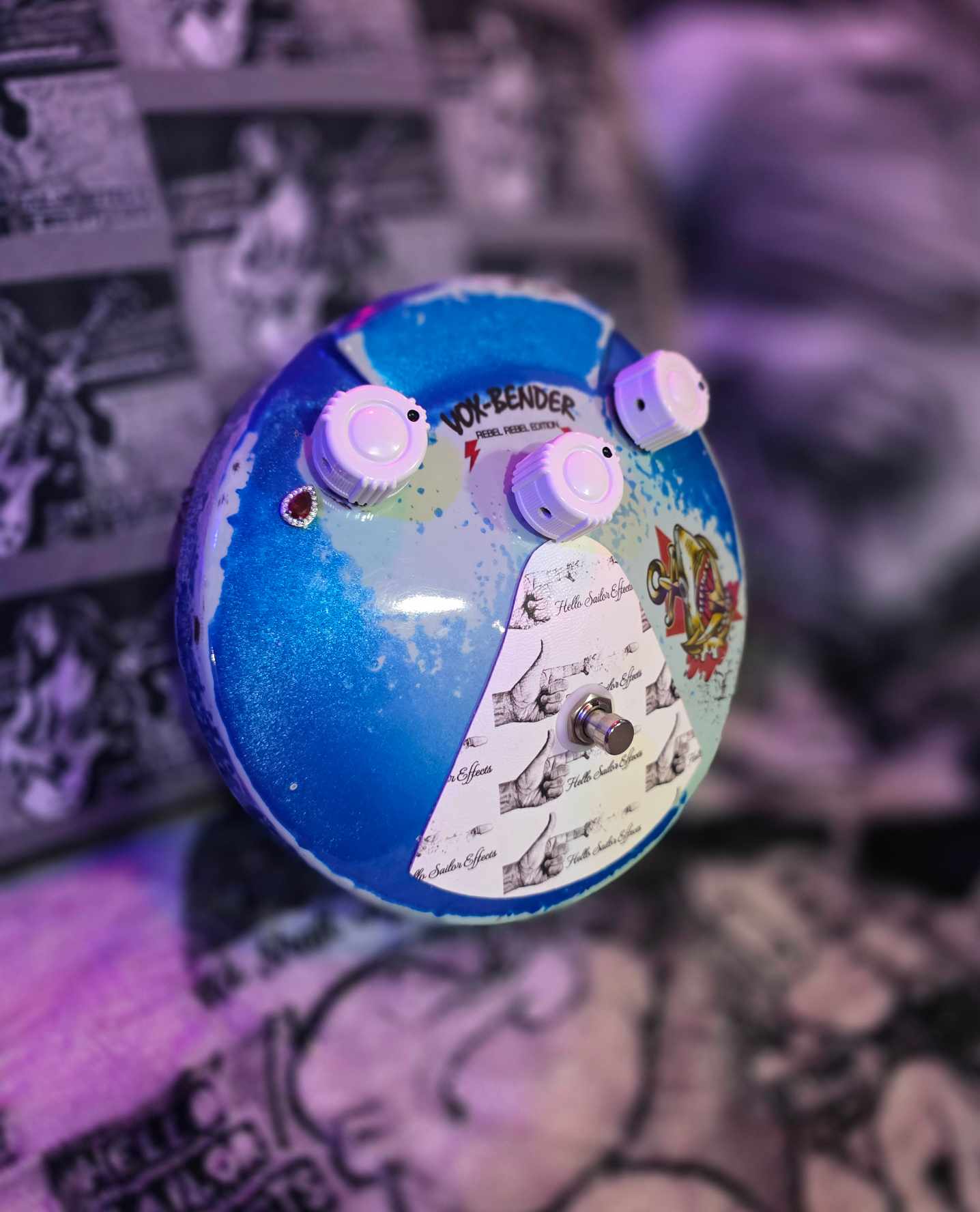

Voxbender Fuzz | NOS Soviet BART Transistors | Hand Wired Tagboard
£280.00
1 in stock
Description
Description of Product
There are plenty of vintage style fuzz pedals that look the part. The real difference is what happens when you start playing.
How does it respond to your picking? What happens when you roll the guitar volume back? And can you change the character of the fuzz without losing the sound that made you turn it on in the first place?
That is what I was interested in when I built this Voxbender.
Based around the classic British Vox Tone Bender idea, this is my take on a circuit that has always been more interesting to me for its behaviour than its reputation.
The heart of this build is a set of NOS Soviet made BART transistors. I chose them for how they work together in the circuit, particularly how they respond as the bias changes.
That last part matters.
Rather than fixing the transistor bias at one particular setting and leaving you with whatever character that produces, I have fitted an external Bias control using an oversized 1960s CTS potentiometer.
It gives you direct control over one of the things that makes these old fuzz circuits so interesting. You can move between a more stable, even sounding fuzz and something rougher, with the notes beginning to break apart.
It is a useful control rather than another adjustment added for the sake of it.
The entire circuit is hand wired on traditional tagboard, with cloth covered wiring throughout. No printed circuit board. Every component and connection is individually laid out and assembled.
It is the sort of construction I enjoy, particularly with old circuits like this. You can follow the whole signal path just by looking inside.
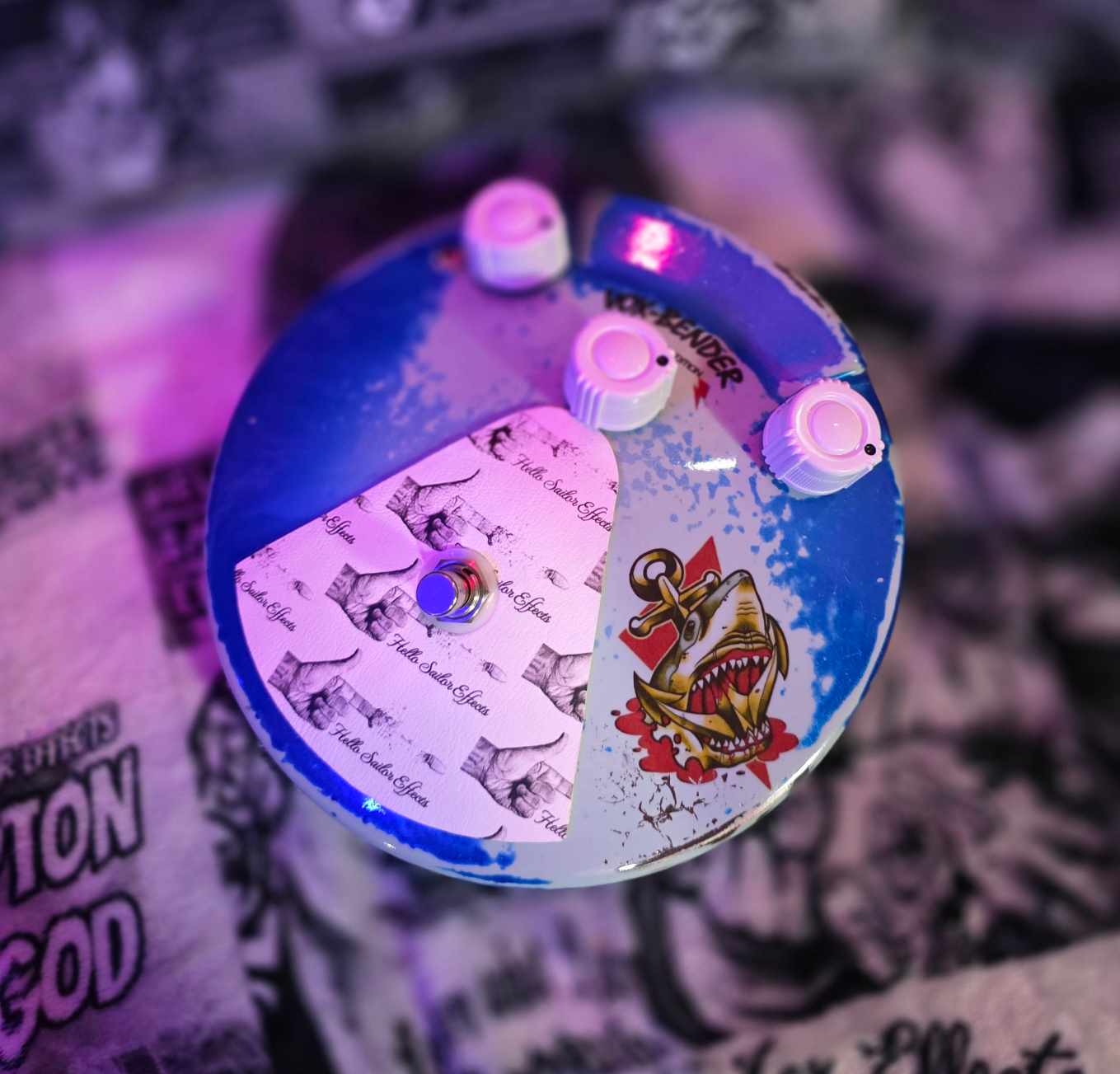
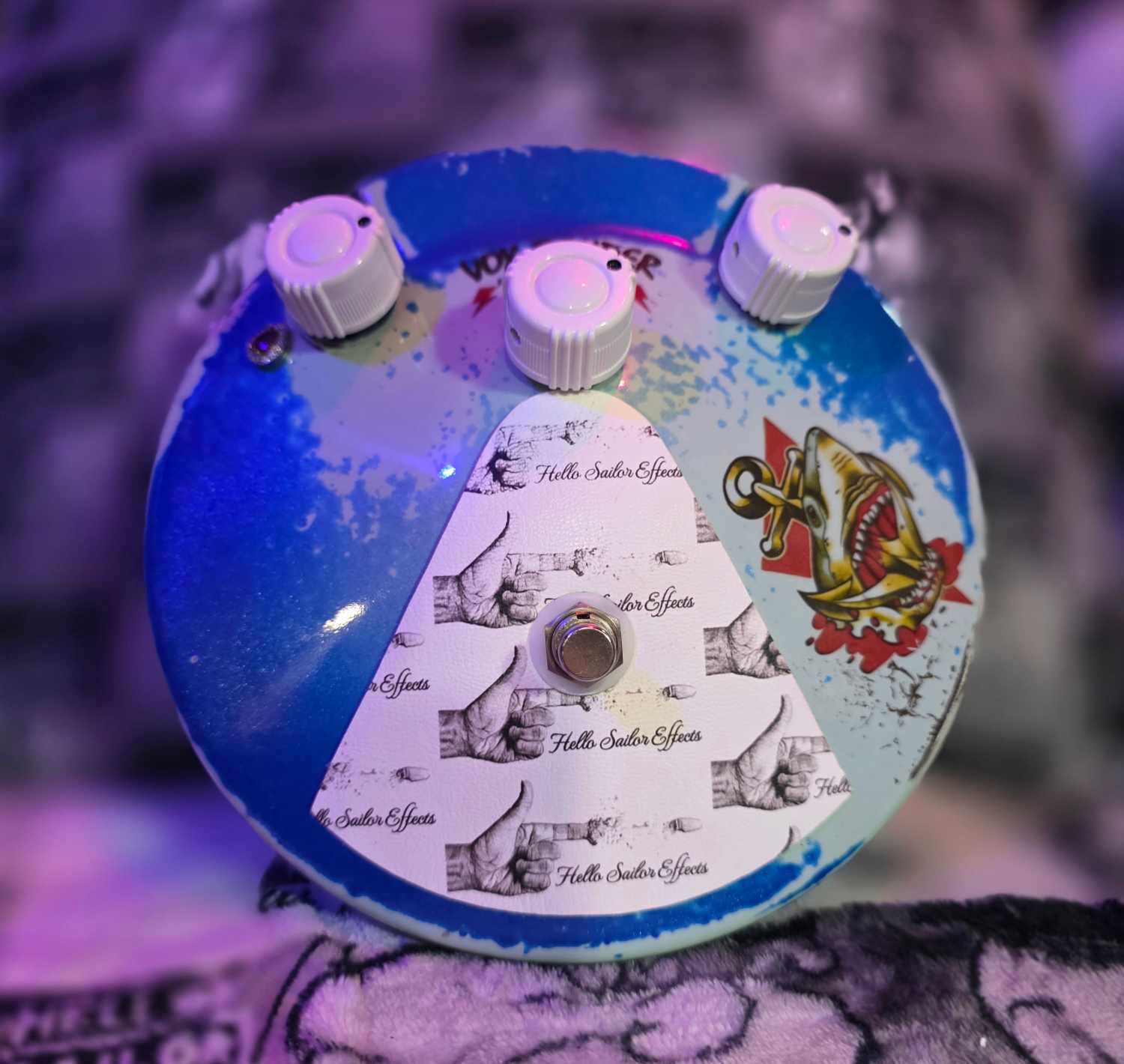
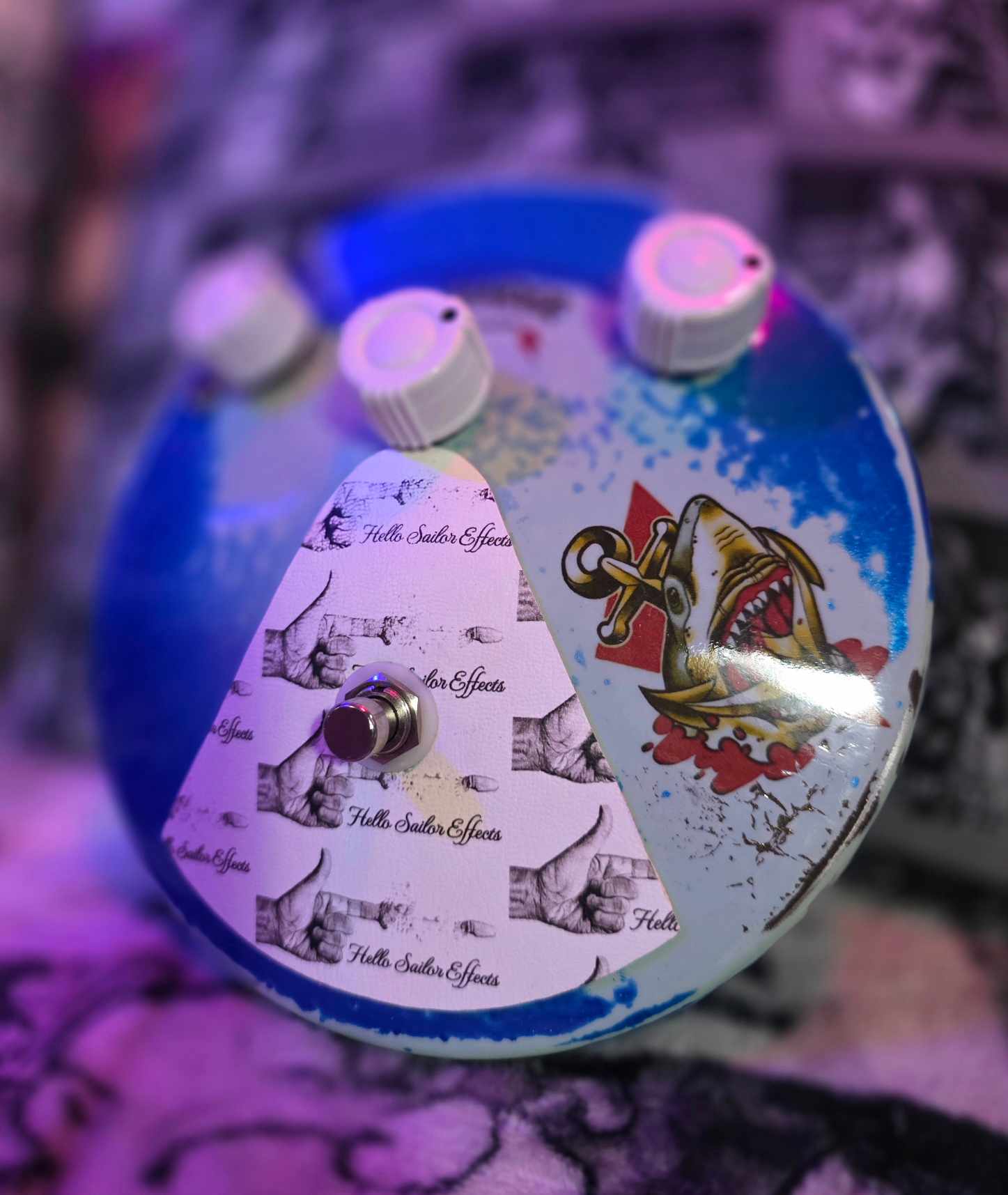
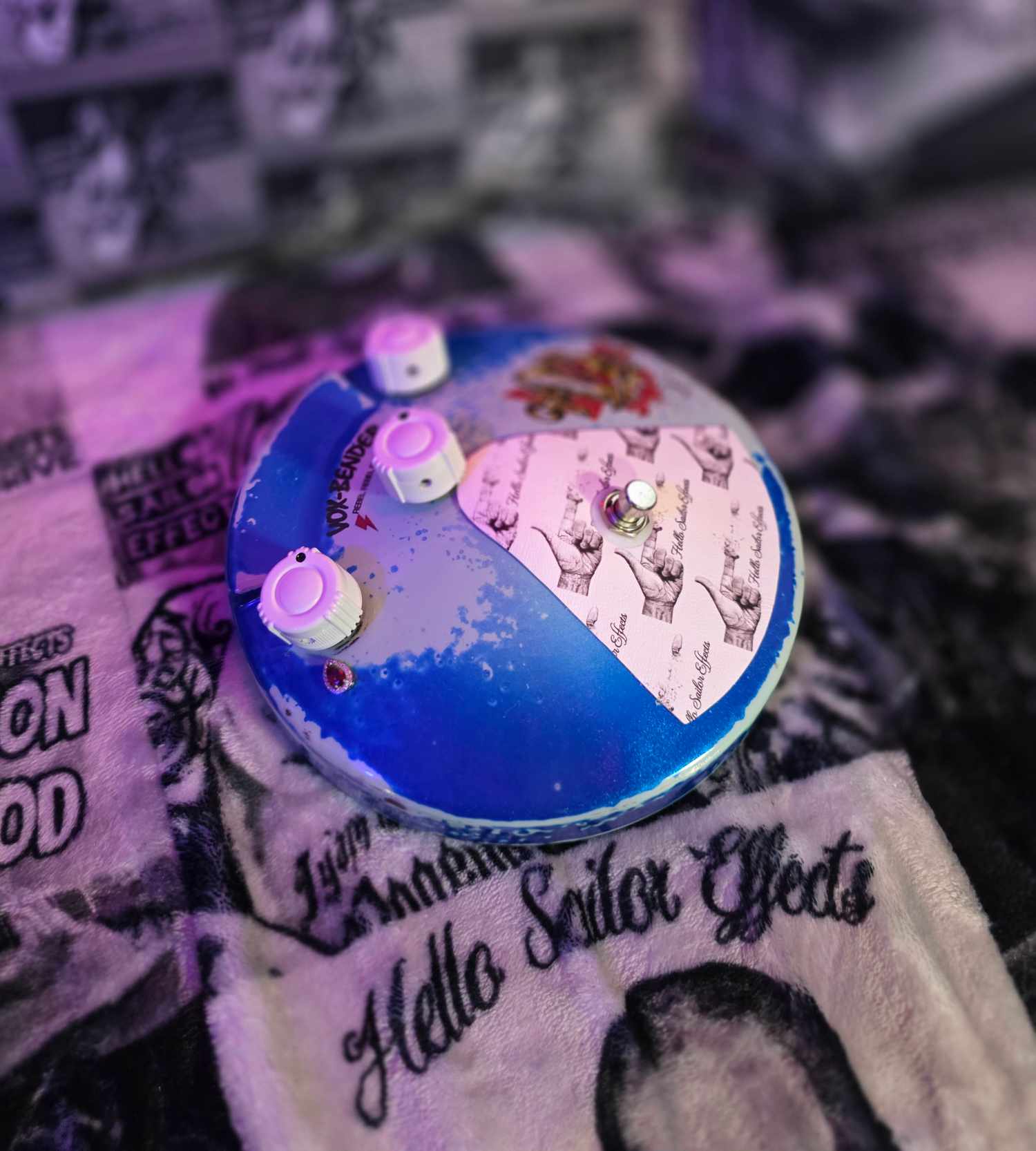
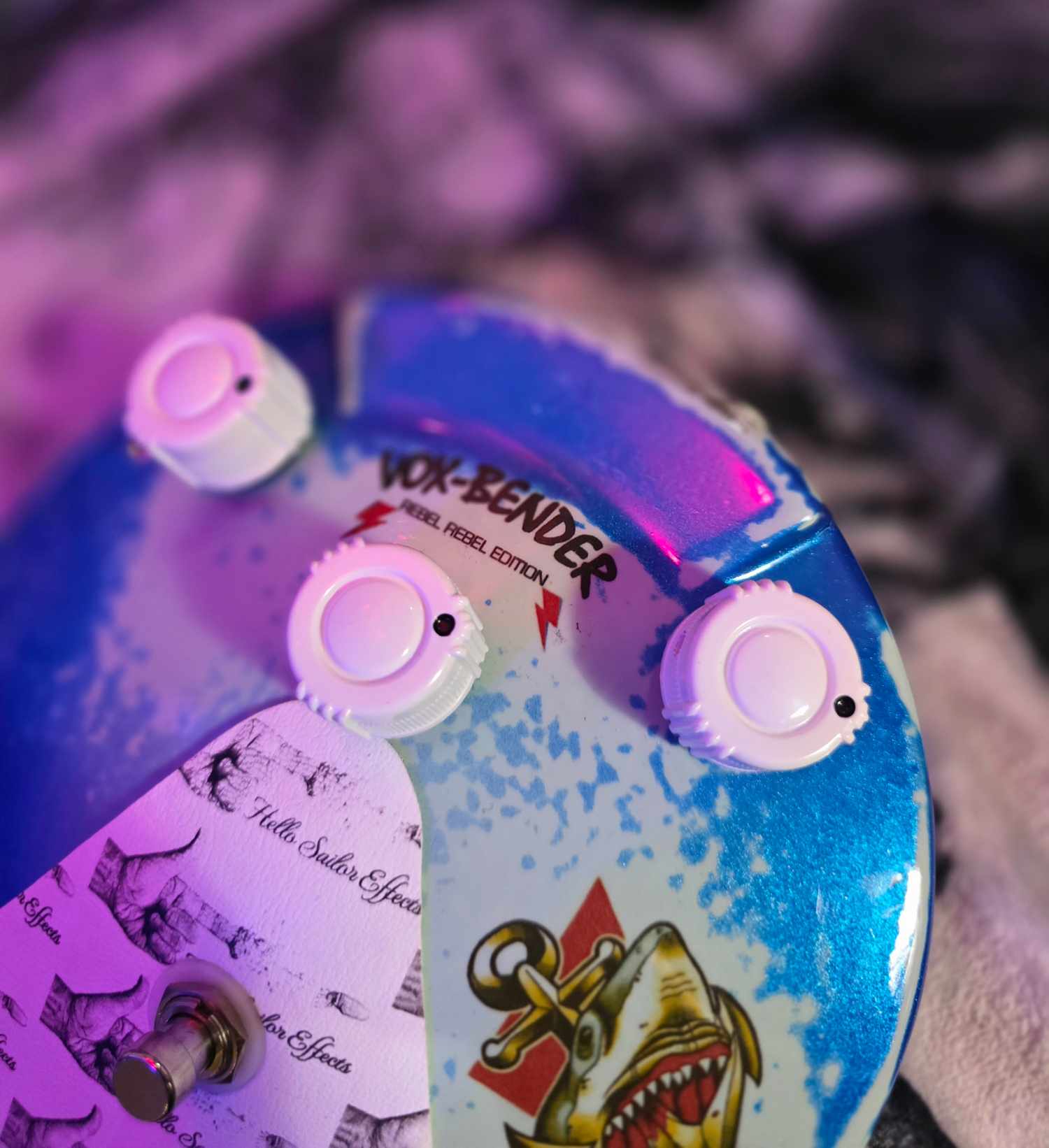
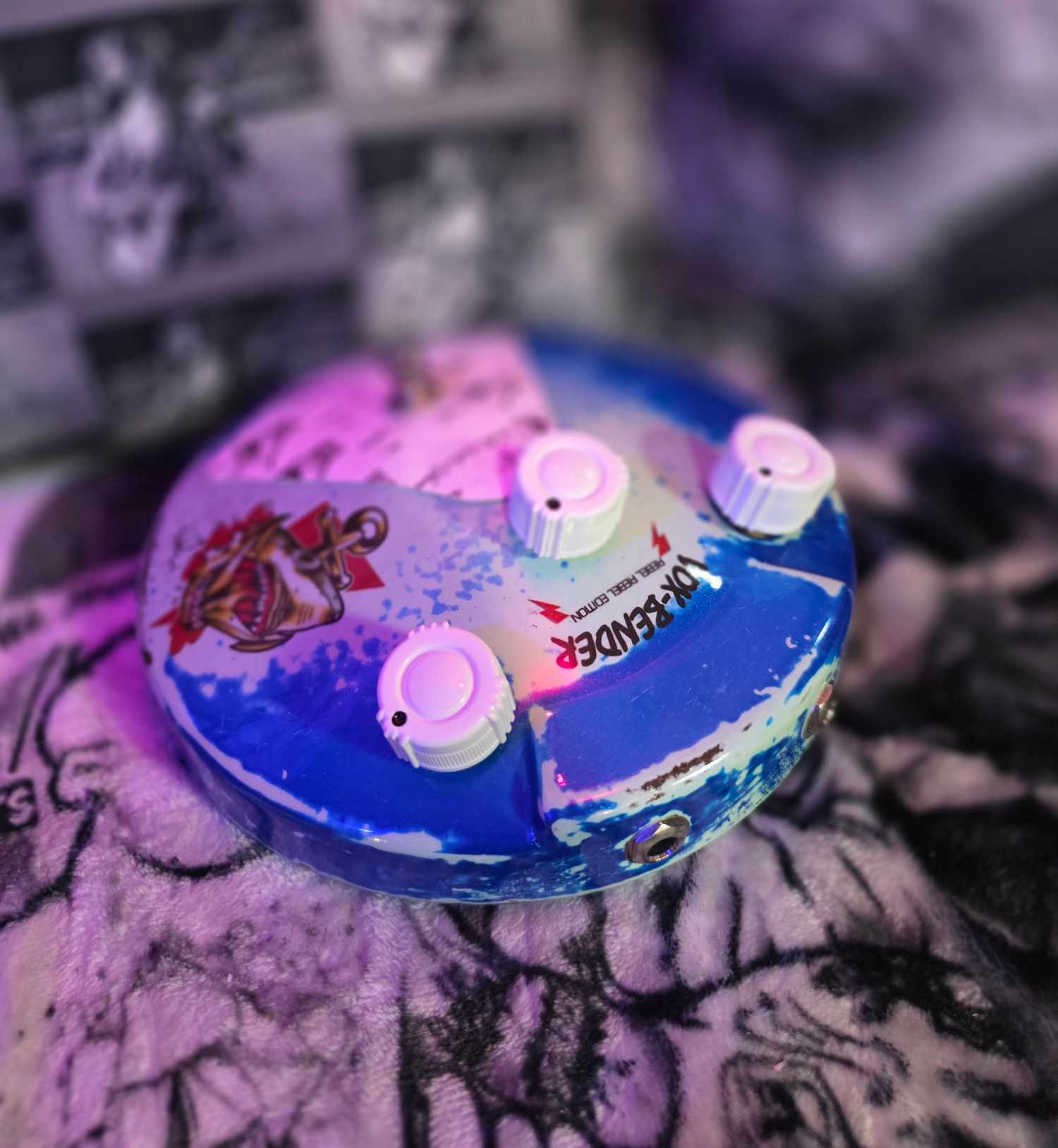
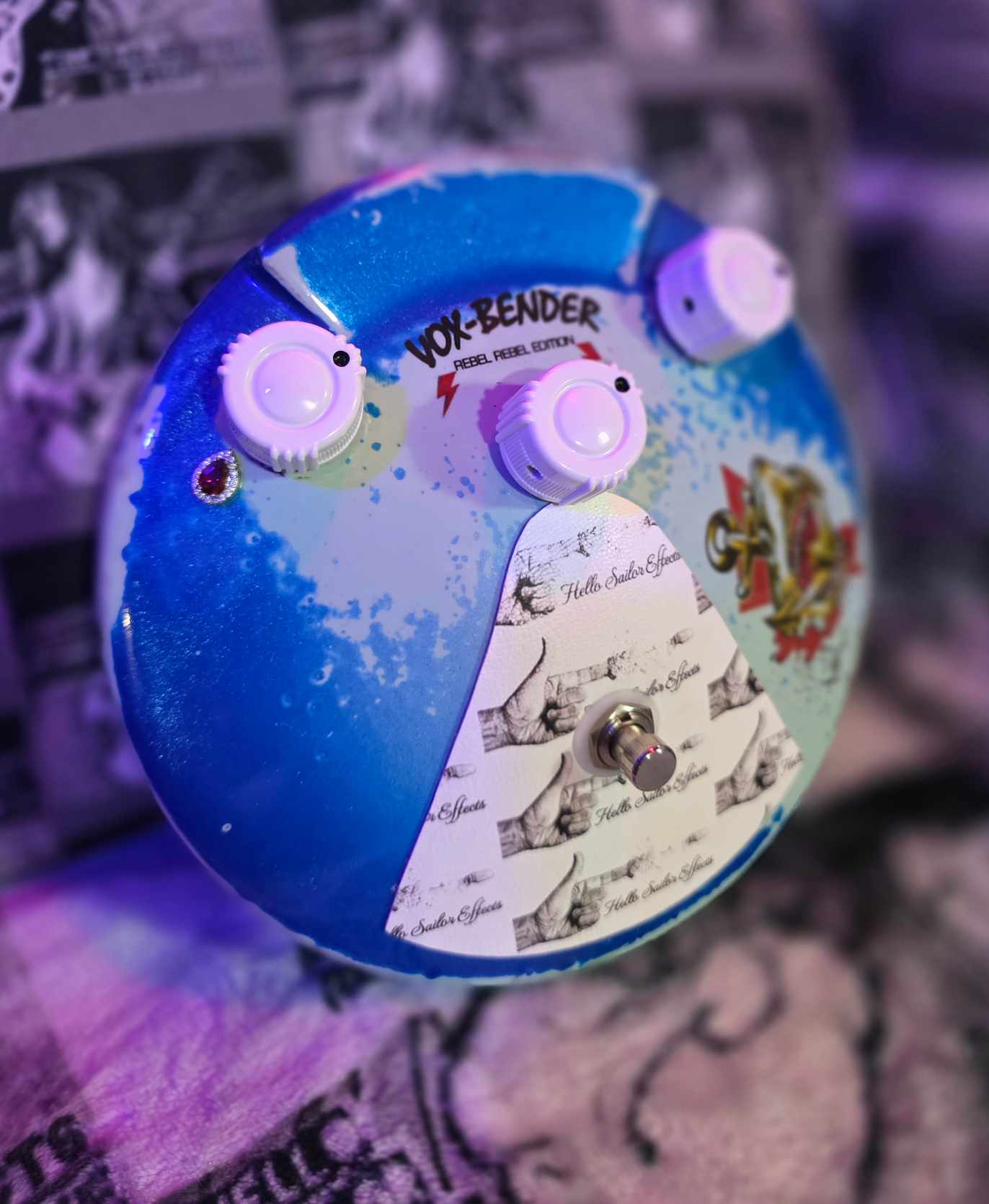
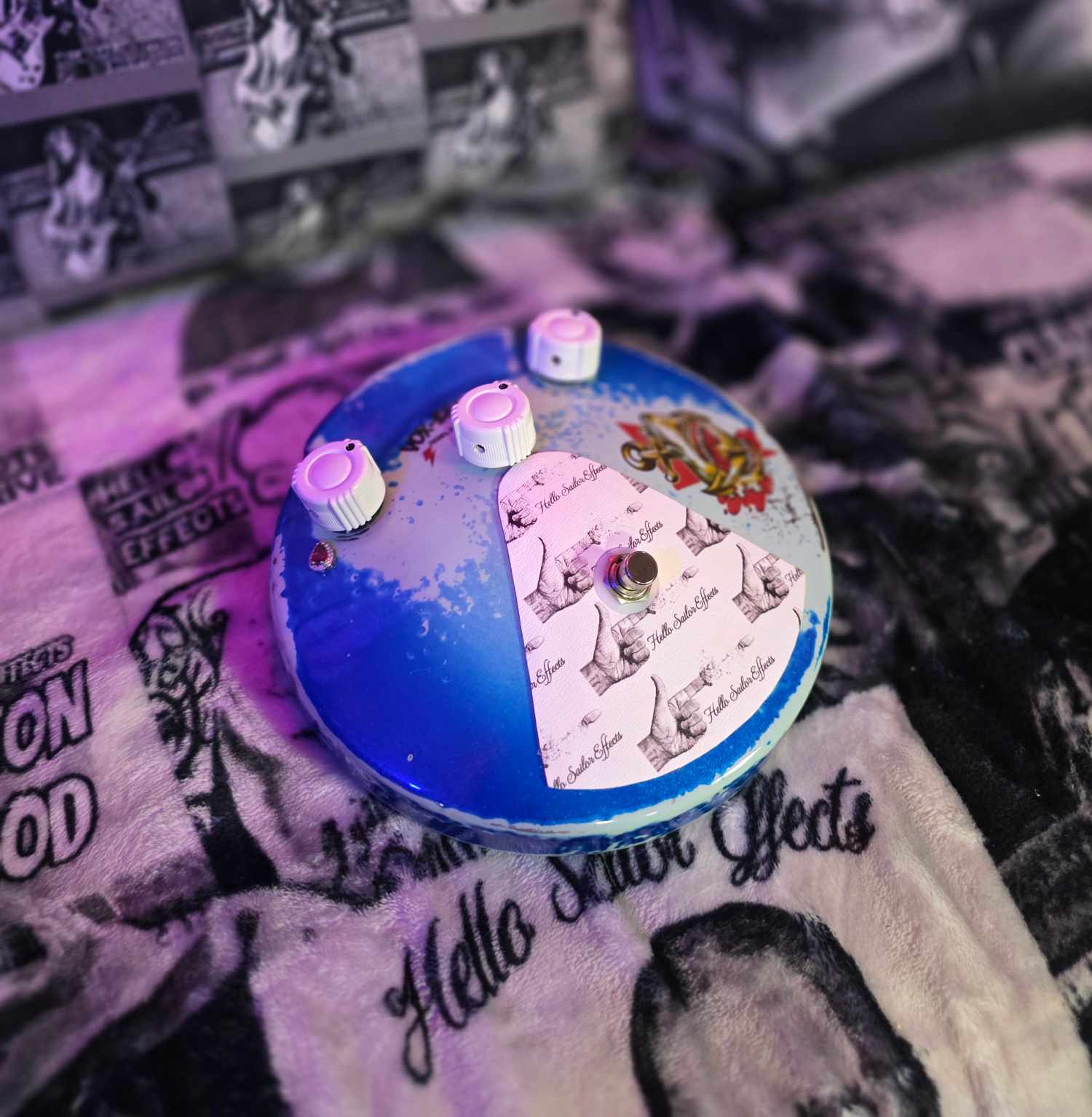
Everything sits in a substantial, thick wall, vintage Fuzz Face style enclosure.
The finish is metallic blue over Sonic Blue, carefully aged to expose the layers underneath. Rather than trying to make an old pedal look new, I wanted something that could easily have spent the last few decades being carried between amplifiers and guitar cases.
The three controls use Classic Big Muff knobs, giving the pedal another recognisable piece of vintage fuzz styling.
A fitted leatherette footpad finishes the enclosure. A small detail, but one that feels right on a pedal of this size.
This isn’t a production model with a different paint job.
It is one particular collection of components, assembled and adjusted around the way I wanted this circuit to behave.
And there is only one.
Description of Sound
The thing I like about this Voxbender is that it doesn’t simply give you more or less fuzz. It lets you change the way the fuzz behaves.
At lower Fuzz settings, the notes remain relatively controlled and defined. You can hear the individual strings, and there is enough response to your picking that the pedal doesn’t immediately take over everything you play.
Bring the Fuzz control up and the character starts to change.
There is more saturation, more sustain and that familiar rough edge associated with early British transistor fuzz circuits. But it still responds to the guitar, rather than turning every note into the same sound.
The Bias control is where this particular build becomes interesting.
With the transistors operating in a more stable region, the fuzz has a smoother, more even response.
Move the Bias control and you begin to alter that balance. The texture becomes rougher. The decay changes. Notes start to break up in a way that you simply cannot get by turning the Fuzz control down.
It gives you another way of shaping the sound without changing pedals.
Then there is the guitar’s volume control.
Roll it back and the fuzz begins to clean up, retaining some of its character rather than disappearing into an unrelated sound. Bring the guitar volume back up and the saturation returns.
You can move between these sounds while playing, without constantly bending down to the pedal.
Into an amplifier that is already starting to work, the Voxbender has that familiar interaction between transistor fuzz and an amp being pushed. Pick lightly and it settles back. Dig in and it responds.
That is what I was chasing with this build.
Not the greatest amount of gain or the rarest transistor I could find.
A fuzz that changes with the way you play it.
One Off Build
This is a single, individually hand wired Hello Sailor Effects Voxbender.
The combination of Soviet BART transistors, vintage CTS Bias control, traditional tagboard construction, layered blue finish and Classic Big Muff knobs is specific to this pedal.
I may build other Voxbenders, but I won’t repeat this one in exactly the same form.
If you have been looking for a vintage style British fuzz with a little more control over how the circuit behaves, this is the one I built.
It exists. There is only one. And it is available.

Reviews
There are no reviews yet.