
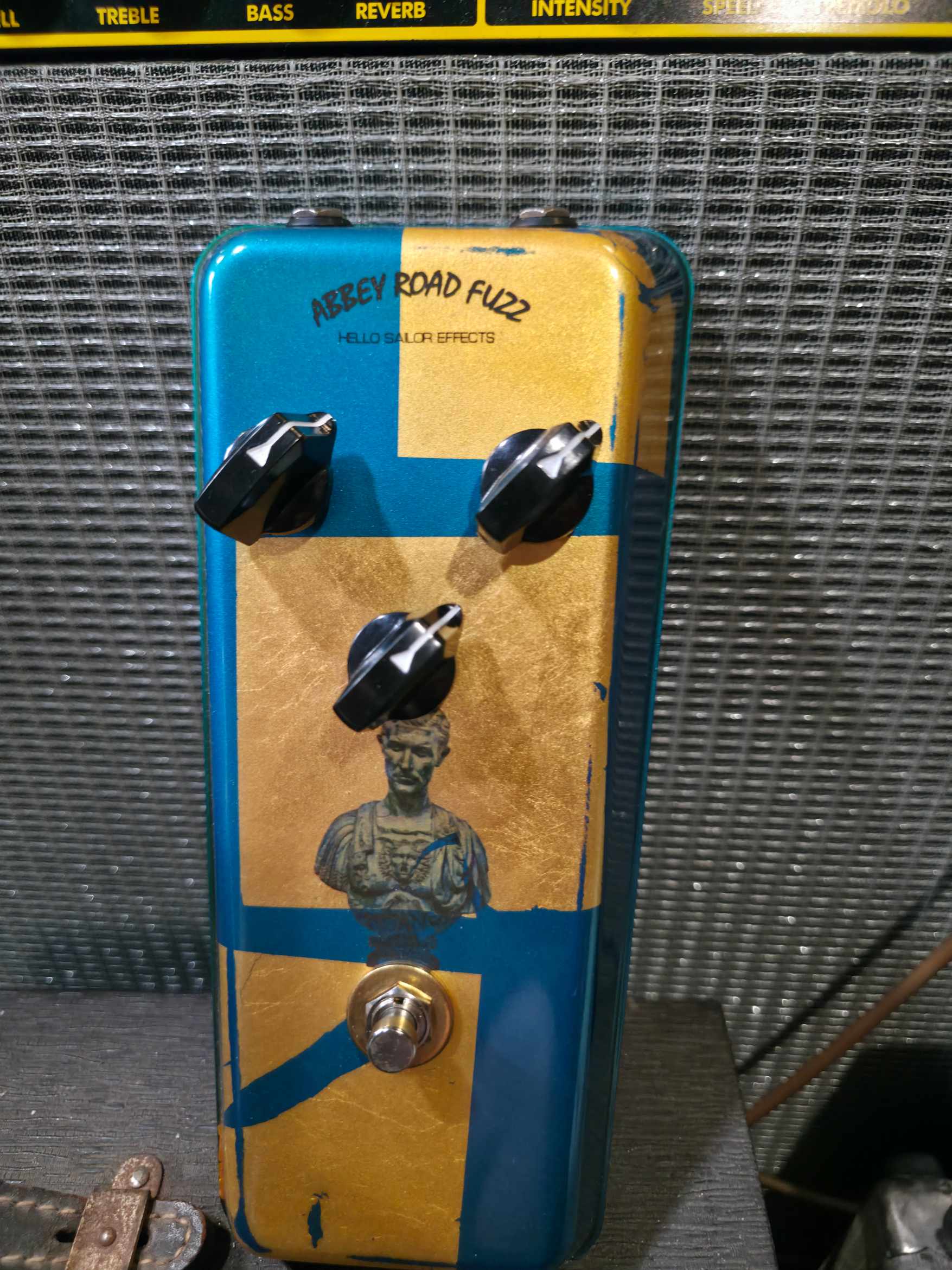
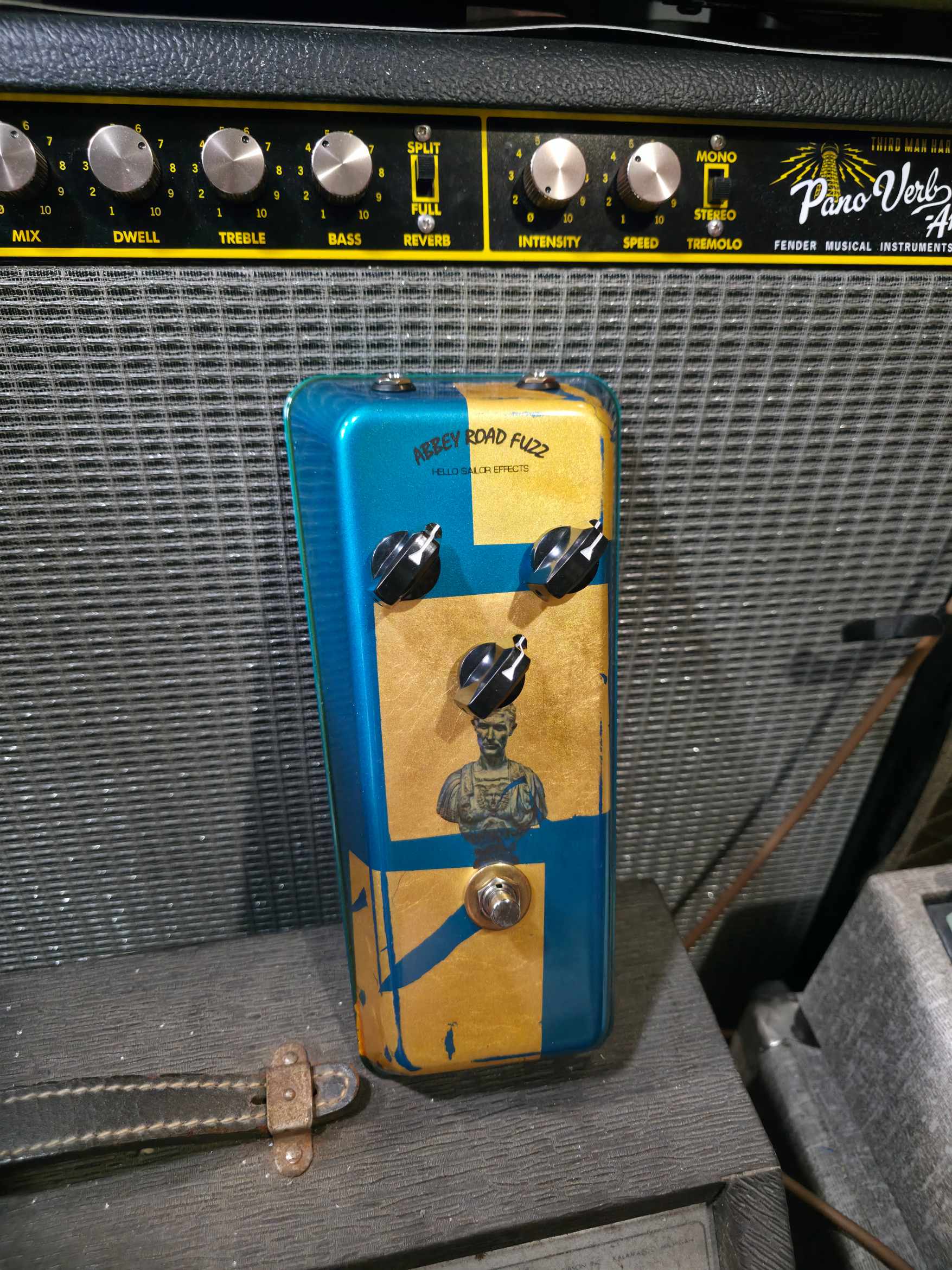
Hello Sailor Effects Abbey Road Fuzz | NKT OC44 and NKT275 Germanium Fuzz | Metallic Teal Nitrocellulose and 24 Carat Gold Leaf
£700.00
1 in stock
Description
Description of Product
This is probably the point where saving rare components stops making sense.
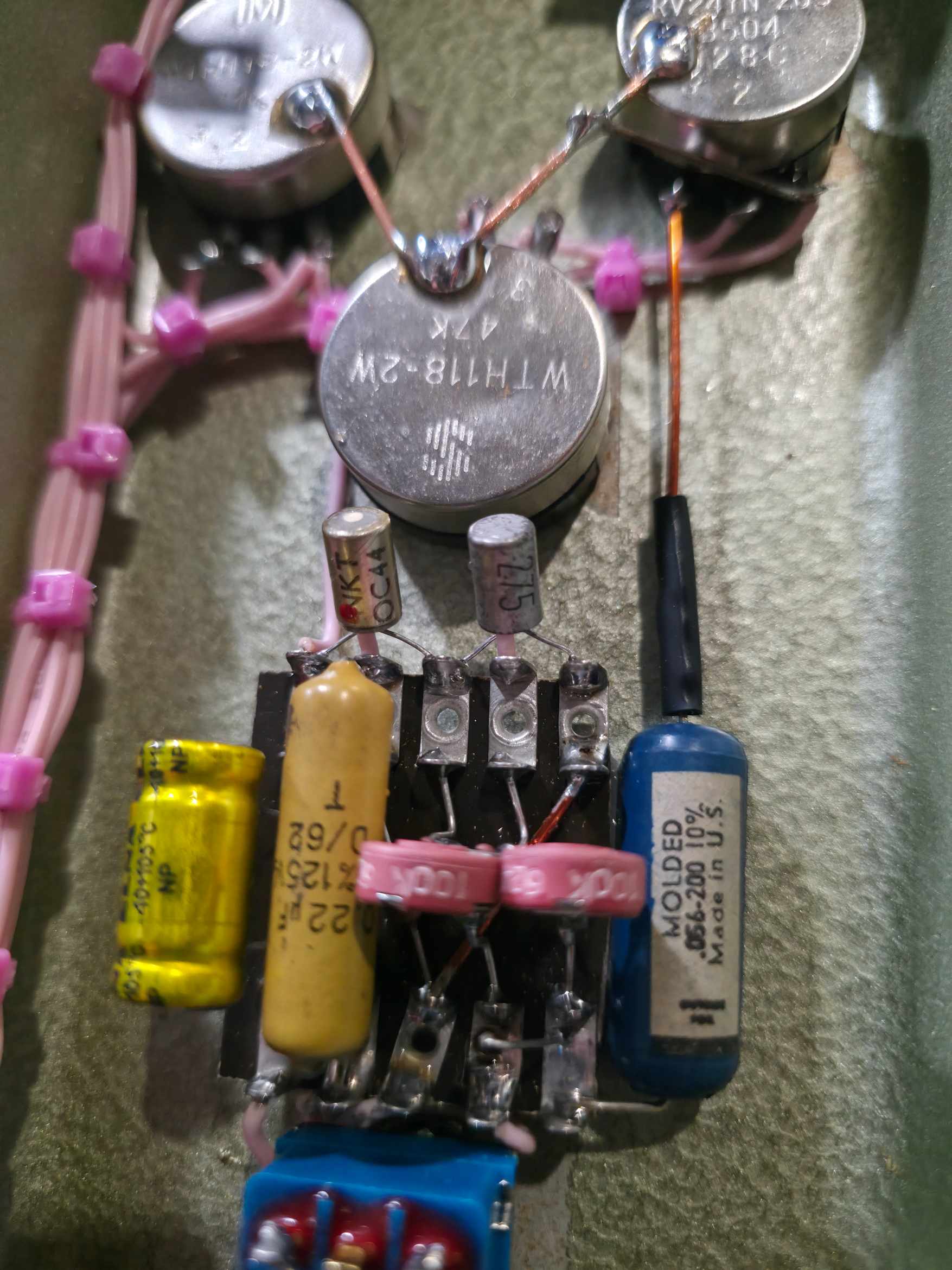
I have had the NKT OC44 in this pedal for years. I have only ever seen two of them. The other one went into another particularly special build, which left this one sitting in the drawer waiting for something I thought justified actually using it.
That transistor is now Q1 in this Abbey Road Fuzz.
Q2 is an original NKT275.
Rather than buying it loose with no idea where it had come from, I reclaimed this one from an old transistor radio during the build of the pedal. It was removed, tested, and only used once I knew it was suitable for the circuit.
That matters to me more than the writing on the side of the can.
The Abbey Road Fuzz is my take on the traditional two transistor germanium fuzz circuit. This particular one has been built entirely by hand on tagboard, with the NKT OC44 in Q1 and the reclaimed NKT275 in Q2.
The rest of the board follows exactly the same approach.
The input capacitor is a NOS moulded mustard capacitor, while the output uses a vintage blue moulded capacitor of the same style found in old Fender and Magnatone amplifiers.
I could use modern components to achieve the required electrical values, but part of what I enjoy about builds like this is using components with a physical connection to the equipment and construction methods that inspired them.
That does not mean an old capacitor automatically sounds better because it is old. It means this particular pedal has been built from parts I have deliberately collected and kept because they belonged in the right project.
This was that project.
The enclosure has had just as much attention.
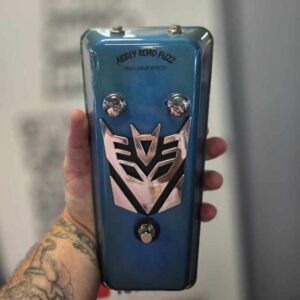
It is finished in metallic teal nitrocellulose lacquer with genuine 24 carat gold leaf worked into the finish. The gold is embedded into the finish rather than simply painted onto the surface, with the metallic teal breaking through around it as part of the aged appearance.
The three black Bakelite knobs finish it off properly without distracting from the enclosure itself.
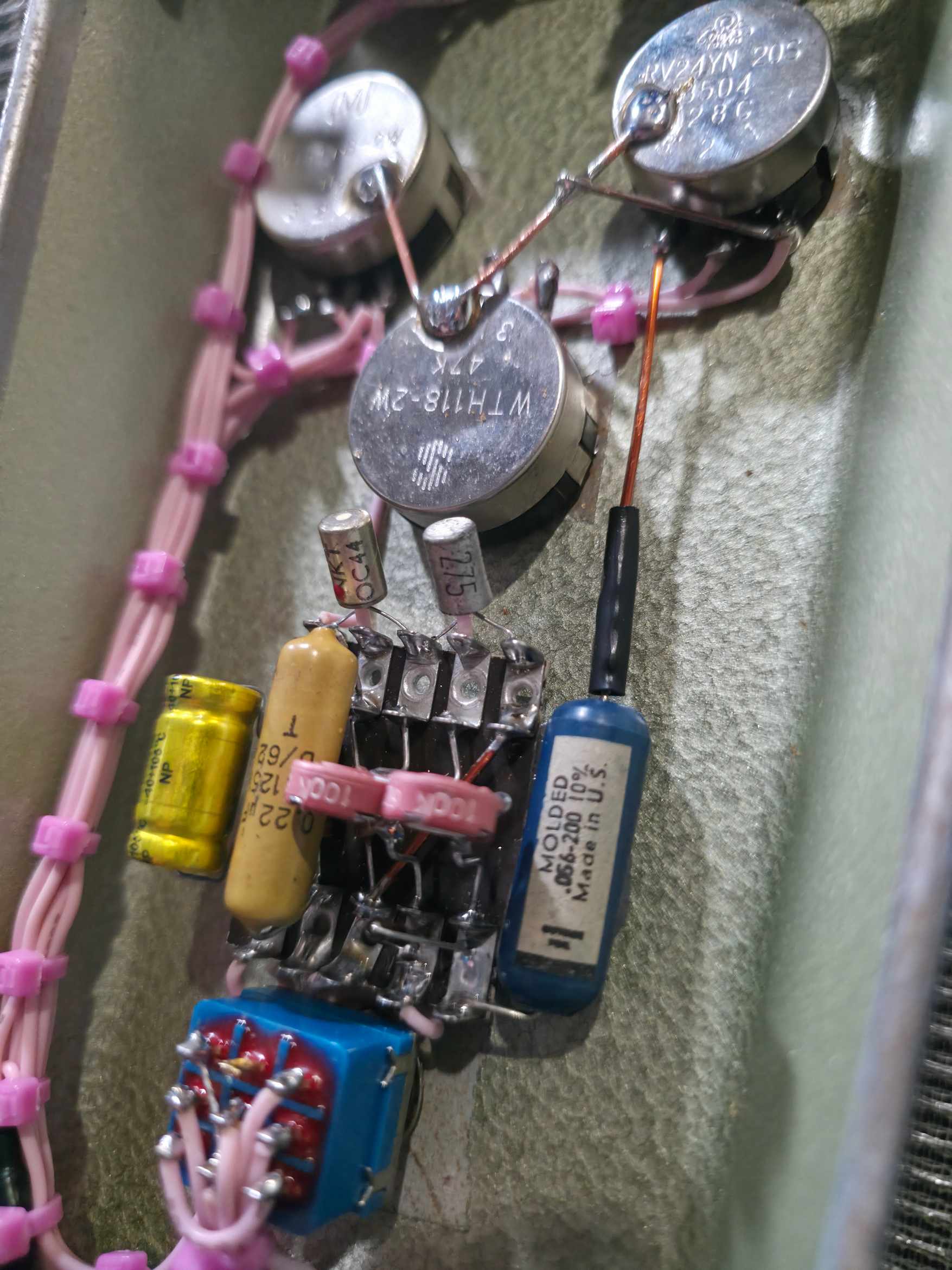
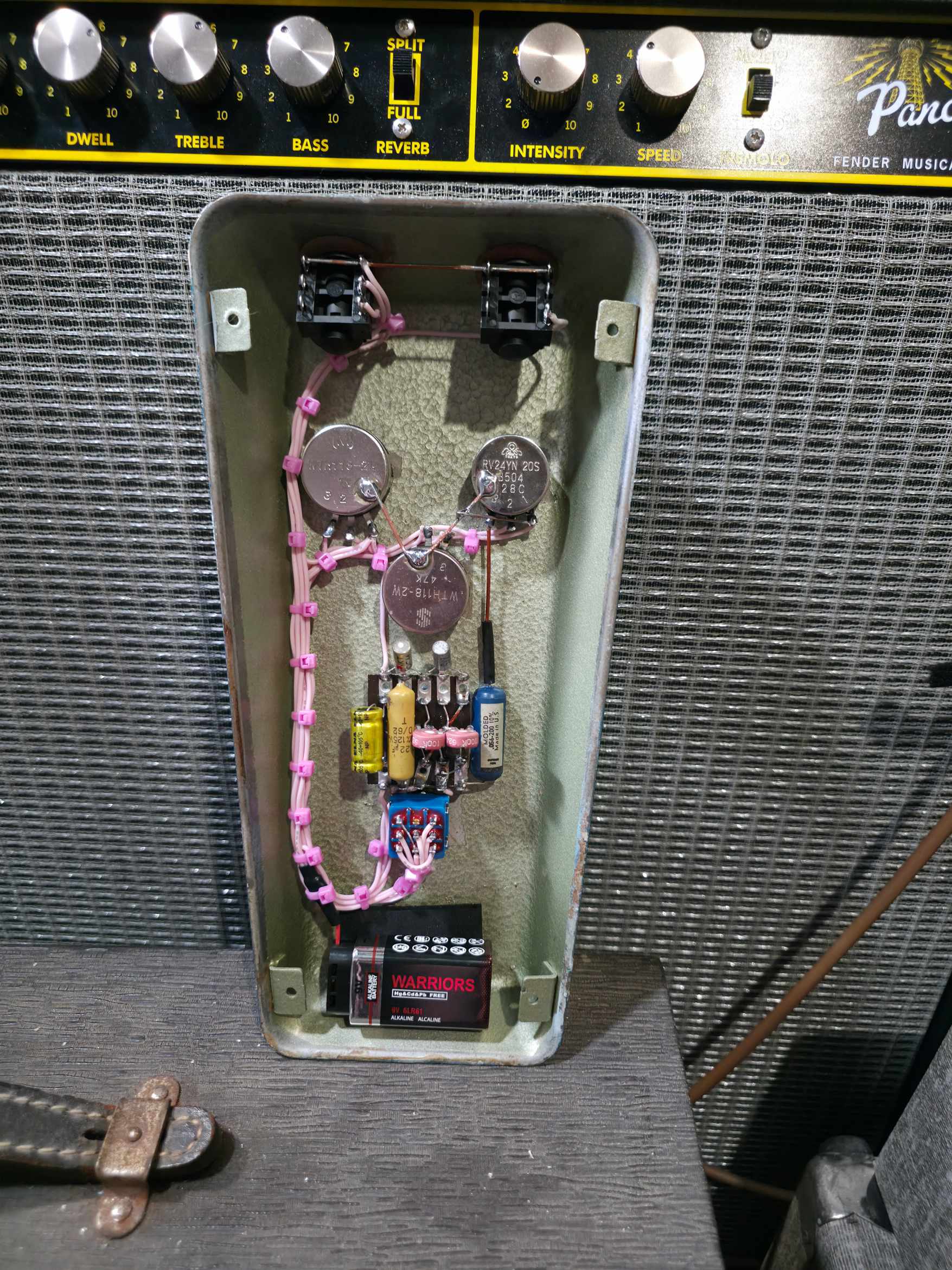
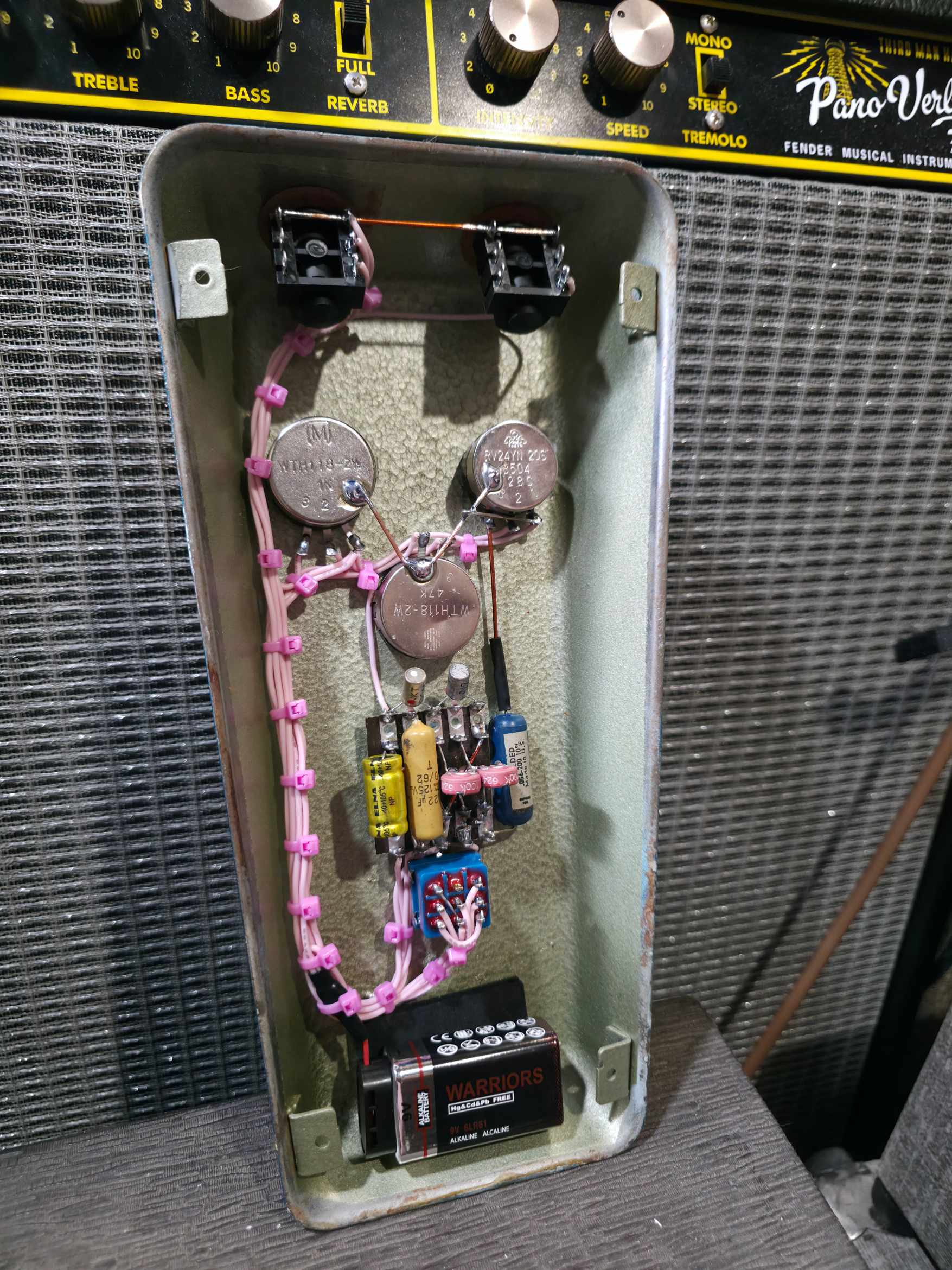
Open the back and everything is visible.
Tagboard construction.
The NKT OC44.
The reclaimed NKT275.
The NOS moulded mustard input capacitor.
The vintage blue moulded output capacitor.
Traditional potentiometers.
Hand dressed wiring.
And a normal 9 volt battery.
No PCB.
No hidden circuit underneath.
This was really the point of the build. I had components I had spent years keeping because they were becoming increasingly difficult to replace, and eventually decided that keeping them in a drawer was more pointless than actually using them.
Now they belong to this pedal.
Description of Sound
The Abbey Road Fuzz is still an Abbey Road Fuzz first.
The rare components are part of the story, but I did not build the circuit around the assumption that expensive or difficult to find parts automatically make better sounds.
Every important component still had to be suitable for the job.
With the guitar opened up, the pedal gives you the broad saturated response I want from a germanium fuzz, but the more useful part for me is what happens when you start pulling the guitar volume back.
The fuzz progressively backs away rather than simply becoming quieter.
The attack becomes clearer, the edges of chords start to return and there is a useful range underneath the full fuzz sound that can be controlled from the guitar.
That relationship with the guitar volume has always been one of the reasons I care about this style of circuit.
The NKT275 has an enormous reputation because of its connection with early germanium Fuzz Faces, but this particular transistor still had to test correctly before I was prepared to use it.
The same applied to the NKT OC44.
The names did not get them into the pedal.
The measurements did.
What those two transistors give this particular build is its own version of the Abbey Road response.
Full fuzz when the guitar is opened up, progressively cleaner sounds underneath it and a circuit that responds noticeably to the level and attack coming from the guitar.
The NOS mustard input capacitor and vintage blue moulded output capacitor are part of the same approach to the build. They were chosen because they suited what I wanted to make and because their construction belongs naturally alongside the rest of the components inside this particular pedal.
The whole circuit is powered from a normal 9 volt battery, keeping the power arrangement as simple and traditional as the circuit itself.
This is a one off Abbey Road Fuzz.
I have only ever seen two NKT OC44 transistors and I have no intention of trying to find another one simply so I can repeat this pedal.
The NKT275 came from the radio dismantled during the build.
The input capacitor is a NOS moulded mustard capacitor.
The output capacitor is a vintage blue moulded type of the same style found in old Fender and Magnatone amplifiers.
The enclosure was finished individually in metallic teal nitrocellulose lacquer with genuine 24 carat gold leaf embedded into the finish.
This exact combination will not be repeated.
If this particular one speaks to you, it is available.



Reviews
There are no reviews yet.