
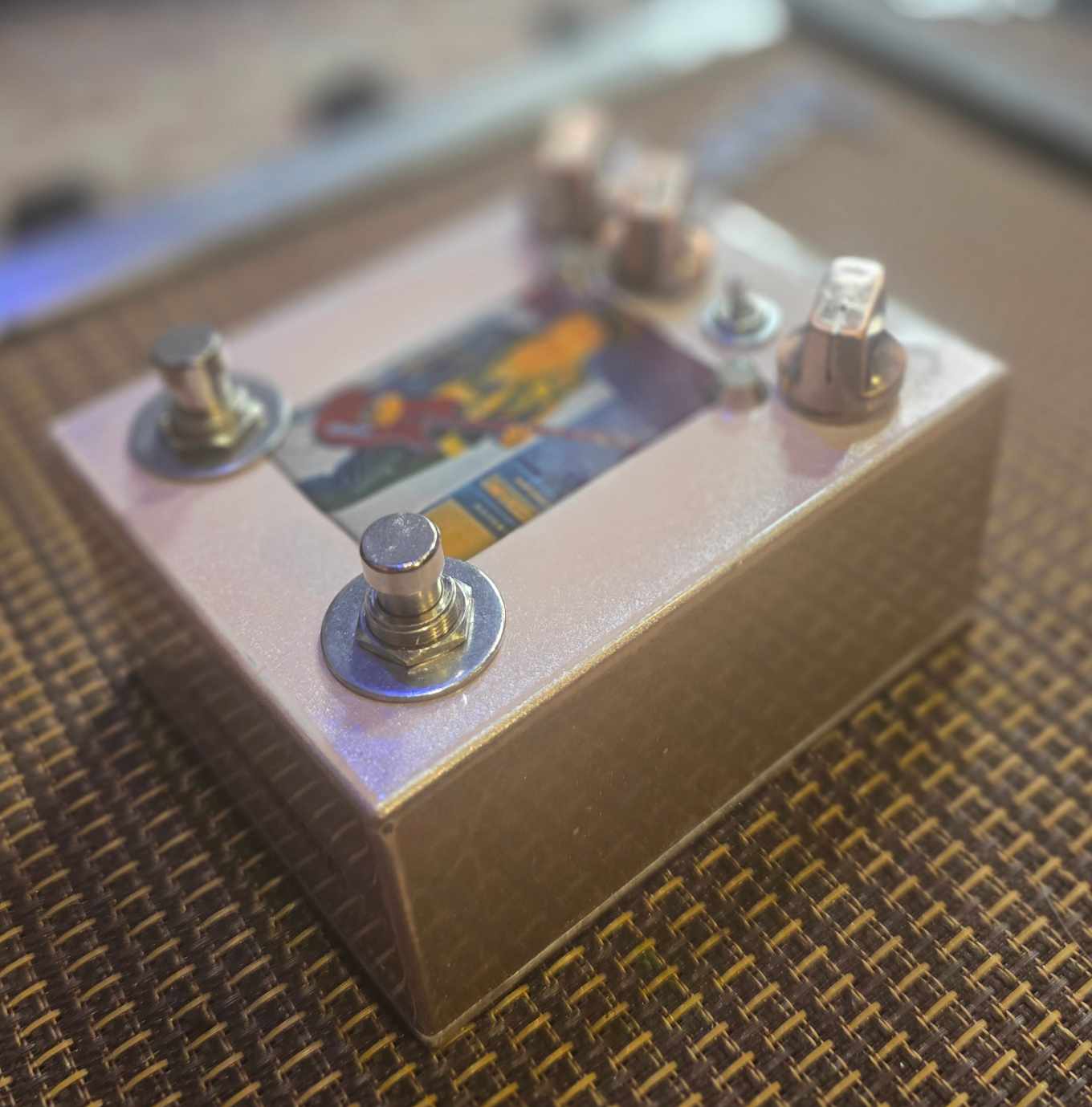
Gibbons Dual Rangemaster & Red Llama | Rose Sparkle Nitro | 1950s Mullard Germanium | 2 of 4
£350.00
1 in stock
Description
Description of Product
There is something about those early Billy Gibbons guitar tones that has always fascinated me. That sharp, biting attack, the thick overdrive underneath it and the way a guitar can sound aggressive without losing its character.
This is the second pedal in my four-piece Gibbons series, combining a traditional germanium Rangemaster treble booster with my own modified Red Llama overdrive.
The Rangemaster sits at the front of the signal path, allowing it to push the Red Llama into some wonderfully aggressive territory. Both circuits can also be used independently, giving you two very different effects within one enclosure.
Only four of these pedals have been built, and each is individually finished and electronically distinct.
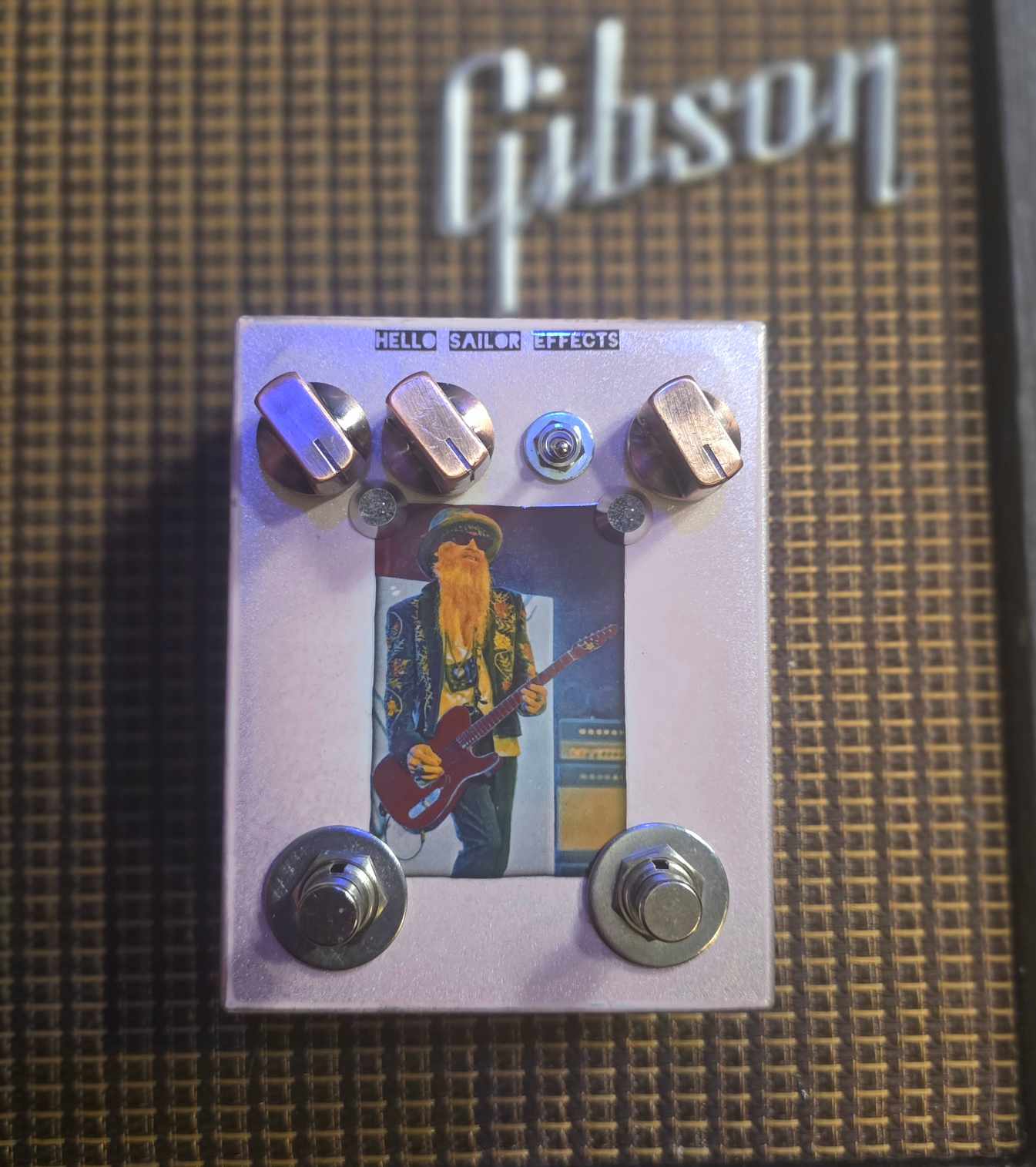
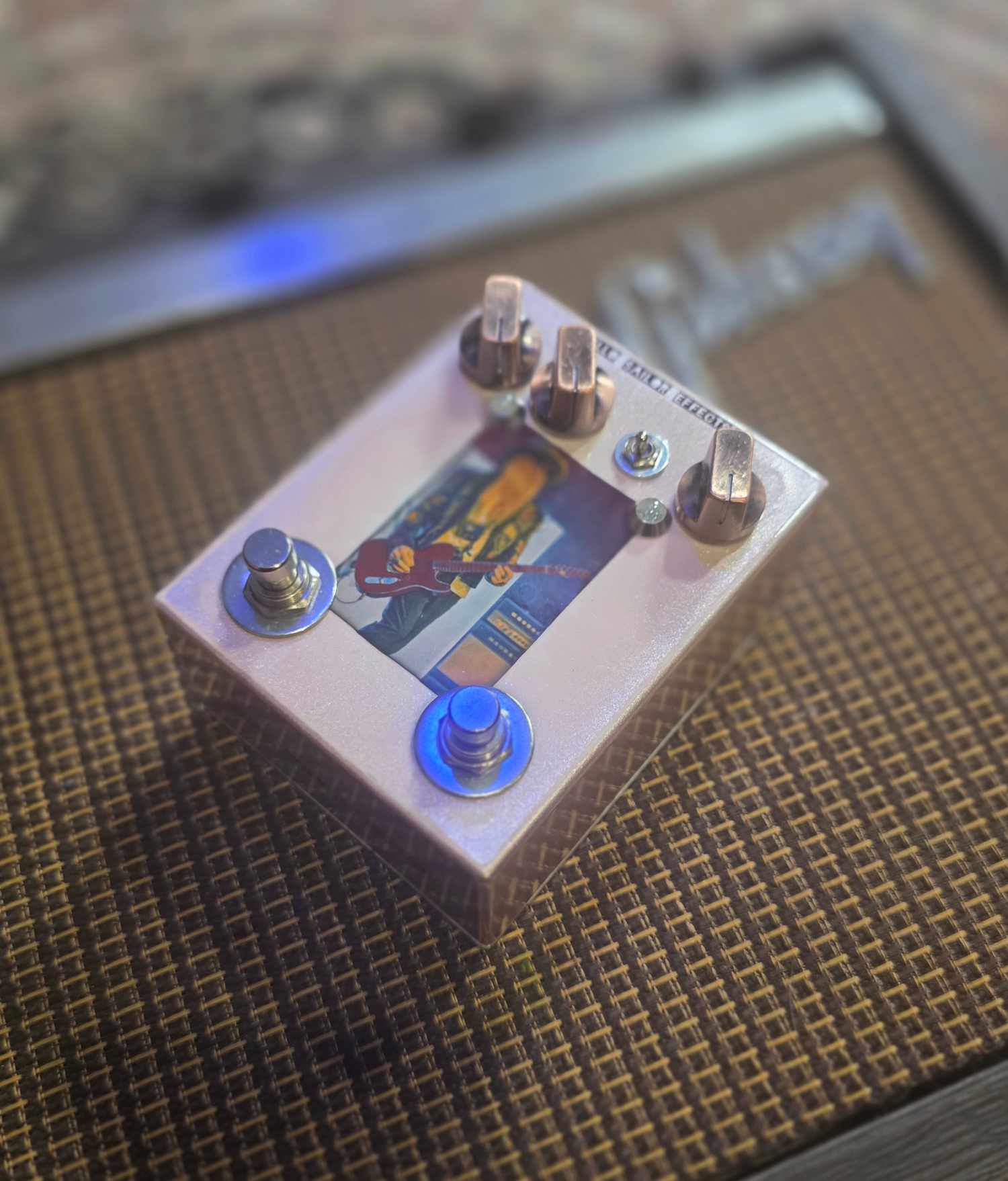
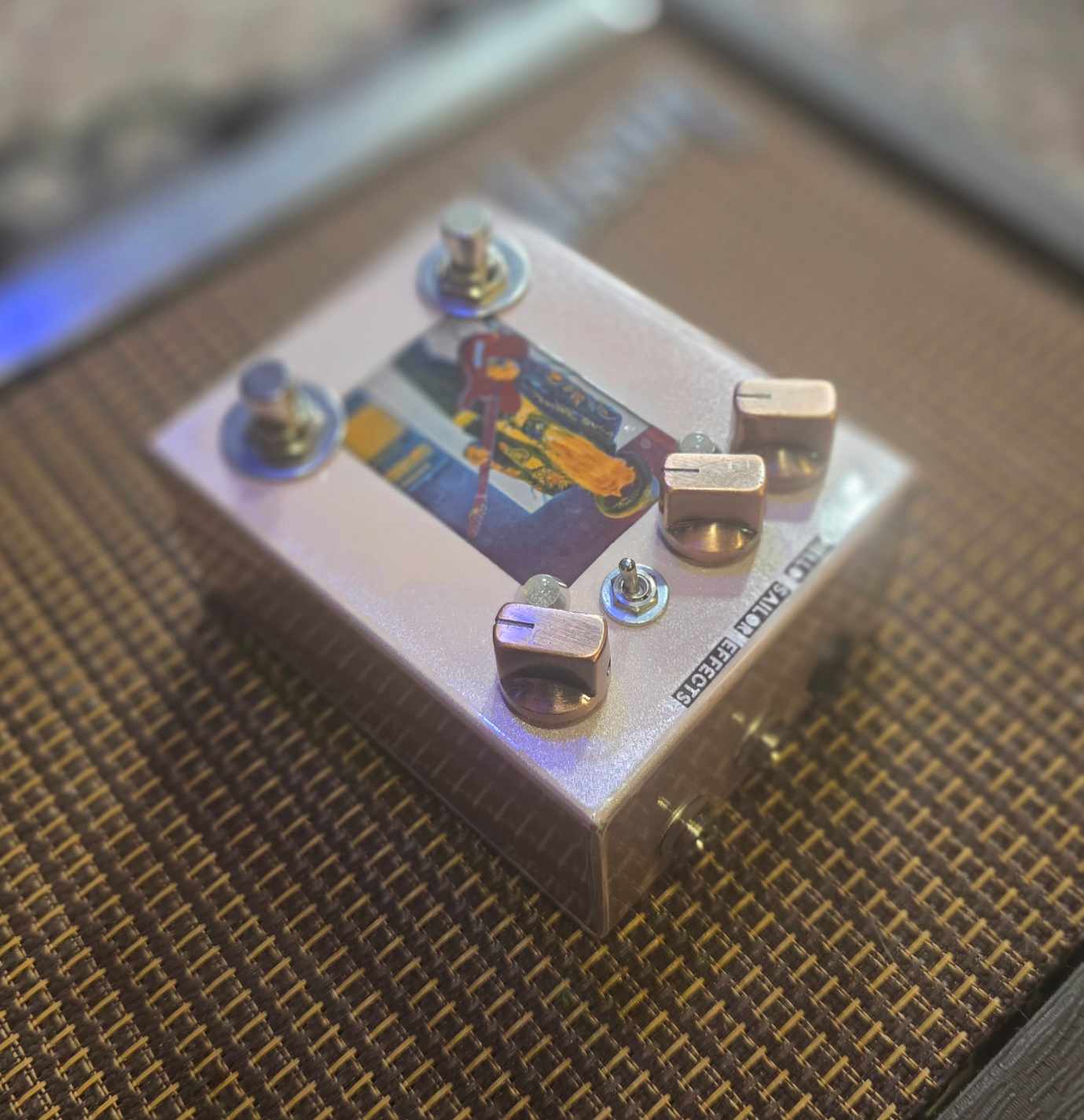
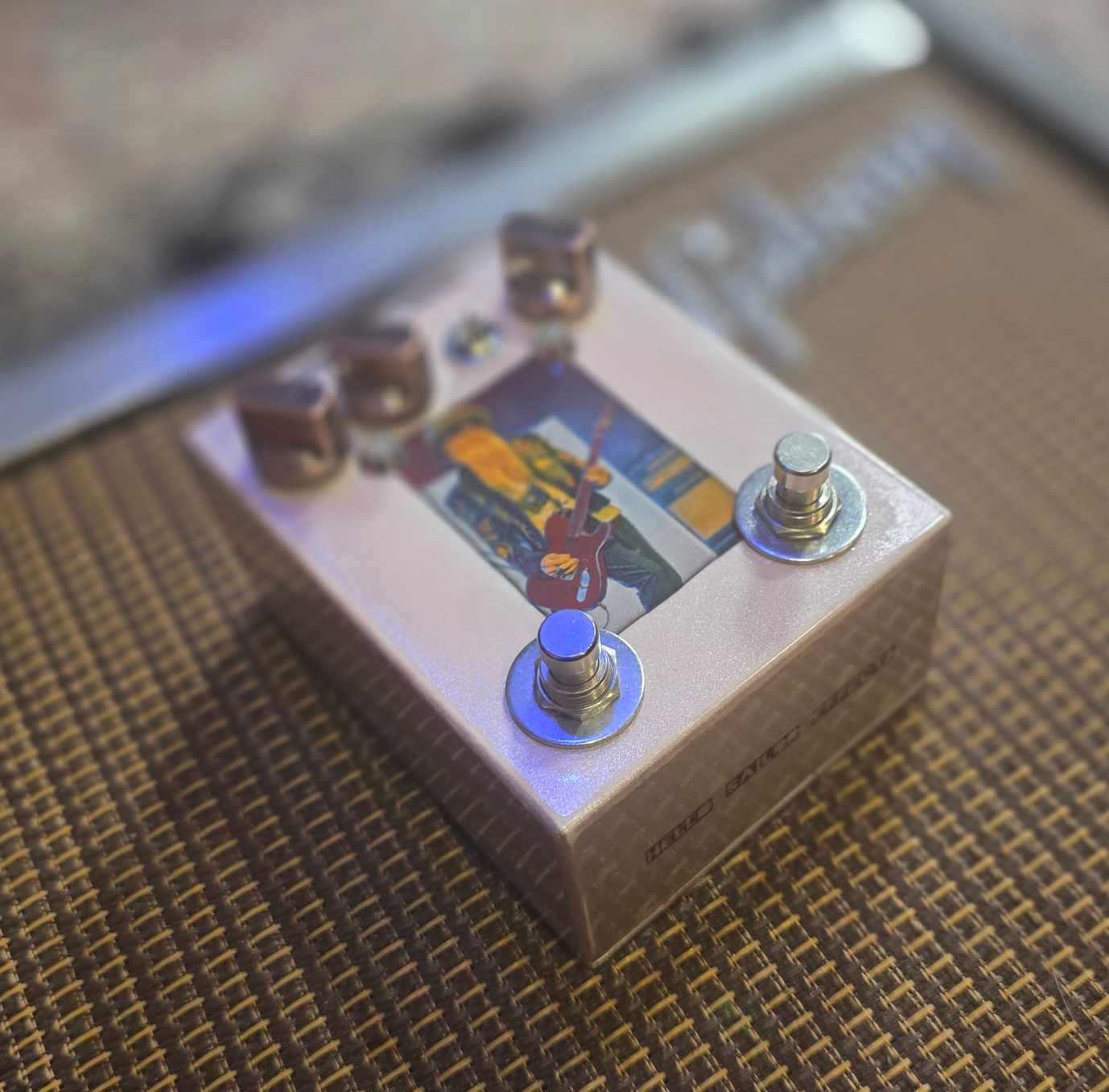
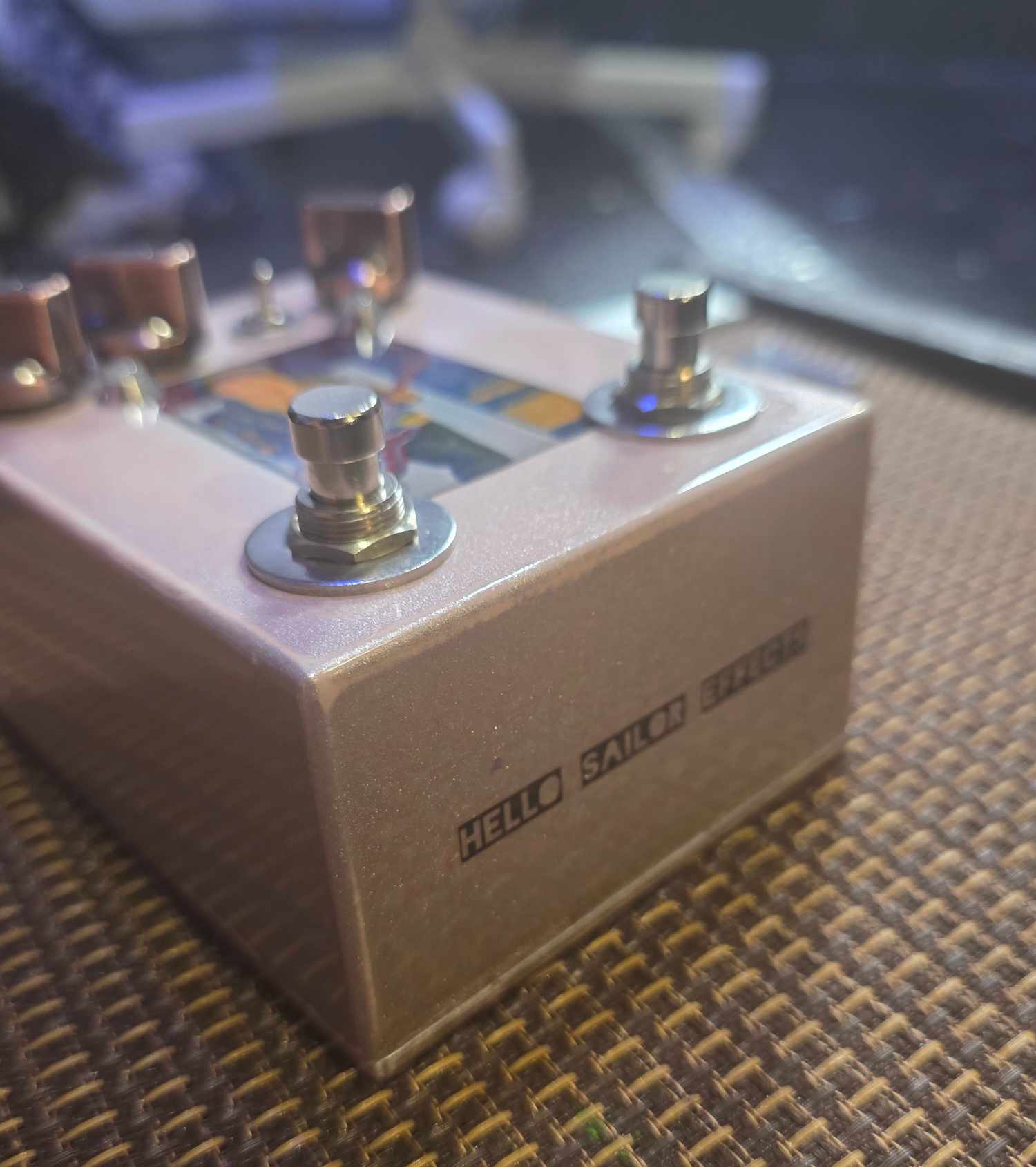
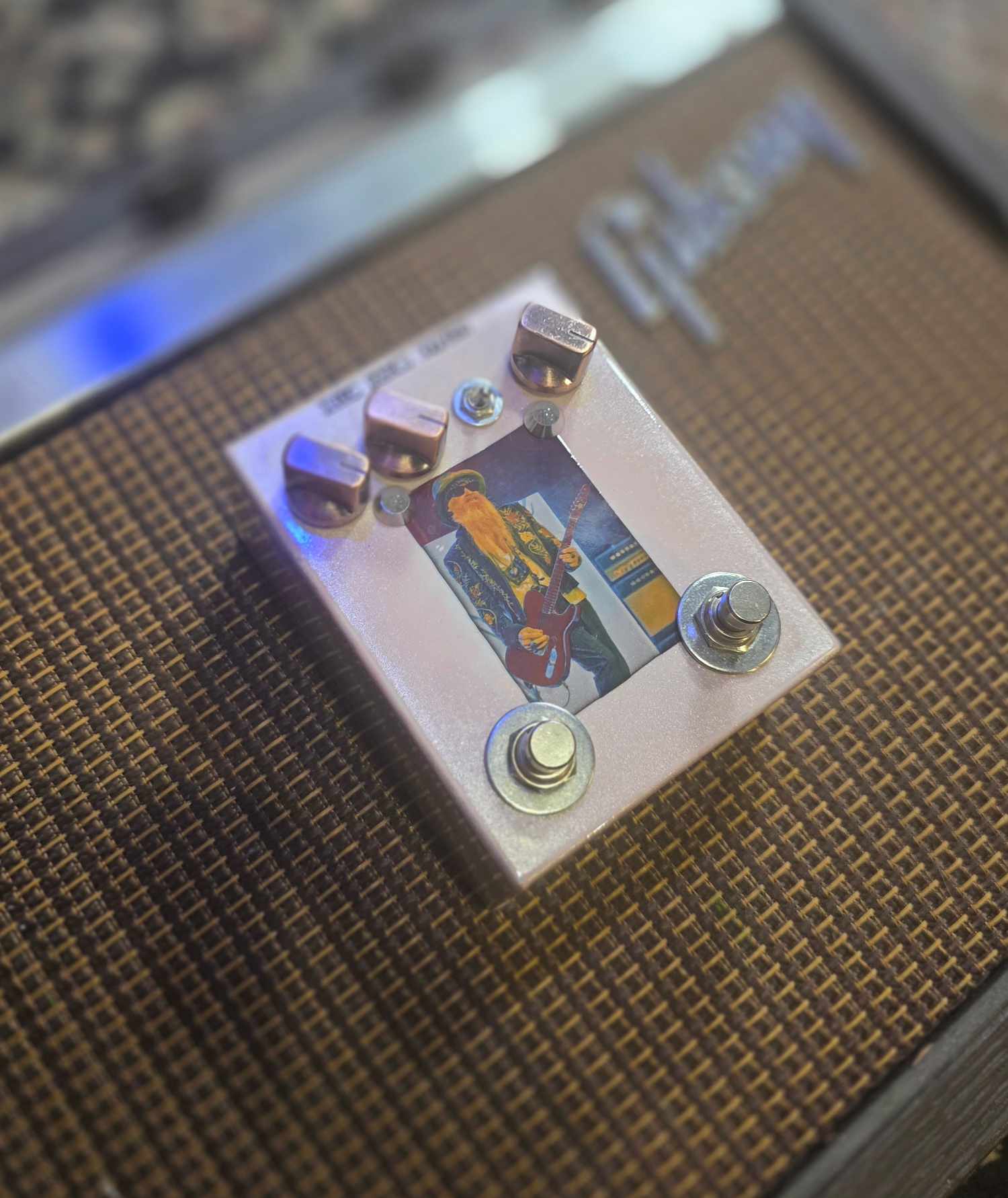
This particular example is finished in rose sparkle nitrocellulose lacquer, complemented by bronze control knobs. It has a very different appearance from the other three pedals in the series, with the sparkle finish giving it a distinctive character while retaining the traditional feel of a lacquered instrument.
Inside, things become particularly interesting.
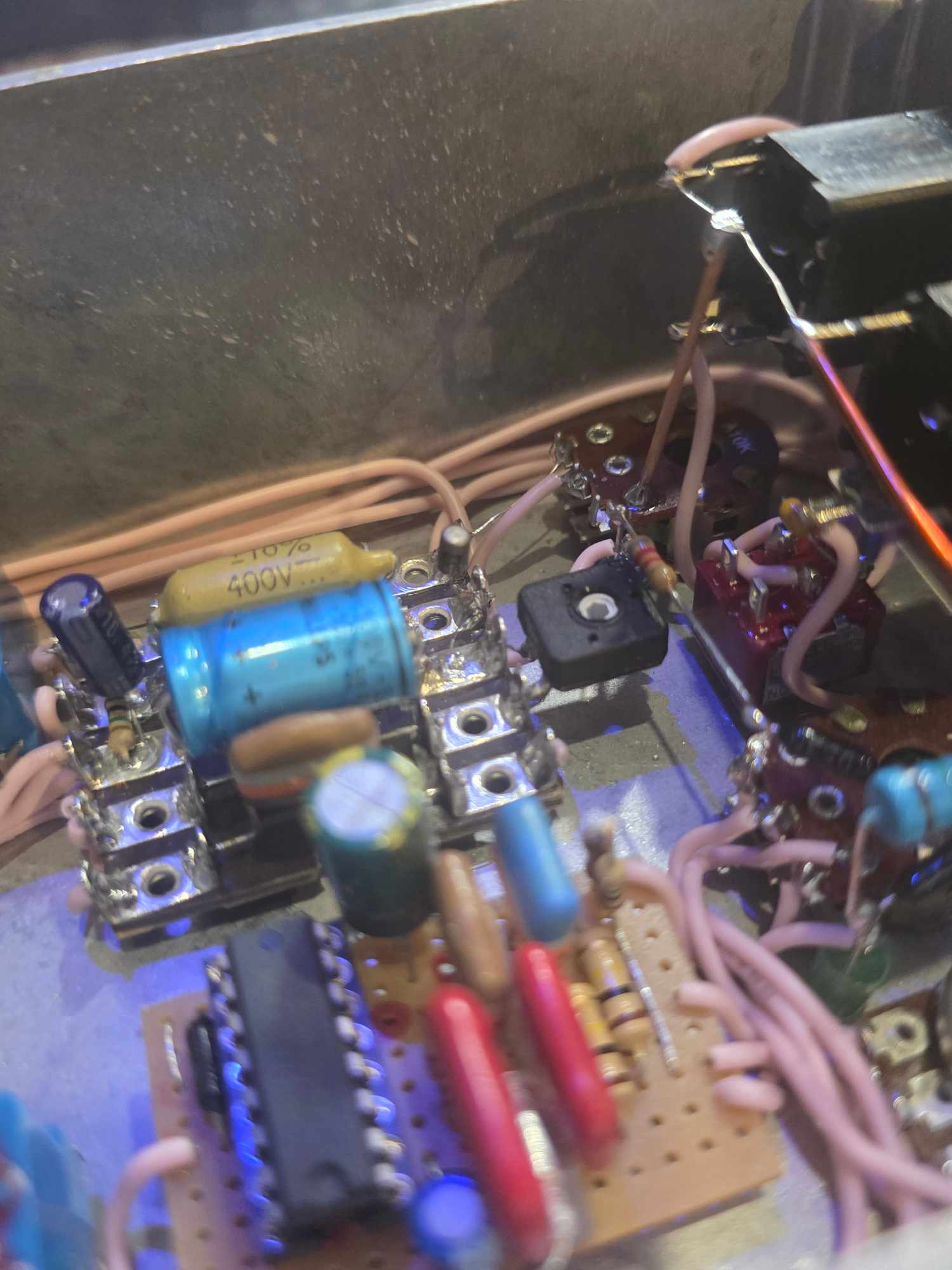
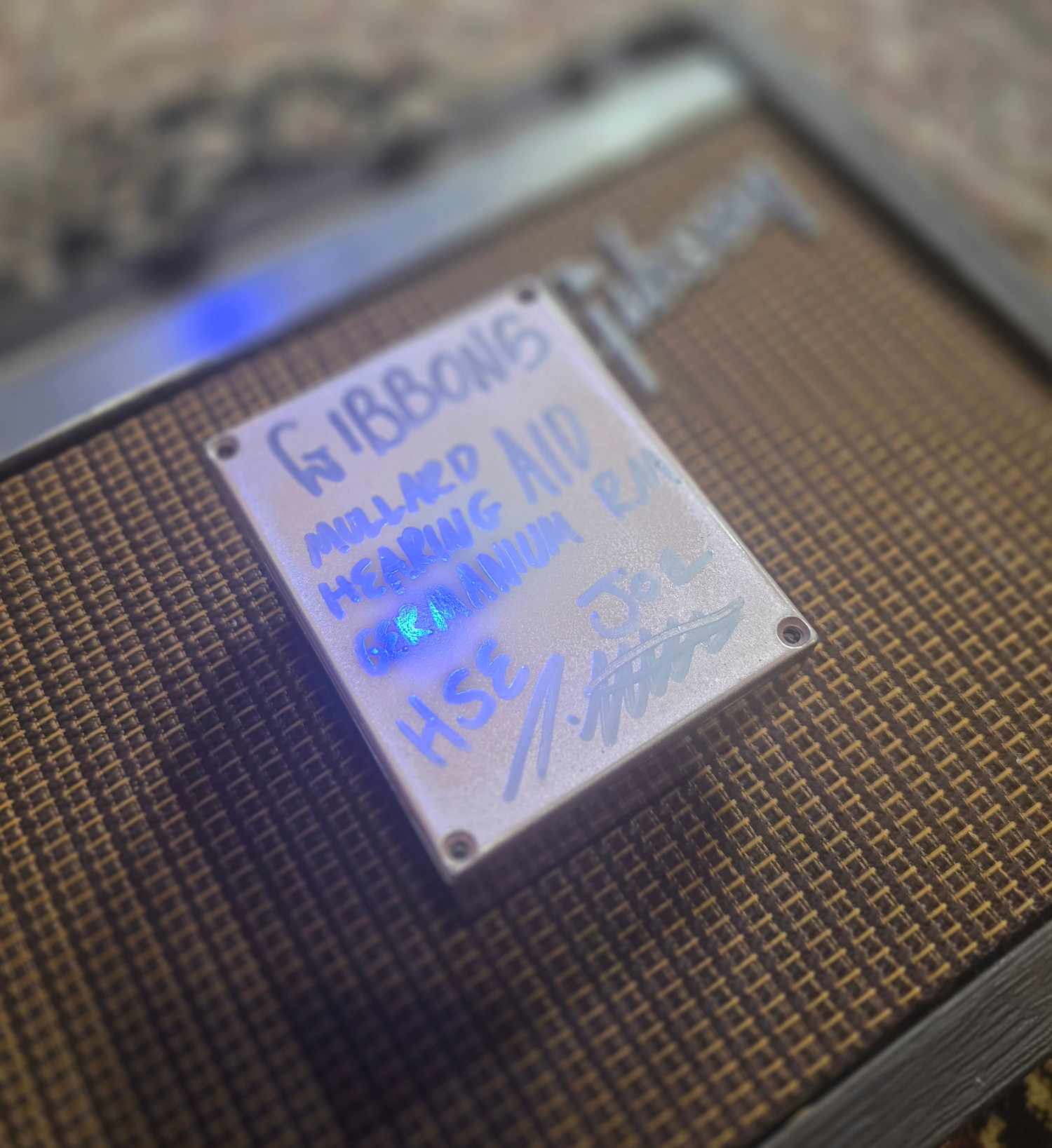
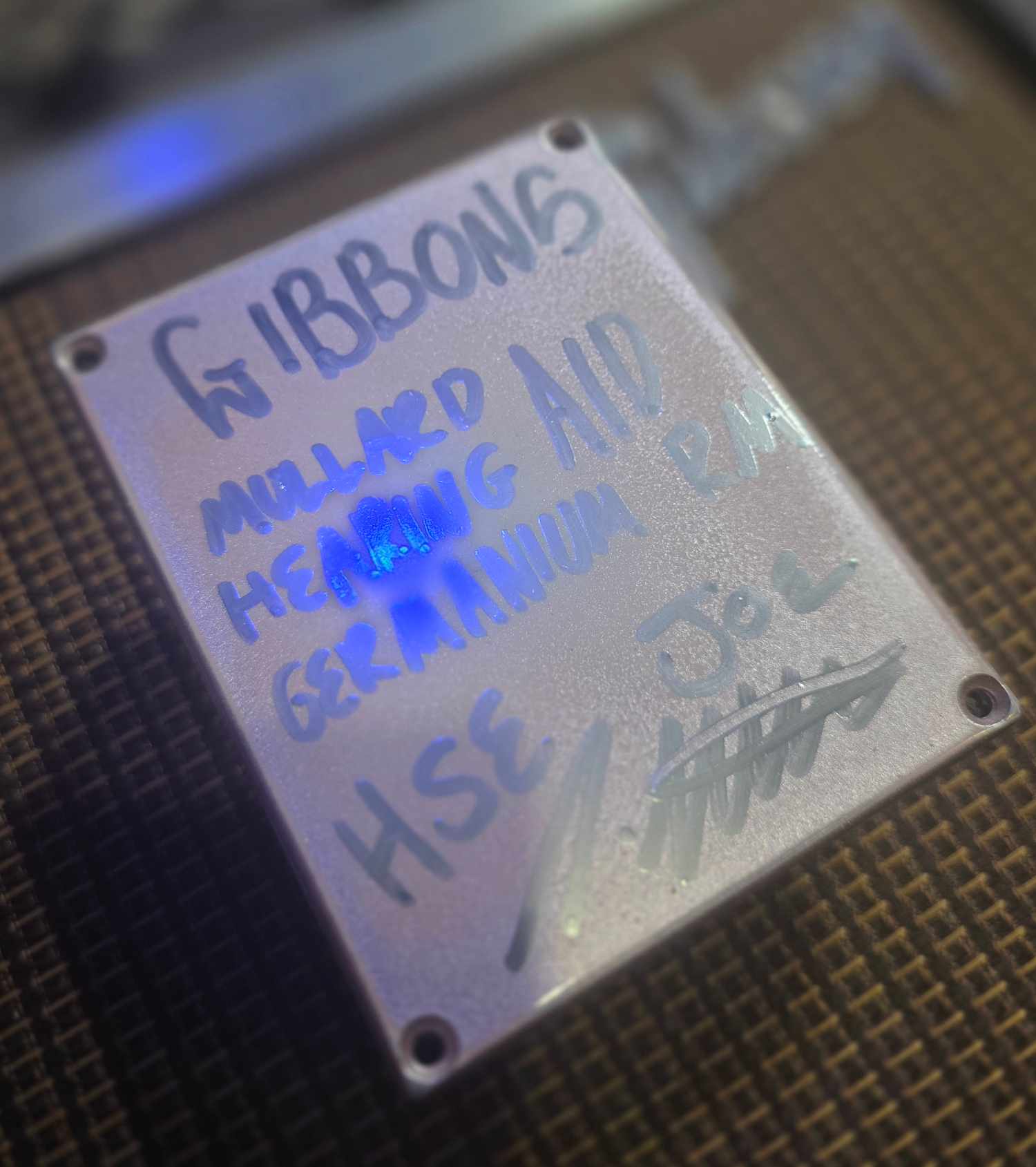
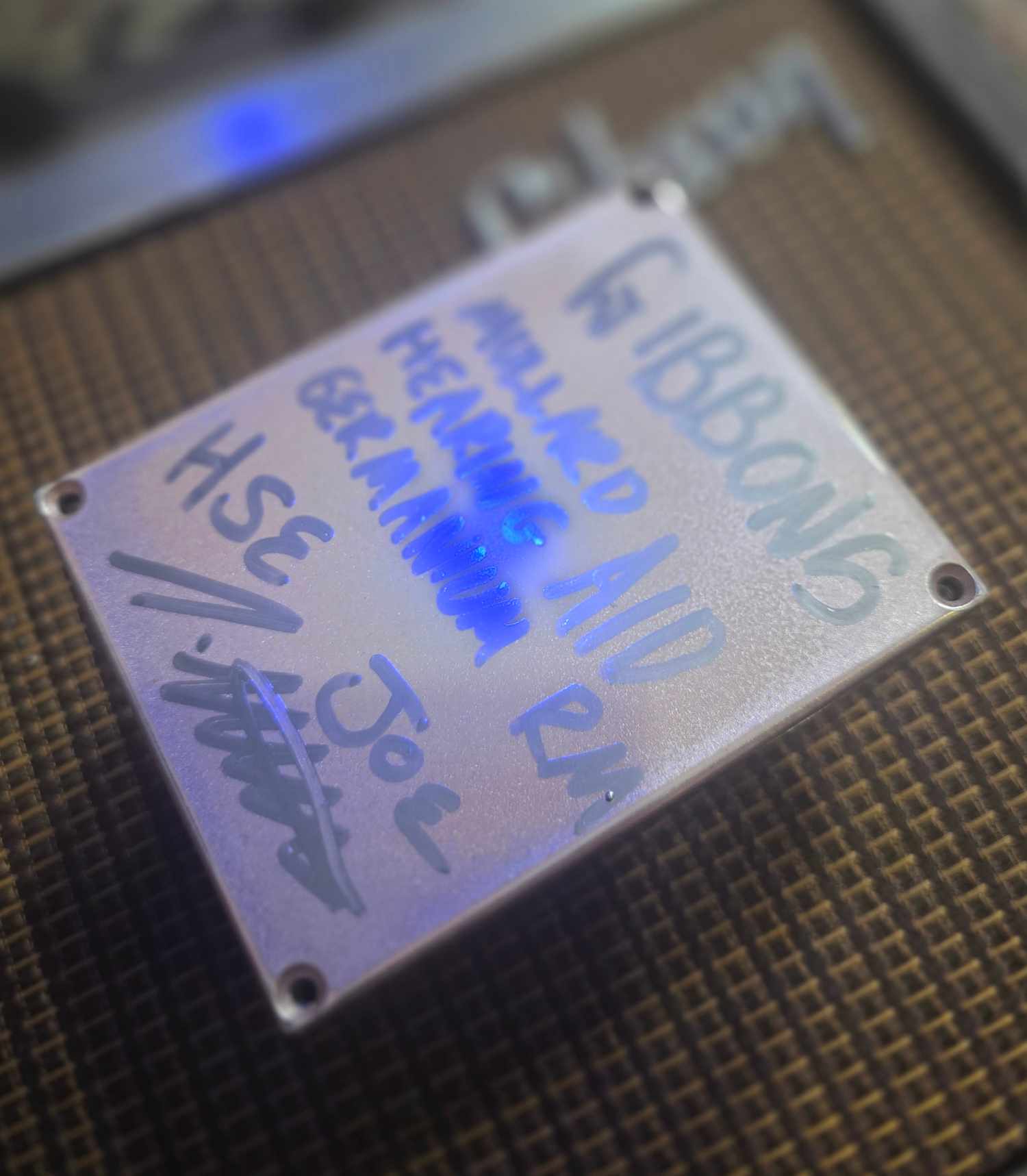
At the heart of the Rangemaster is a tiny, vintage 1950s Mullard hearing-aid germanium transistor.
These miniature germanium transistors are fascinating components from an era when transistor technology was still relatively new. Rather than simply fitting a modern equivalent, I wanted each pedal in this series to use a different vintage germanium device.
The result is a collection of four pedals that share the same circuit arrangement but each have their own individual components, appearance and character.
The 1950s Mullard Germanium Rangemaster
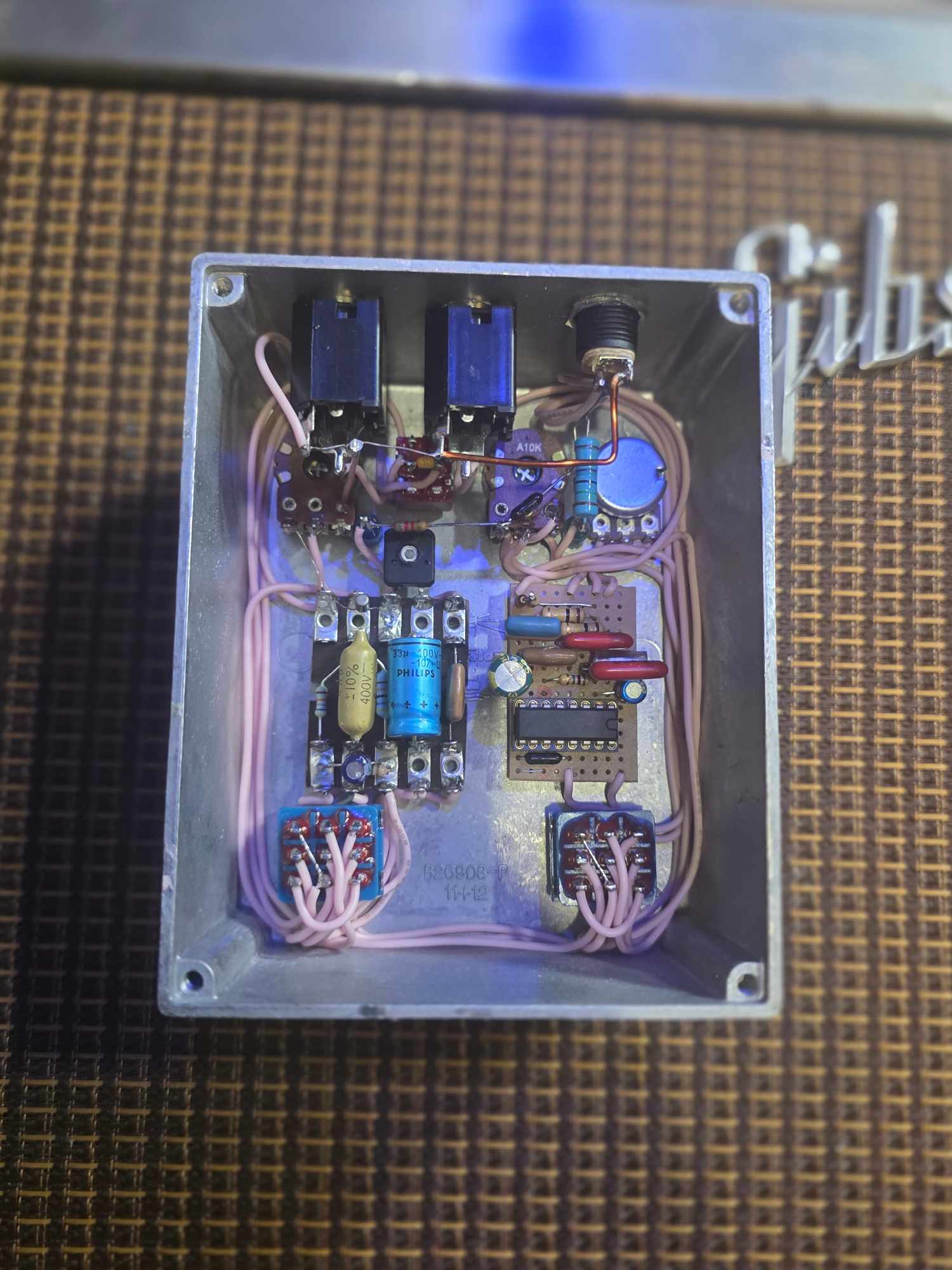
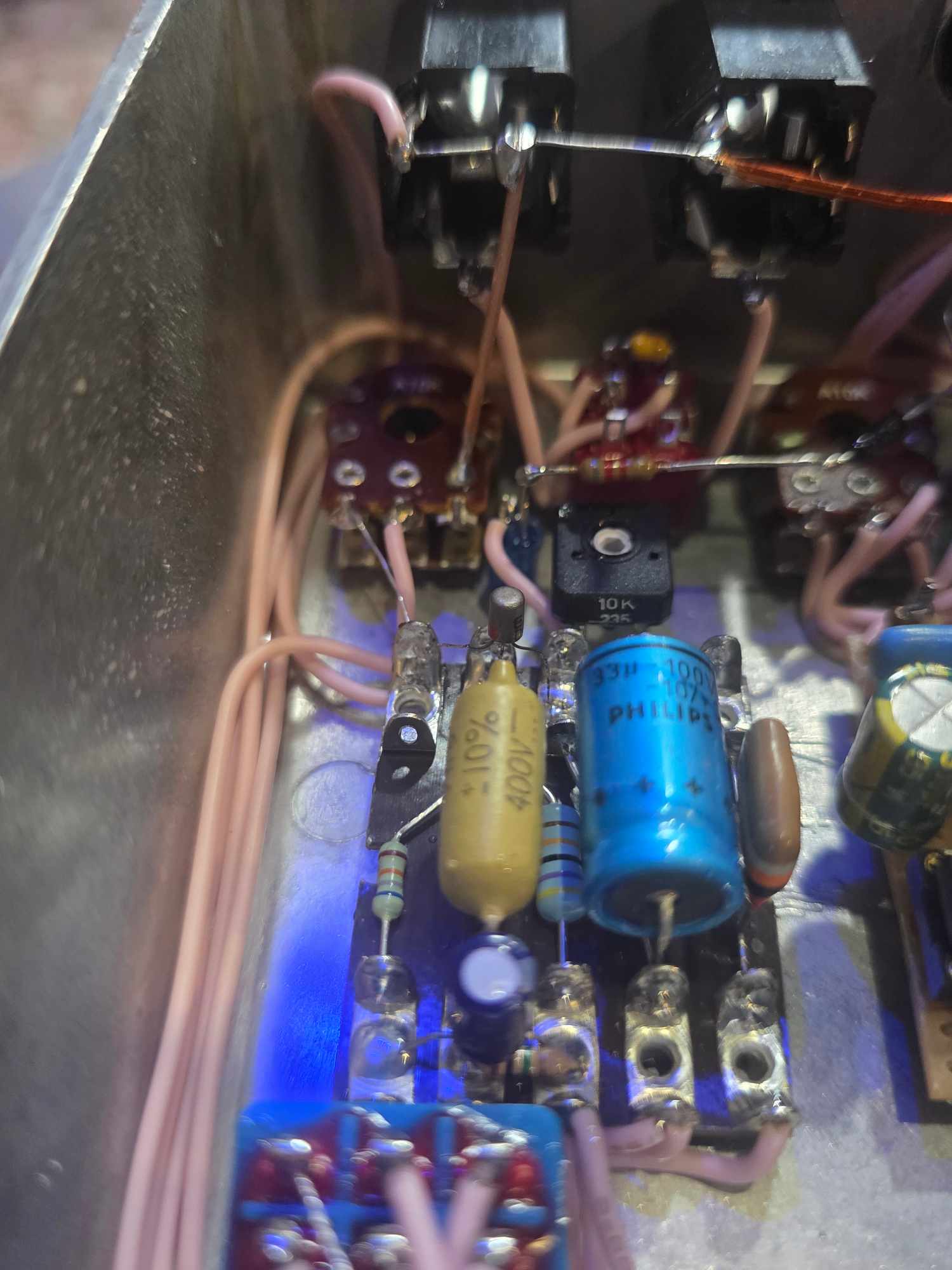
The Rangemaster circuit is constructed by hand on traditional tagboard, using a selection of vintage components.
Alongside the miniature Mullard germanium transistor, I have fitted a Mullard mustard capacitor at the input and a Mullard tropical fish capacitor at the output.
These are the sorts of components I particularly enjoy working with. They come from a period when electronics were built very differently, and there is something rather satisfying about giving them a new purpose in a hand-built guitar pedal.
The Rangemaster follows the traditional treble booster concept, bringing the upper midrange forward and giving the guitar a sharper, more immediate attack.
It is particularly effective when driving an amplifier that is already beginning to break up, where the focused frequency response helps produce those cutting, articulate early British blues-rock tones.
There is also a Fat switch, which makes the circuit considerably more versatile.
In its traditional position, the Rangemaster delivers the familiar pointed treble boost associated with early Billy Gibbons guitar sounds.
Engage the Fat switch and more low frequencies are allowed through the circuit, producing a thicker, fuller response.
This is particularly useful when moving away from the sharper ZZ Top tones and towards the heavier, more substantial sounds of 1970s rock.
The Modified Red Llama
The second half of the pedal is my modified Red Llama overdrive, constructed by hand on veroboard.
I have made changes to the original circuit and incorporated selected vintage components throughout the build.
The Red Llama is an interesting circuit because it has a rather different character from many conventional overdrives.
At lower gain settings, it produces a gritty, textured breakup with a slightly ragged edge. It has plenty of character without needing to be pushed particularly hard.
Increase the gain and it becomes a much more aggressive effect.
There is a thick, snarling quality to the distortion, with plenty of sustain and enough gain available to move well beyond traditional low-gain overdrive.
It is particularly well suited to those heavier, slightly unruly 1970s guitar sounds where a little roughness around the edges is part of the attraction.
Two Circuits, One Signal Path
The real appeal of this pedal is what happens when the two circuits are combined.
With the Rangemaster feeding the Red Llama, the treble booster changes the frequency content and level of the signal entering the overdrive.
In the traditional Rangemaster setting, this produces a sharper attack, more pronounced upper mids and a tighter overall response.
It is a particularly useful combination for getting into that pointed, aggressive early Billy Gibbons territory.
Switch the Rangemaster into Fat mode and the character changes considerably.
The fuller frequency response drives the Red Llama with more low-end content, producing a thicker and heavier distortion.
With the Red Llama gain increased, the combination can become particularly gnarly, with plenty of sustain and a distinctly old-school rock character.
You can also switch either circuit off and use the other independently.
That gives you a traditional germanium treble booster, a modified Red Llama overdrive and the option of combining both into something considerably more aggressive.
Traditional Construction and Vintage Components
Both circuits are built individually using traditional construction methods.
Germanium Rangemaster
– Vintage miniature 1950s Mullard hearing-aid germanium transistor
– Hand-wired tagboard construction
– Vintage Mullard mustard input capacitor
– Vintage Mullard tropical fish output capacitor
– Traditional treble boost and switchable Fat voicing
– Selected vintage components throughout
Modified Red Llama
– Hand-assembled veroboard construction
– Modified Red Llama circuit
– Selected vintage components
– Wide gain range, from gritty overdrive to aggressive 1970s rock distortion
Enclosure and Finish
– Rose sparkle nitrocellulose lacquer
– Bronze control knobs
– Individually finished enclosure
– One of four unique Gibbons dual pedals
– Hand built in England
Description of Sound
The two circuits have quite different personalities, which is what makes this combination so interesting.
The Rangemaster
The traditional Rangemaster setting has that familiar cutting character, with an emphasis on the frequencies that help a guitar stand out when an amplifier is being driven.
It produces a focused, pointed response that works particularly well for early ZZ Top-inspired guitar tones.
The Fat switch changes the frequency response, retaining more low end and producing a considerably thicker sound.
It is a useful addition because it allows the Rangemaster to move beyond the traditional treble booster role without losing the fundamental character of the circuit.
The Red Llama
On its own, the modified Red Llama provides everything from gritty, textured overdrive to thick, aggressive distortion.
At lower settings, it has a rough-edged breakup that responds well to changes in playing dynamics.
Push the gain further and it develops a heavier, snarling character, with plenty of harmonic content and sustain.
It is not intended to be an overly refined overdrive. The roughness is part of what makes it interesting.
Both Circuits Together
With the Rangemaster driving the Red Llama, you can move between two quite different approaches to heavier guitar tones.
The traditional Rangemaster setting provides a sharper, tighter response with plenty of upper-midrange bite.
Engaging the Fat switch produces a thicker sound with more low-frequency content, particularly useful when pushing the Red Llama into its higher gain settings.
From cutting early blues-rock to heavier, gnarly 1970s rock sounds, there is quite a bit of ground available from these two relatively simple circuits.
A Note on the Gibbons Series
I have built just four of these pedals.
Each uses the same basic combination of Rangemaster and modified Red Llama, but every example has its own nitrocellulose finish, colour scheme, aesthetic and vintage germanium transistor.
This second example is particularly distinctive because of its rose sparkle lacquer, bronze knobs and miniature 1950s Mullard germanium transistor.
I have always enjoyed using vintage components in my builds, particularly unusual devices that have survived for decades and can still be put to work.
The combination of traditional construction, old electronic components and individually finished enclosures is what makes this series a little different.
These are pedals intended to be played, but I also wanted them to be interesting objects in their own right.
Call to Action
This rose sparkle Gibbons is number two in a series of just four individually built pedals.
Each has its own finish, component selection and character. No two examples are identical, and this particular rose sparkle and bronze combination will not be repeated exactly.
For the guitarist who appreciates early ZZ Top, vintage germanium electronics, traditional construction and unusual boutique effects, this is an opportunity to own an individual piece from a very small collection.
Hand built in England by Hello Sailor Effects.
Reviews
There are no reviews yet.